

Balancing rent, student loans, and growing credit card bills can make financial freedom feel completely out of reach for young professionals living in major cities. Facing every monthly payment often means scrambling to keep up and never getting ahead. If you want expert-backed steps that transform financial chaos into clear action, this guide focuses on building a comprehensive view of your debt so you can create a real blueprint for eliminating what you owe and reclaiming control over your future.
Table of Contents
- Step 1: Assess Your Full Debt Picture
- Step 2: Prioritize and Organize Balances
- Step 3: Select the Right Repayment Strategy
- Step 4: Cut Expenses and Boost Income
- Step 5: Track Progress and Adjust Plans
Quick Summary
| Essential Insight | Detailed Explanation |
|---|---|
| 1. Assess Your Total Debt Clearly | Gather all financial documents to understand exactly what you owe, including balances, interest rates, and payment history. |
| 2. Prioritize High-Interest Debts | Focus on paying off high-interest debts first to maximize savings and eliminate the most financially damaging obligations. |
| 3. Choose an Effective Repayment Strategy | Select a debt repayment strategy, like Avalanche or Snowball, that aligns with your motivation style and ensures consistent payments. |
| 4. Reduce Expenses and Increase Income | Cut unnecessary expenses and seek additional income sources to accelerate debt reduction efforts and improve cash flow. |
| 5. Regularly Track Progress and Adjust | Monitor your debt payoff regularly and adjust your strategies quarterly to maintain motivation and respond to changing financial situations. |
Step 1: Assess Your Full Debt Picture
Getting a comprehensive view of your debt is the critical first step toward financial freedom. Understanding exactly what you owe will help you develop a strategic plan to eliminate debt efficiently.
To create an accurate debt picture, start by gathering all financial documentation including:
- Credit card statements
- Student loan records
- Personal loan agreements
- Medical bills
- Car loan paperwork
- Bank statements showing recurring debt payments
Credit counseling resources recommend thoroughly documenting each debt’s details – not just total amount, but interest rates, minimum payments, and payment history. This means creating a comprehensive spreadsheet or list that includes:
- Creditor name
- Total balance owed
- Interest rate
- Minimum monthly payment
- Payment due date
Your goal is total financial transparency – hiding or forgetting about any debt will sabotage your debt reduction strategy.
Most individuals discover they have more debt than they initially believed. By meticulously tracking every financial obligation, you transform abstract numbers into a clear, actionable roadmap for debt elimination.

Pro tip: Use a dedicated spreadsheet or budgeting app to track your debts in real-time, ensuring you never miss a detail about your financial landscape.
Step 2: Prioritize and Organize Balances
Prioritizing your debt is a strategic approach that can dramatically accelerate your journey to financial freedom. By strategically organizing your balances, you’ll create a targeted plan that maximizes your debt reduction potential.
Start by categorizing your debts using the following method:
- High-interest debts: Credit cards, personal loans with highest interest rates
- Critical debts: Loans with potential legal consequences (taxes, child support)
- Secured debts: Mortgages, car loans with collateral attached
- Lower-priority debts: Student loans, personal loans with lower interest rates
To effectively prioritize, focus on managing credit card debt first. High-interest credit card balances can rapidly accumulate, creating a snowball effect that makes debt elimination increasingly challenging.
Prioritizing debt is not about paying everything equally, but about strategically targeting the most financially damaging obligations first.
Develop a structured repayment strategy by ranking your debts based on two primary methods:
- Debt Avalanche Method: Pay minimum on all debts, then put extra money toward highest interest debt
- Debt Snowball Method: Pay off smallest balances first for psychological momentum
Pro tip: Create a visual debt tracking system using color-coded spreadsheets or apps to maintain motivation and clearly see your progress.
Step 3: Select the Right Repayment Strategy
Choosing the most effective debt repayment strategy can make the difference between struggling for years and achieving financial freedom quickly. Your goal is to find a method that not only reduces your debt but also keeps you motivated throughout the journey.
Credit counseling experts recommend evaluating your personal financial landscape before selecting a repayment approach. The two most popular strategies offer different psychological and financial benefits:
-
Debt Avalanche Method
- Prioritizes highest interest debts first
- Saves most money in long-term interest payments
- Mathematically most efficient strategy
-
Debt Snowball Method
- Focuses on paying smallest balances first
- Provides quick psychological wins
- Builds momentum through early debt clearance
The best strategy is the one you can consistently stick with – financial discipline matters more than mathematical perfection.
Additionally, consider hybrid approaches that combine elements of both methods. This might mean targeting high-interest debts while simultaneously maintaining motivation by clearing smaller balances.
Here’s a quick comparison of the Debt Avalanche and Debt Snowball methods:
| Method | Key Focus | Typical Benefit | Psychological Effect |
|---|---|---|---|
| Debt Avalanche | Highest interest first | Maximum interest savings | May take longer for motivation boost |
| Debt Snowball | Smallest balance first | Quick account closures | Builds early confidence and momentum |
Factors to consider when selecting your strategy:
- Total debt amount
- Interest rates across different debts
- Your personal motivation style
- Income stability
- Emotional relationship with money
Pro tip: Review and adjust your debt repayment strategy quarterly to ensure it continues meeting your evolving financial needs and maintaining your motivation.
Step 4: Cut Expenses and Boost Income
Reducing debt requires a two-pronged approach: slashing unnecessary expenses and strategically increasing your income. This dual strategy accelerates your path to financial freedom by maximizing every dollar you earn and save.
Start by creating a detailed budget to identify potential areas for expense reduction. Your expense-cutting strategy should focus on these key areas:
-
Fixed Expenses
- Negotiate utility bills
- Refinance high-interest loans
- Review insurance policies
- Cancel unnecessary subscriptions
-
Variable Expenses
- Reduce dining out
- Cut grocery spending
- Limit entertainment costs
- Use cash instead of credit cards
Small savings compound quickly – a $10 daily cut translates to $3,650 annually.
To boost income, explore multiple revenue streams:
- Request a salary raise
- Start a side hustle
- Sell unused items online
- Freelance in your professional field
- Offer consulting services
Quantify your efforts by tracking both expense reductions and income increases. Every extra dollar can be redirected toward debt elimination.
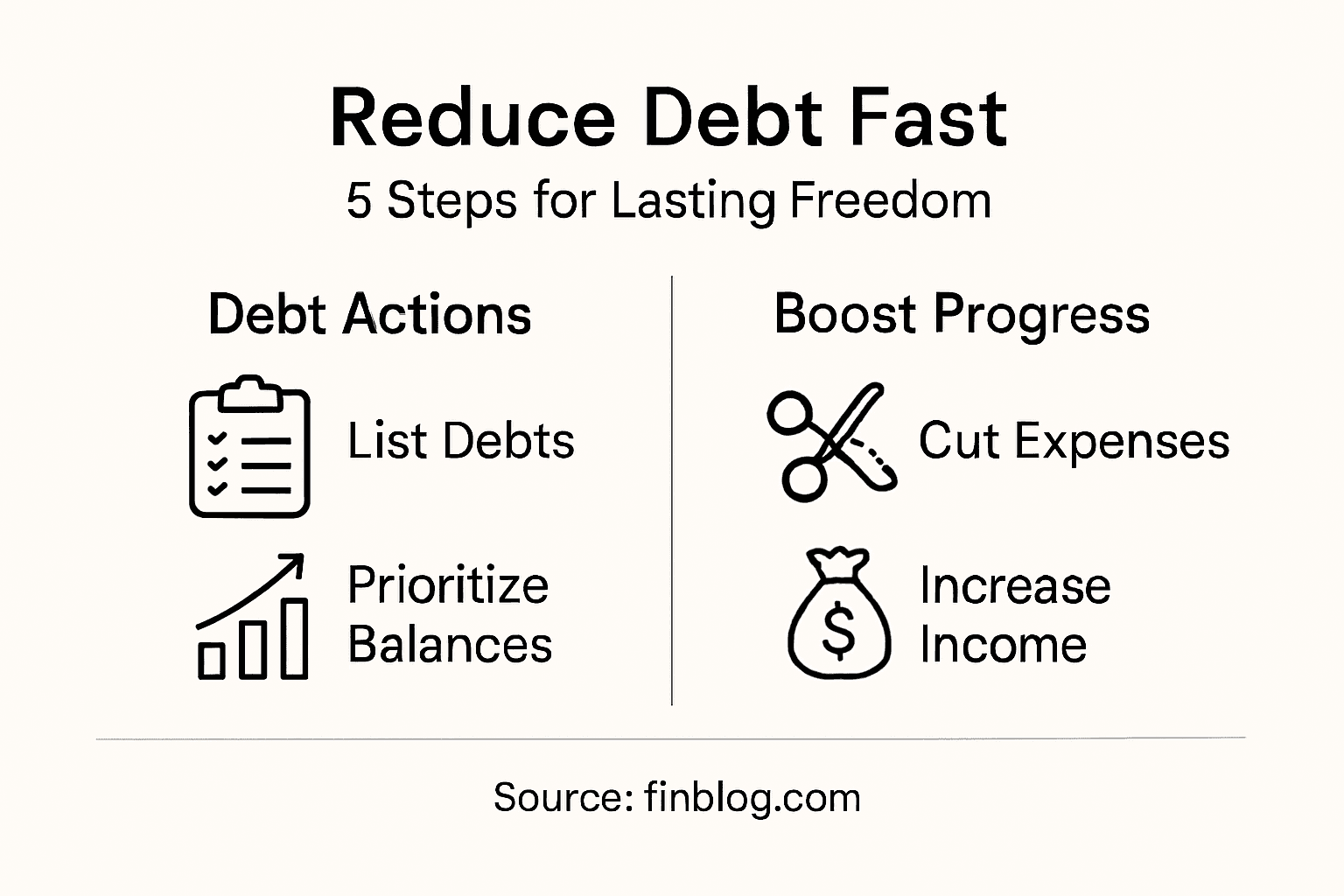
Pro tip: Automate your savings and debt payments immediately after receiving income to ensure consistent financial progress.
Step 5: Track Progress and Adjust Plans
Successful debt reduction requires consistent monitoring and strategic adaptation. Credit counseling experts emphasize that tracking your progress is not just about numbers, but maintaining motivation and financial momentum.
Establish a robust tracking system with these essential components:
-
Financial Tracking Tools
- Spreadsheet with debt balances
- Debt reduction apps
- Monthly progress charts
- Automated expense trackers
-
Key Metrics to Monitor
- Total debt reduction
- Interest savings
- Monthly payment consistency
- Income-to-debt ratio
Small, consistent progress beats sporadic, dramatic changes every single time.
Review your debt reduction plan quarterly, looking for opportunities to:
- Accelerate debt payments
- Reduce unnecessary expenses
- Increase income streams
- Refinance high-interest debts
- Adjust strategy based on life changes
Remember that flexibility is key. Your initial plan might need tweaking as your financial situation evolves.
Pro tip: Set up automatic monthly reviews in your calendar to ensure you never lose sight of your debt reduction goals.
Consider these practical ways to maximize your debt reduction progress:
| Action | Impact on Debt Payoff | Implementation Frequency |
|---|---|---|
| Quarterly strategy review | Refines your approach | Every 3 months |
| Automate payments | Ensures on-time payoff | With every paycheck |
| Track key metrics | Measures real progress | Monthly |
| Seek new income sources | Accelerates payments | As opportunities arise |
Take Control of Your Debt Journey Today
Struggling with high-interest credit card balances or unsure which repayment plan fits your needs? This article breaks down proven strategies like the Debt Avalanche and Debt Snowball methods to help you prioritize and reduce debt fast. If you want to transform your detailed debt assessment into a clear action plan that fits your lifestyle, you are in the right place.
At finblog.com, we specialize in guiding professionals through their financial challenges. From creating effective budgets to boosting income and tracking progress, our expert resources give you the tools to achieve lasting financial freedom. Need tailored advice or actionable steps to accelerate your debt payoff? Start now by exploring our comprehensive financial insights and discover how the right plan makes all the difference.
Don’t wait for debt stress to control your life. Visit finblog.com today and take the first step toward a debt-free future.
Frequently Asked Questions
How can I quickly assess my total debt?
Start by gathering all financial documents, including credit card statements, loan agreements, and medical bills. Create a comprehensive list or spreadsheet detailing each debt, including total balances, interest rates, and minimum payments, to gain a complete overview.
What is the best way to prioritize my debts for fast reduction?
To prioritize your debts, categorize them by interest rates and urgency. Focus on paying off high-interest debts first or small balances to create psychological momentum; this can help you reduce debts effectively within a few months.
Which repayment strategy should I choose for eliminating debt?
You can choose between the Debt Avalanche Method, which targets high-interest debts first, and the Debt Snowball Method, which focuses on paying off the smallest balances. Analyze your financial habits and select the strategy that you can stick with consistently to see progress quickly.
How can I cut expenses to support faster debt repayment?
Assess your budget to identify areas for expense reduction, such as negotiating bills or canceling subscriptions. Aim to cut unnecessary expenses by around 10-20% and redirect those savings toward debt payments for quicker results.
What steps can I take to boost my income for debt elimination?
Consider exploring additional revenue streams like starting a side hustle, freelancing, or selling unused items. Even increasing your income by a few hundred dollars each month can significantly impact your ability to pay down debt faster.
How often should I track my debt reduction progress?
Review your debt repayment progress at least quarterly to ensure you stay on track with your goals. This allows you to adjust your strategies and maintain motivation by celebrating small wins and milestones.