

Over 60 percent of American adults admit they have never created a detailed financial plan. Understanding your own money habits and resources can make the difference between constant stress and real peace of mind. Whether you are aiming to pay off debt, grow savings, or make smarter investments, a clear roadmap starts with an honest assessment and achievable goals.
Table of Contents
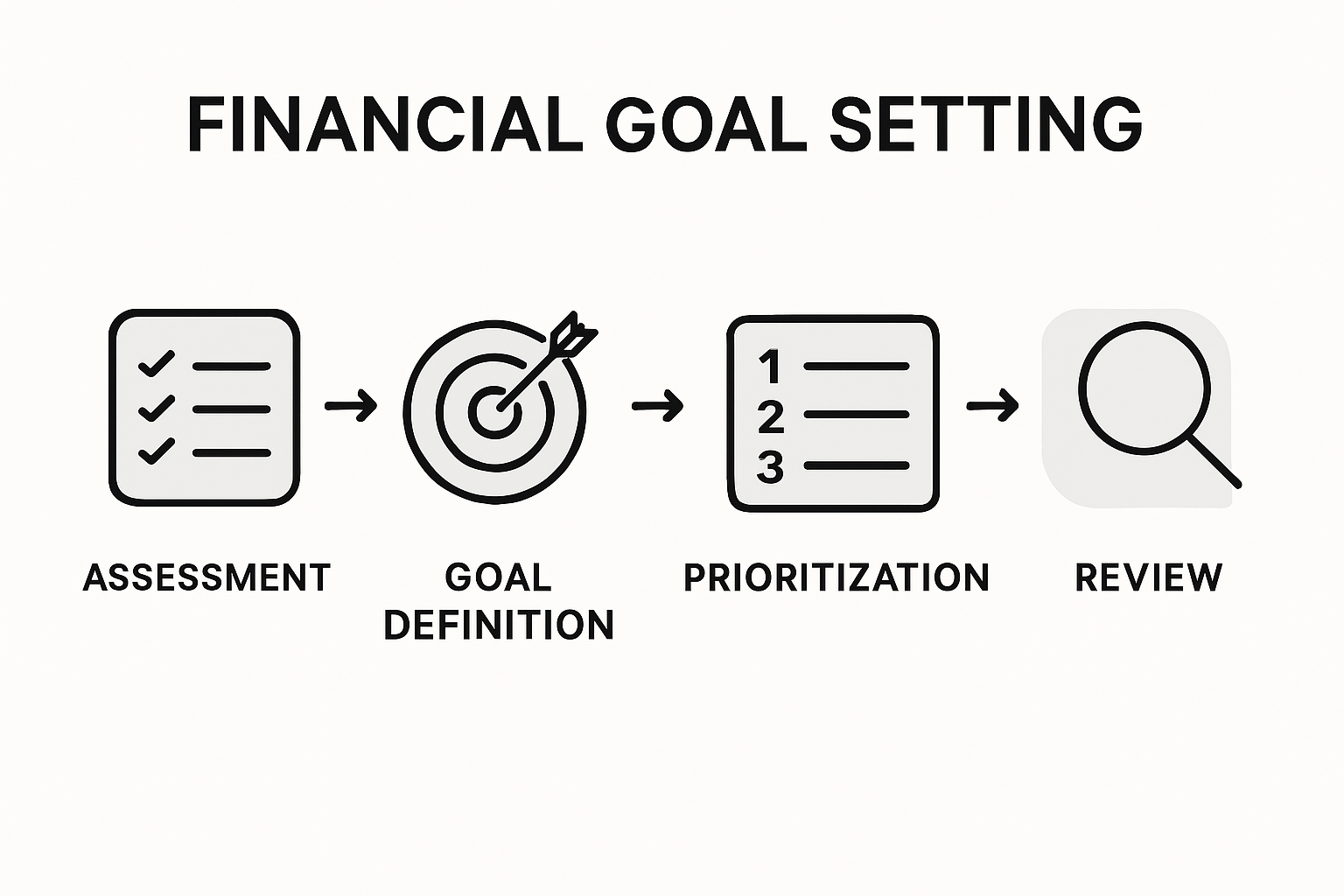
- Step 1: Assess Your Current Financial Situation
- Step 2: Define Clear And Measurable Financial Goals
- Step 3: Prioritize Objectives Based On Importance
- Step 4: Create An Actionable Plan To Reach Goals
- Step 5: Review Progress And Adjust As Needed
Quick Summary
| Key Point | Explanation |
|---|---|
| 1. Assess Your Financial Situation | Collect documents to evaluate income, expenses, assets, and liabilities for financial clarity. |
| 2. Set SMART Financial Goals | Clearly define financial goals that are Specific, Measurable, Achievable, Relevant, and Time-bound to enhance focus. |
| 3. Prioritize Financial Objectives | Organize goals by urgency and importance to allocate resources effectively and build a strategic plan. |
| 4. Create an Actionable Plan | Develop a timeline with specific actions for each financial goal to transform intentions into accomplishments. |
| 5. Review and Adjust Regularly | Conduct quarterly reviews to track progress, reassess strategies, and adapt to changing financial circumstances. |
Step 1: Assess Your Current Financial Situation
Assessing your current financial situation is the critical foundation for creating effective financial goals. This process helps you understand where you stand financially and provides the roadmap for future planning. To get a comprehensive view, you will need to gather detailed information about your income, expenses, assets, and liabilities.
Start by collecting all your financial documents such as bank statements, pay stubs, tax returns, investment account records, and credit card statements. Developing a comprehensive financial overview requires thorough documentation. Calculate your total monthly income after taxes, including your primary salary, side hustle earnings, investment returns, and any additional revenue streams. Next, track your monthly expenses by categorizing them into fixed costs (rent, utilities, insurance) and variable expenses (groceries, entertainment, shopping). Subtract your total expenses from your income to determine your current cash flow and identify potential areas for savings.
As you review your financial landscape, pay special attention to your debt levels and existing assets. List all outstanding debts like student loans, credit card balances, and mortgage payments, noting their interest rates and minimum monthly payments. Similarly, document your assets including savings accounts, retirement funds, real estate, and investment portfolios. This comprehensive snapshot will reveal your net worth and help you set realistic financial goals tailored to your unique circumstances.
Warning: Be honest and precise during this assessment. Avoiding difficult financial truths will only hinder your long term success. Your next step will involve using this detailed financial overview to create strategic and achievable financial objectives.
Step 2: Define Clear and Measurable Financial Goals
Defining clear and measurable financial goals transforms your abstract financial aspirations into concrete targets that guide your strategic planning. Developing precise financial objectives requires a systematic approach that helps you create actionable and realistic milestones for your financial journey.
The SMART framework provides an excellent strategy for goal setting. Each goal should be Specific (clearly defined), Measurable (quantifiable), Achievable (realistic), Relevant (aligned with your broader financial vision), and Time-bound (with a specific deadline). For instance, instead of saying “I want to save money,” a SMART goal would be “I will save $15,000 for a down payment on a home within the next 24 months by setting aside $625 monthly from my salary.” This approach turns vague intentions into structured financial targets that you can track and accomplish.
To implement this strategy, break down your long term financial objectives into short term and intermediate goals. Consider different financial dimensions such as retirement savings, emergency funds, debt reduction, investment growth, and major purchases. Prioritize these goals based on their urgency and potential impact on your overall financial health. Remember that your goals should stretch you without being overwhelming. Realistic ambition combined with clear metrics creates the most effective path to financial success. Your next step will involve creating a detailed action plan to systematically work toward these well defined financial objectives.
Step 3: Prioritize Objectives Based on Importance
Prioritizing your financial objectives is crucial for creating a strategic roadmap that maximizes your resources and aligns with your most critical life goals. Categorizing financial goals effectively requires a thoughtful approach that considers both immediate needs and long-term aspirations.

Start by dividing your financial objectives into three primary categories: short-term (within one year), medium-term (one to five years), and long-term (five years and beyond). Within each category, assess the urgency and potential impact of each goal. Emergency fund savings, debt reduction, and critical living expenses should typically take precedence over discretionary spending or luxury purchases. Consider using a scoring system that evaluates each goal based on factors like financial necessity, personal value, potential return on investment, and alignment with your overall life vision.
To effectively prioritize, create a visual ranking system that helps you understand the relative importance of each financial objective. Assign numerical weights to goals based on their criticality and potential consequences if left unaddressed. Be prepared to make tough choices and potentially postpone less critical goals to ensure you are building a solid financial foundation. Remember that prioritization is not about eliminating goals but strategically sequencing them to create a balanced and achievable financial plan. Your next step will involve creating a detailed strategy to tackle these prioritized objectives in a systematic and sustainable manner.
Step 4: Create an Actionable Plan to Reach Goals
Transforming your financial goals from abstract concepts into concrete achievements requires a strategic and detailed action plan. Developing comprehensive financial strategies involves breaking down each objective into specific measurable milestones that guide your progress.
Start by creating a structured timeline for each financial goal with clear quarterly or monthly benchmarks. For each objective, identify specific actions required to move forward. If your goal is to save $24000 for a down payment, outline precise steps such as automating monthly transfers to a dedicated savings account, reducing discretionary spending, exploring additional income streams, and tracking your progress monthly. Use digital tools or spreadsheets to monitor your advancement, allowing you to make real-time adjustments and maintain accountability.
Establish a system of regular financial check-ins to assess your progress and recalibrate your strategy as needed. These reviews should include a comprehensive evaluation of your income, expenses, savings rate, and goal achievement. Be flexible and prepared to modify your plan in response to changing life circumstances or unexpected financial challenges. Remember that an actionable plan is a living document that evolves with your financial journey. Your next step will involve implementing these strategies and maintaining consistent commitment to your financial objectives.
Step 5: Review Progress and Adjust as Needed
Regular assessment of your financial journey is essential for maintaining momentum and ensuring your goals remain achievable and relevant. Implementing systematic progress tracking allows you to identify potential roadblocks and make strategic adjustments that keep you moving forward.
Schedule quarterly financial review sessions where you comprehensively analyze your progress across each financial objective. During these reviews, compare your actual performance against the original benchmarks you established. Examine factors that may have impeded or accelerated your progress such as unexpected expenses, income changes, market fluctuations, or personal life events. Use quantitative metrics like savings rates, debt reduction percentages, and investment growth to objectively evaluate your performance. Be prepared to recalibrate your strategies if certain approaches are not yielding the desired results.
Maintain a growth mindset during these reviews. Recognize that financial planning is an iterative process and not a linear journey. Some goals might require more time or different strategies than initially anticipated. Document your insights, celebrate incremental achievements, and remain flexible in your approach. Adjust your timelines, savings rates, or investment allocations based on your evolving financial landscape. Your willingness to adapt and learn will be the most critical factor in transforming your financial goals from aspirations into tangible achievements.
Take Control of Your Financial Future Today
Setting clear and measurable financial goals is just the first step toward lasting success. Many struggle with turning their aspirations into actionable plans because assessing finances honestly and prioritizing objectives can feel overwhelming. This article highlights the importance of creating a strategic roadmap based on your unique situation and regularly reviewing progress to stay on track.
If you are ready to overcome common challenges like debt management, savings discipline, and goal prioritization, finblog.com offers expert guidance tailored for serious investors and professionals committed to building wealth. Explore our resources to develop a personalized action plan, track your goals, and make informed adjustments. Don’t wait to secure your financial future – start your journey now with trusted advice from finblog.com and transform your financial goals into real achievements.
Frequently Asked Questions
How do I assess my current financial situation?
To assess your current financial situation, compile documents like bank statements, pay stubs, and tax returns. Calculate your total monthly income after taxes and track your expenses to determine your cash flow within the next month.
What are SMART financial goals?
SMART financial goals are Specific, Measurable, Achievable, Relevant, and Time-bound. For example, instead of just wanting to save money, set a goal to save $15,000 for a home down payment within 24 months by saving $625 each month.
How can I prioritize my financial objectives effectively?
To prioritize your financial objectives, categorize them into short-term, medium-term, and long-term goals. Assess each goal’s urgency and potential impact to create a visual ranking, focusing first on essential needs like debt reduction and emergency funds.
What steps should I include in my action plan to reach my financial goals?
Your action plan should outline specific actions for each goal, including timelines and monthly benchmarks. For instance, if you’re saving $24,000 for a down payment, plan to automate monthly transfers into your savings account and review your spending habits regularly.
How often should I review my financial progress?
You should review your financial progress quarterly to ensure you are on track to meet your goals. During these reviews, compare your performance against your original benchmarks and adjust your strategies as needed to stay aligned with your financial objectives.
Recommended
- How to Budget Effectively: Master Your Finances in 2025 – Finblog
- What is a Financial Plan? Understanding Its Importance – Finblog
- How to Build Wealth: Proven Steps for Lasting Financial Success – Finblog
- Financial Goal Setting: Complete Guide for Investors – Finblog
- Personal Growth Coaching Steps for Real Transformation – Wisdom
- The #1 New Year Resolution Women Need to Avoid – Mastering Conflict