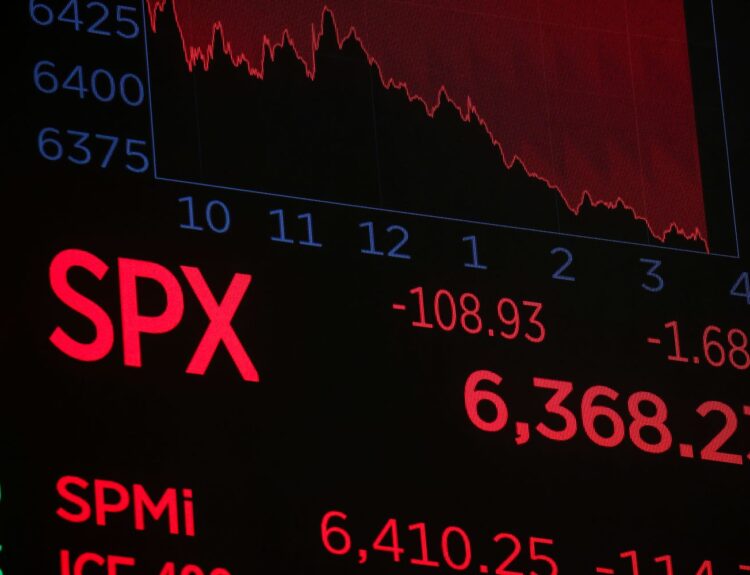
According to Bloomberg, sharp selloffs followed by rapid rebounds have defined markets over the past 18 months, and many on Wall Street expect that pattern to continue next year. The AI boom has delivered outsized gains, but it has also left investors uneasy about timing their exit.
AI dominance is masking underlying risk
Mega-cap tech and chip stocks continue to carry an outsized weight in the S&P 500. Their strong performance in 2025 helped offset weakness elsewhere in the market, keeping overall volatility lower than expected. But that balance is fragile.

Strategists warn that any stumble in major AI or semiconductor names could quickly ripple across the broader market and push volatility gauges sharply higher.
“2025 has generally been a year of rotation and narrow leadership, rather than broad risk on or risk off,” said a derivatives strategist at UBS, adding that this has left volatility prone to sudden spikes when macro risks re-enter the picture.

Fear of missing out clashes with bubble anxiety
A recent Bank of America survey shows that bubble risk is now the top concern among global fund managers. At the same time, fear of missing out remains powerful, especially if the AI trade continues to deliver gains into 2026.
This tension is why strategists expect volatility to stay elevated. Asset bubbles tend to become more unstable as they grow, increasing the likelihood of pullbacks larger than 10 percent. However, those declines may be followed by unusually fast rebounds as investors rush back in.
Volatility trades gain favor
At UBS, strategists argue that betting on higher volatility in tech-heavy benchmarks like the Nasdaq 100 could perform well whether AI continues to surge or begins to unwind. Some see buying Nasdaq volatility while selling S&P 500 volatility as one of the most compelling trades for 2026.

Meanwhile, JPMorgan Chase expects the VIX to average around 16 to 17 next year, but with frequent spikes during risk-off episodes driven by macroeconomic shocks, policy uncertainty, or earnings disappointments.
Dispersion and hedging stay in focus
The popular dispersion trade, which bets on higher volatility in individual stocks compared to the index, is expected to remain active, though some investors now warn it has become crowded. Others are adapting by refining stock selection and timing rather than abandoning the strategy altogether.
Across Wall Street, the message is consistent. 2026 is unlikely to be calm. Conflicting AI narratives, lingering FOMO, and growing concern about valuation extremes are creating a market environment where hedging and volatility strategies matter more than simple direction bets.

AI optimism may keep stocks supported, but bubble fears mean investors should expect bigger swings, faster reversals, and more frequent volatility shocks in 2026. Preparing for both upside and downside scenarios is increasingly seen as essential, not optional.
Disclosure: This article does not represent investment advice. The content and materials featured on this page are for educational purposes only.
Trade, Tariffs, and Treasuries: The Hidden Cost of Trump’s Protectionism
Big Year for Old School Wall Street Trades Gets Lost in AI Hype
Markets Enter Final Stretch of 2025 With Santa Rally Hopes: What to watch