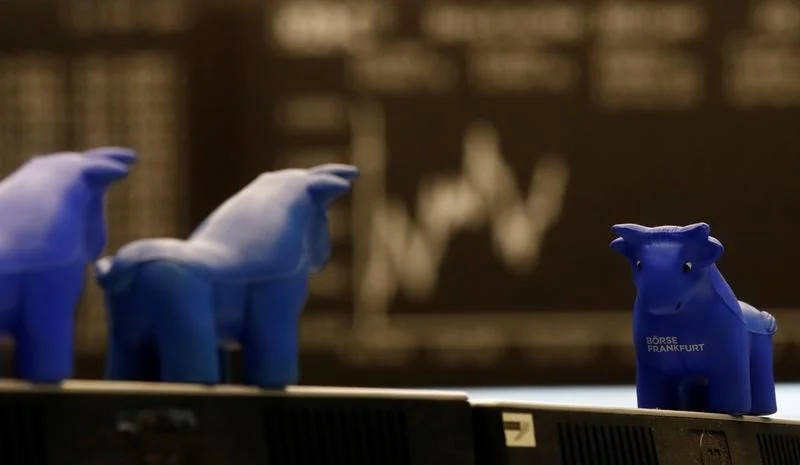

European stocks paused near record levels on Tuesday as investors shifted their attention from easing tensions in the Middle East to the economic challenges that could follow.
The pan-European STOXX 600 edged up 0.1%, holding just above Monday’s record close, while major indexes across Germany, France, Italy, Spain, and the UK posted modest gains.
Markets had rallied strongly after signs of progress toward a potential agreement between the United States and Iran helped ease fears over energy supplies and geopolitical risks. However, investors are now turning their focus back to inflation, interest rates, and corporate profitability.
While the prospect of a lasting truce has supported sentiment, analysts note that Europe still faces a difficult economic backdrop. Higher borrowing costs and elevated operating expenses continue to pressure businesses, raising questions about how much further the rally can extend.
One challenge for European markets is their limited exposure to the sectors driving much of the global stock market’s gains.
Unlike the United States, Europe lacks a large concentration of major technology companies benefiting from the AI infrastructure boom. As a result, European stocks have generally lagged behind markets that have been fueled by demand for artificial intelligence, semiconductors, and data-center investments.
Still, European equities have performed strongly this year. The region’s major indexes are up nearly 8% year-to-date, recovering losses seen during the conflict and narrowing part of the performance gap with Wall Street.
Investors are now watching whether corporate earnings can remain resilient as companies navigate:
- Higher financing costs
- Sticky inflation pressures
- Slower economic growth
- Potential shifts in central bank policy
Among individual stocks, STMicroelectronics fell after announcing a $1.5 billion convertible bond offering, making it one of the weakest performers in early trading.
For now, the relief from geopolitical tensions is helping support markets. But with inflation concerns returning and AI-driven growth largely concentrated outside Europe, the next stage of the rally may depend less on headlines and more on corporate profits and economic data.
Disclosure: This article does not represent investment advice. The content and materials featured on this page are for educational purposes only.