

Nearly 50 percent of American households hold stocks primarily for retirement income. Navigating the world of dividend investing offers middle-aged professionals a proven way to supplement savings while building financial stability. Understanding practical steps from setting clear financial goals to selecting reliable income streams helps you confidently grow a diversified portfolio that aligns with your retirement objectives and risk comfort.
Table of Contents
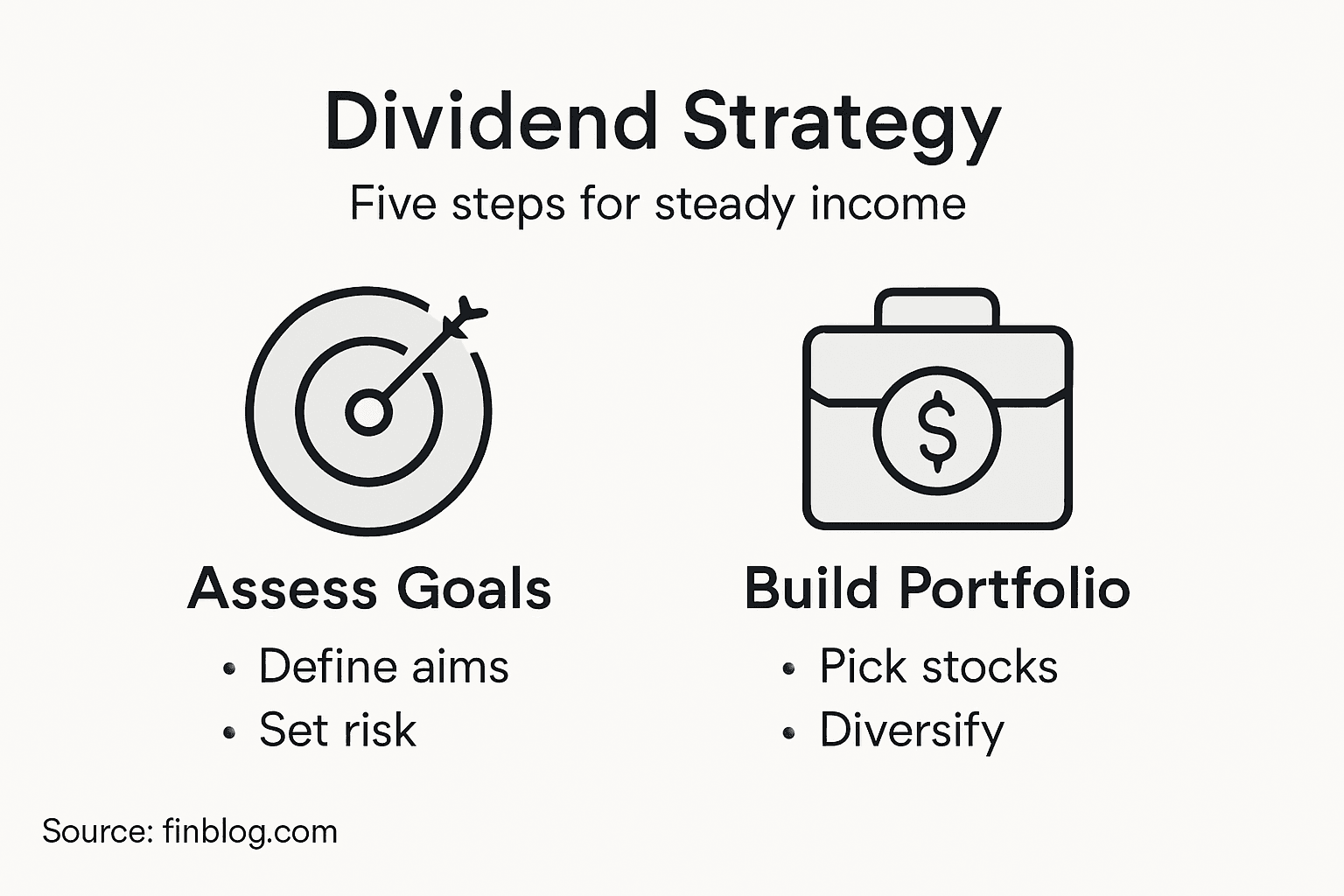
- Step 1: Assess Your Financial Goals And Risk Tolerance
- Step 2: Select Reliable Dividend Stocks And Funds
- Step 3: Build A Diversified Dividend Portfolio
- Step 4: Monitor And Reinvest Dividends Effectively
- Step 5: Evaluate Portfolio Performance And Adjust
Quick Summary
| Key Point | Explanation |
|---|---|
| 1. Assess Financial Goals Carefully | Clearly define your financial objectives to align your investment strategy effectively with your needs and timeline. |
| 2. Choose Reliable Dividend Stocks | Focus on companies that consistently perform well, with strong dividend strategies and low payout ratios for long-term stability. |
| 3. Diversify Your Portfolio | Invest across different sectors to reduce risk and enhance the resilience of your dividend income. |
| 4. Reinvest Dividends Automatically | Leverage the power of compounding by setting up automatic reinvestment of dividends to grow your investment without extra effort. |
| 5. Regularly Monitor and Adjust | Conduct frequent reviews of your portfolio’s performance to make necessary adjustments and respond to market changes. |
Step 1: Assess Your Financial Goals and Risk Tolerance
Successfully mastering dividend investing starts with understanding your unique financial landscape and risk comfort zone. Your investment strategy must align precisely with your personal financial objectives and psychological tolerance for potential market fluctuations.
Begin by critically evaluating your financial goals with clarity and honesty. Are you seeking supplemental retirement income? Aiming to build long-term wealth? Looking to generate passive cash flow? Understanding financial goals fundamentally determines your investment approach. Different dividend strategies suit different objectives.
Risk tolerance represents your psychological and financial capacity to withstand potential investment losses. Investors with longer time horizons can typically absorb more market volatility, while those needing funds soon should adopt more conservative approaches. Risk tolerance reflects investment comfort across multiple dimensions including financial stability, income needs, and personal temperament.
Consider creating a comprehensive assessment worksheet that captures key factors: current income, retirement timeline, existing savings, and emotional response to potential losses. A systematic approach helps prevent emotional investing and supports rational decision making.
Professional Tip: Reassess your financial goals and risk tolerance annually, as life circumstances and market conditions continuously evolve.
Step 2: Select Reliable Dividend Stocks and Funds
Selecting reliable dividend stocks and funds requires a strategic approach that balances potential returns with consistent performance. Your goal is to build an investment portfolio that generates steady income while minimizing risk through careful selection.

Start by focusing on companies with robust dividend investing strategies that demonstrate consistent historical performance. Look for stocks from established companies with strong financial health, stable earnings, and a track record of maintaining or increasing dividend payouts. Key indicators include dividend yield, payout ratio, and the company’s overall financial stability. Blue chip stocks from sectors like utilities, consumer staples, and healthcare often provide more predictable dividend income.
Diversification is crucial when building your dividend portfolio. Consider mixing individual stocks with dividend focused mutual funds or exchange traded funds (ETFs). These funds offer professional management and built in diversification, spreading risk across multiple companies and sectors. Analyze expense ratios, historical performance, and the fund’s specific dividend strategy before investing.
Pay close attention to financial metrics that signal dividend sustainability. A lower payout ratio (typically below 60%) suggests the company can maintain dividends even during economic downturns. Look for companies with consistent earnings growth, strong cash flows, and a history of increasing dividend payments over multiple years.
Here is a summary of key financial metrics used to evaluate dividend stocks:
| Metric | What It Indicates | Ideal Range |
|---|---|---|
| Dividend Yield | Dividend income relative to stock price | 2% – 5% for stability |
| Payout Ratio | Portion of earnings paid as dividends | Below 60% preferred |
| Earnings Growth | Company’s ability to increase profits | Positive, steady trend |
| Cash Flow Stability | Consistency of cash generation | Strong, dependable cash flow |
| Dividend Growth History | Track record of annual dividend raises | Multiple consecutive years |
Professional Tip: Reinvest your dividends automatically to leverage compound growth and accelerate your portfolio’s long term potential.
Step 3: Build a Diversified Dividend Portfolio
Developing a well structured dividend portfolio requires strategic planning and a thoughtful approach to spreading your investment risk across multiple sectors and investment types. Your ultimate goal is creating a resilient income generating portfolio that can weather market fluctuations and provide consistent returns.
Begin by creating a balanced investment portfolio that includes a mix of dividend paying stocks from different sectors. Aim to distribute your investments across industries like technology, healthcare, utilities, consumer staples, and financial services. This sectoral diversity helps protect your investments from sector specific downturns. Consider allocating approximately 20 to 25% of your portfolio to each major sector, ensuring no single industry dominates your investment strategy.
Beyond individual stocks, incorporate dividend focused exchange traded funds (ETFs) and mutual funds to enhance portfolio stability. These investment vehicles offer instant diversification and professional management, reducing your individual stock selection risk. Look for funds with low expense ratios, consistent performance histories, and proven track records of dividend growth. Prioritize funds that have demonstrated ability to maintain steady payouts during economic challenges.
Regularly monitor and rebalance your portfolio to maintain your desired asset allocation. Market changes and individual stock performances can shift your initial investment strategy over time. Conduct quarterly reviews to assess each investment’s performance, dividend sustainability, and alignment with your financial goals. Be prepared to make strategic adjustments as your personal financial situation and market conditions evolve.
Professional Tip: Set up automatic dividend reinvestment to compound your returns and accelerate portfolio growth without additional effort.
Step 4: Monitor and Reinvest Dividends Effectively
Successful dividend investing extends beyond initial stock selection into strategic management of your investment returns. Monitoring and reinvesting dividends systematically can dramatically accelerate your portfolio’s growth potential and create a powerful wealth building mechanism.
Dividend reinvestment strategies play a critical role in compounding investment returns. Most investors choose to automatically reinvest dividends, which allows purchasing additional shares without incurring transaction costs. This approach transforms dividend payouts into continuous portfolio growth, effectively turning your investment income into additional wealth generating assets. Consider setting up a dividend reinvestment plan (DRIP) with your brokerage to automate this process and eliminate manual intervention.
The table below compares manual dividend management with automated dividend reinvestment plans (DRIPs):
| Approach | Key Benefit | Main Drawback | Best For |
|---|---|---|---|
| Manual Management | Allows flexible use of cash | Requires regular attention | Investors seeking flexibility |
| Automated DRIP | Harnesses compounding automatically | Less immediate cash access | Investors focused on long-term growth |
Implement a consistent monitoring strategy that involves quarterly portfolio reviews. During these reviews, assess each investment’s dividend sustainability, track record of dividend increases, and overall financial health. Pay attention to key metrics like payout ratio, earnings growth, and cash flow stability. Be prepared to make strategic adjustments if a stock demonstrates declining dividend potential or weakening financial fundamentals.
Technology can significantly simplify dividend tracking and reinvestment. Many online brokerages and investment platforms offer sophisticated tools that provide real time dividend performance tracking, automatic reinvestment options, and comprehensive portfolio analysis. Leverage these digital resources to maintain a comprehensive view of your dividend income stream and make informed investment decisions.
Professional Tip: Create a separate spreadsheet to track dividend income, reinvestment rates, and year over year portfolio growth for precise financial planning.
Step 5: Evaluate Portfolio Performance and Adjust
Successful dividend investing demands continuous performance monitoring and strategic adjustments. Your investment strategy must remain dynamic, responding to changing market conditions and your evolving financial objectives.
Systematic portfolio review techniques are essential for maintaining investment health. Implement a comprehensive quarterly evaluation process that examines multiple performance metrics. Calculate total returns, which include dividend income and stock price appreciation. Compare your portfolio’s performance against relevant market benchmarks like the S&P 500 or sector specific indices. Track individual stock performance, dividend yield consistency, and overall portfolio income generation.
Focus on key performance indicators that signal potential portfolio adjustments. Assess dividend sustainability by examining payout ratios, earnings growth, and cash flow stability. Watch for warning signs such as consistent dividend cuts, declining earnings, or significant changes in company fundamentals. Be prepared to replace underperforming stocks with more stable dividend generating assets. Maintain a disciplined approach that balances long term investment goals with responsive portfolio management.
Utilize advanced tracking tools and spreadsheets to streamline your performance evaluation. Many online brokerage platforms offer comprehensive analytics that can help you visualize portfolio performance, dividend income trends, and potential reallocation opportunities. Consider creating custom dashboards that provide quick insights into your investment strategy’s effectiveness.
Professional Tip: Set specific performance thresholds that trigger portfolio review and potential rebalancing to maintain disciplined investment management.
Take Control of Your Dividend Investing Journey Today
Mastering the strategy for steady income through dividend investing can feel overwhelming when faced with complex decisions about risk tolerance, stock selection, and portfolio diversification. This article highlights the critical challenges investors face such as aligning investments with personal financial goals, understanding payout ratios, and effectively reinvesting dividends for long term growth. If you are ready to overcome these hurdles and build a resilient dividend portfolio that withstands market fluctuations, expert guidance is essential.
Explore how finblog.com can help you transform these insights into actionable investment plans. Our tailored financial consulting and proven educational resources support you in assessing your financial goals, selecting reliable dividend stocks and funds, and maintaining disciplined portfolio management. Don’t wait for market changes to impact your income stream. Visit finblog.com now to take the next step toward financial confidence and steady dividend income.
Frequently Asked Questions
What financial goals should I consider when mastering dividend investing?
Understanding your financial goals is crucial for aligning your investment strategy. Determine whether you want supplemental retirement income, long-term wealth building, or passive cash flow. Create a worksheet to assess your current income, savings, and timeline to clarify your objectives.
How do I choose reliable dividend stocks and funds?
Select dividend stocks and funds by focusing on companies with strong financial health and stable earnings. Look for a dividend yield between 2% and 5%, and ensure a payout ratio below 60% for sustainability. Diversify your portfolio by mixing individual stocks with dividend-focused mutual funds or exchange-traded funds (ETFs).
How can I build a diversified dividend portfolio effectively?
Create a balanced portfolio by investing in dividend-paying stocks across various sectors like technology, healthcare, and consumer staples. Allocate about 20% to 25% of your portfolio to each major sector to minimize risk. Regularly monitor and adjust your investments to maintain alignment with your financial goals.
What is the best way to monitor and reinvest dividends?
Use an automated dividend reinvestment plan (DRIP) to efficiently manage your dividend income. This allows you to buy additional shares without transaction costs, compounding your returns. Set up quarterly reviews to assess each investment’s performance and ensure it aligns with your strategy.
How often should I evaluate the performance of my dividend portfolio?
Evaluate your portfolio performance quarterly to track total returns and key performance indicators like dividend yield and earnings growth. This regular assessment helps you identify underperforming stocks and make necessary adjustments. Maintain discipline by setting specific performance thresholds for portfolio reviews.
What metrics should I monitor to ensure dividend sustainability?
Focus on key metrics such as payout ratio, earnings growth, and cash flow stability to assess dividend sustainability. A lower payout ratio (ideally below 60%) indicates that a company can maintain its dividends during downturns. Regularly review these indicators to make informed investment decisions.
Recommended
- 7 Best Passive Income Ideas for Smart Investors Explained – Finblog
- Understanding Dividend Investing Guide for Beginners – Finblog
- 7 Safe Investment Options for Your Financial Future – Finblog
- Master Building an Investment Portfolio for Profits – Finblog
- 7 Proven Wealth-Building Strategies for Founders