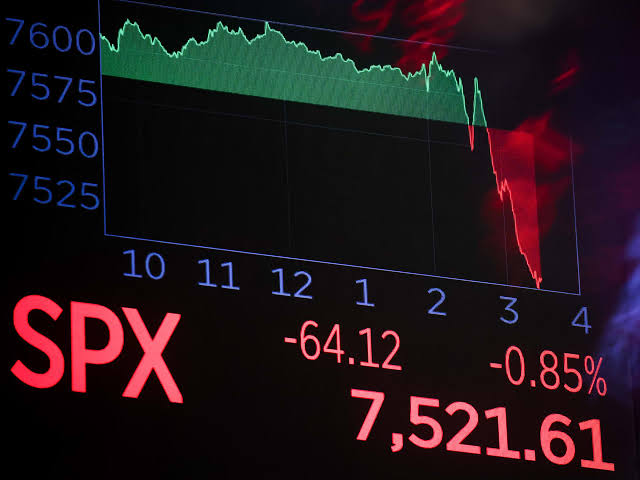
Over 80 percent of American financial analysts acknowledge that rising market volatility has made risk and return management much more complex. In today’s unpredictable environment, understanding how to balance investment risks with expected returns directly impacts portfolio outcomes. This article breaks down proven strategies and metrics that help professionals optimize risk exposure while improving their portfolio’s long-term performance.
Table of Contents
- Defining Risk and Return in Investments
- Key Types of Investment Risks Explained
- Assessing Return Potential Versus Risk Exposure
- Effective Strategies for Managing Volatility
- Common Mistakes When Balancing Portfolios
Key Takeaways
| Point | Details |
|---|---|
| Understanding Risk and Return | Investors should evaluate potential gains against risks, recognizing that higher returns typically come with higher risks. |
| Diversification is Key | Spreading investments across various asset classes and sectors can mitigate unsystematic risk. |
| Use Analytical Metrics | Employ metrics like Standard Deviation and Beta to assess risk exposure and portfolio volatility. |
| Avoid Emotional Investing | Maintain a disciplined approach and avoid impulsive decisions that could harm long-term financial goals. |
Defining Risk and Return in Investments
In financial markets, risk and return represent the fundamental relationship between potential gains and potential losses for investors. Understanding this dynamic is crucial for making informed investment decisions. Risk assessment models demonstrate that investors must carefully evaluate the potential outcomes of their financial strategies.
At its core, investment risk refers to the uncertainty surrounding potential returns, representing the possibility that actual investment performance might differ from expected outcomes. Systematic risk impacts entire market segments, while idiosyncratic risk pertains to specific investments or sectors. Professional investors recognize that comprehensive risk analysis requires examining both broad market trends and individual asset characteristics.
The relationship between risk and return follows a fundamental principle: higher potential returns typically accompany higher potential risks. Modern Portfolio Theory illustrates that investors can optimize their portfolios by strategically balancing different asset types, creating diversification strategies that mitigate overall investment volatility. Mathematical models like the Capital Asset Pricing Model (CAPM) help quantify these relationships, providing frameworks for evaluating potential investments.
Pro tip: When evaluating investment opportunities, always calculate the risk-adjusted return to understand the true potential of an investment beyond its raw percentage gain.
Key Types of Investment Risks Explained
Investors face multiple categories of investment risks that can significantly impact their financial strategies. Comprehensive risk assessment reveals several critical risk types that every financial analyst must understand and manage proactively. These risks range from broad market-level exposures to specific investment-related challenges.

The primary risk categories include systematic risk and unsystematic risk. Systematic risk represents market-wide factors affecting all investments, such as economic downturns, interest rate changes, and geopolitical events. In contrast, unsystematic risk relates to specific industries, companies, or investment sectors. Investors can mitigate unsystematic risk through strategic diversification, spreading investments across different asset classes and sectors to reduce potential vulnerabilities.
Some of the most significant investment risk types include interest rate risk, inflation risk, credit risk, and liquidity risk. Interest rate risk involves potential investment value changes due to market interest rate fluctuations. Inflation risk threatens investment purchasing power over time, while credit risk assesses the potential for borrowers to default on their financial obligations. Liquidity risk emerges when investors cannot quickly convert investments into cash without substantial value loss.
Here is a summary of major risk types and how investors can address them:
| Risk Type | Key Challenge | Common Mitigation Method |
|---|---|---|
| Interest Rate Risk | Value loss from rate fluctuations | Laddering maturities |
| Inflation Risk | Erosion of purchasing power | Investing in real assets |
| Credit Risk | Default by borrowers | Choosing high credit quality assets |
| Liquidity Risk | Difficulty selling without value loss | Maintaining cash reserves |
Pro tip: Create a risk management spreadsheet that tracks and quantifies different risk exposures across your investment portfolio to maintain a comprehensive understanding of potential vulnerabilities.
Assessing Return Potential Versus Risk Exposure
Investors must develop sophisticated strategies for evaluating expected returns against potential risks, recognizing that financial decision-making requires nuanced analysis beyond simple percentage calculations. The process involves understanding complex relationships between potential gains and potential losses across different investment scenarios.
Quantitative risk assessment typically employs several critical metrics, including standard deviation, beta, and probability-weighted return calculations. These mathematical tools help investors translate abstract risk concepts into measurable financial insights. Standard deviation measures investment return volatility, while beta indicates an investment’s sensitivity to broader market movements. Professional analysts use these metrics to construct portfolios that align with specific risk tolerance levels and financial objectives.
This chart compares standard risk assessment metrics used by investors:
| Metric | What It Measures | Main Investment Insight |
|---|---|---|
| Standard Deviation | Volatility of returns | Gauges unpredictability |
| Beta | Market sensitivity | Shows alignment with broader market |
| Probability-Weighted Return | Risk-adjusted scenario analysis | Balances upside and downside outcomes |
The fundamental approach to balancing return potential involves probability analysis and comprehensive scenario planning. Investors must carefully map potential outcomes, assign realistic probability weights, and understand the range of potential financial results. This means not just calculating potential returns, but also comprehensively modeling potential downside scenarios, market fluctuations, and unexpected economic shifts that could impact investment performance.
Pro tip: Create a risk-return matrix that visually maps potential investment scenarios, color-coding different risk levels to help quickly identify optimal investment opportunities.
Effective Strategies for Managing Volatility
Savvy investors recognize that comprehensive financial risk management strategies are essential for navigating unpredictable market conditions. Successful volatility management requires a multifaceted approach that combines proactive planning, sophisticated analytical tools, and flexible investment strategies.
Traditional volatility management techniques center on strategic diversification and risk mitigation. This involves spreading investments across multiple asset classes, sectors, and geographic regions to reduce overall portfolio vulnerability. Professional investors utilize advanced methods like hedging, options strategies, and systematic rebalancing to create resilient investment portfolios that can withstand market fluctuations. By implementing dynamic asset allocation strategies, investors can adjust their portfolios in real-time to respond to changing market conditions.
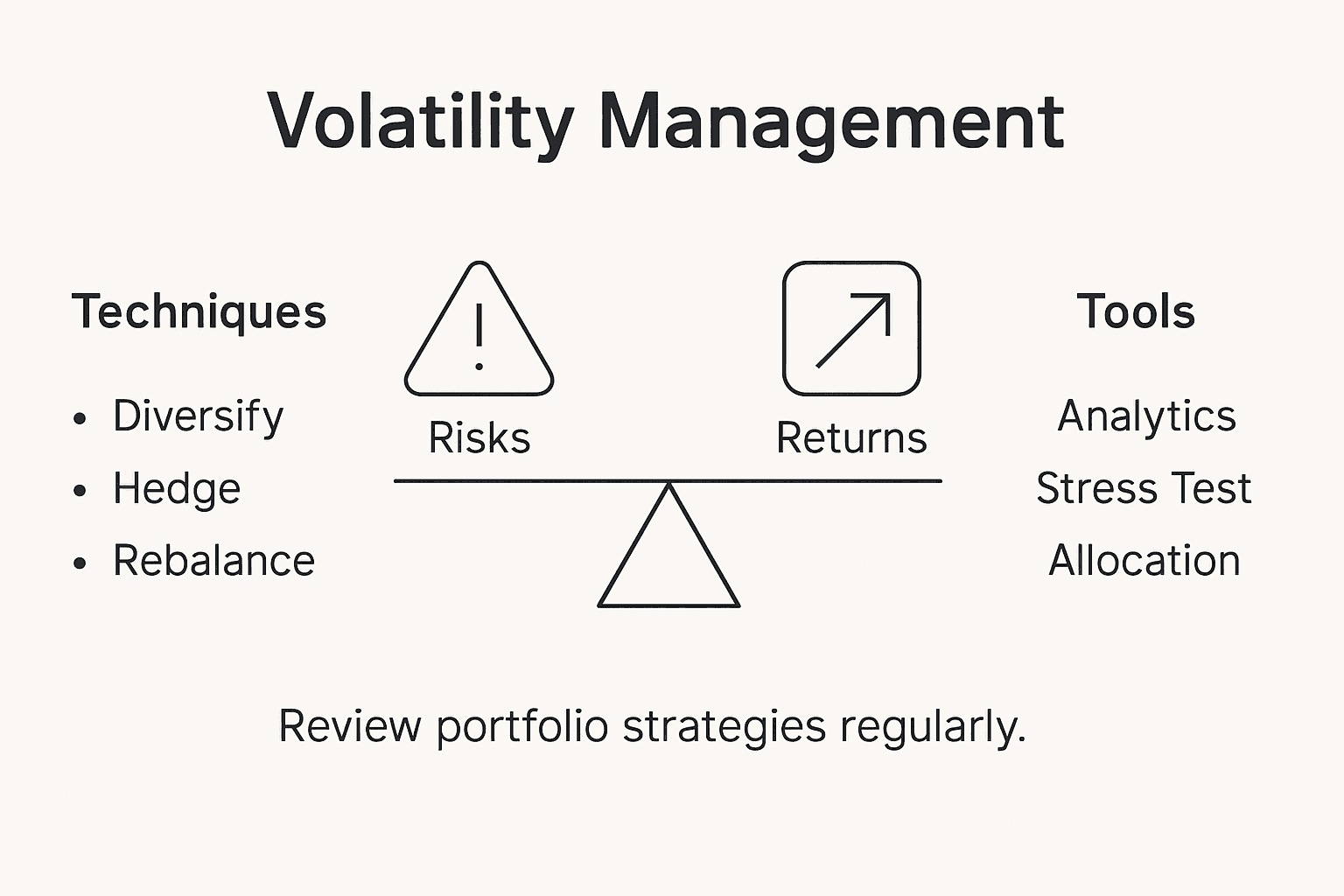
Modern volatility management also leverages cutting-edge technologies and analytical frameworks. Predictive analytics, machine learning algorithms, and stress testing models enable investors to anticipate potential market shifts and develop proactive risk mitigation strategies. These sophisticated tools allow for more nuanced risk assessment, helping investors understand potential downside scenarios and develop contingency plans before market disruptions occur.
Pro tip: Develop a quarterly portfolio stress test that simulates multiple market scenarios to identify potential vulnerabilities and refine your risk management approach.
Common Mistakes When Balancing Portfolios
Investors frequently encounter critical errors when attempting to balance their investment portfolios, often undermining their long-term financial objectives. Common investment mistakes can significantly impact wealth accumulation and risk management strategies, making it essential to recognize and address these potential pitfalls.
One primary mistake is emotional investing, where investors make impulsive decisions based on market fluctuations or personal fears. This approach leads to reactive trading, typically resulting in buying high and selling low—the exact opposite of sound investment strategy. Successful investors maintain disciplined, systematic approaches that prioritize long-term goals over short-term market noise. They develop predetermined investment rules and stick to them, avoiding knee-jerk reactions to market volatility.
Another critical error involves inadequate diversification, which exposes investors to unnecessary risk concentration. Many investors mistakenly cluster investments within a single sector, geographic region, or asset class, creating vulnerabilities that can devastate portfolio performance during market downturns. True diversification requires strategic allocation across multiple uncorrelated asset types, ensuring that potential losses in one area can be offset by stability or gains in another. Professional investors continuously rebalance their portfolios to maintain optimal risk-return profiles.
Pro tip: Conduct a comprehensive portfolio audit every six months to identify potential concentration risks and ensure your investment strategy remains aligned with your financial objectives.
Take Control of Your Investment Risk and Return Today
Navigating volatile markets requires more than luck. This article highlights key challenges like managing systematic and unsystematic risks, measuring metrics such as beta and standard deviation, and avoiding common mistakes like emotional investing and poor diversification. If you feel overwhelmed balancing potential returns with the complex risk factors or struggle to create a disciplined, strategic portfolio, you are not alone.
Unlock expert insights and practical strategies to optimize your investment approach. Learn how to implement dynamic risk management, build a diversified portfolio, and conduct stress tests that can protect your wealth through market ups and downs. Visit finblog.com to connect with tailored financial guidance. Explore how to enhance your knowledge with our resources on risk assessment models and financial risk management strategies.
Are you ready to transform uncertainty into opportunity now Take the first step toward mastering your investment decisions at finblog.com and secure the expert advice you need.
Frequently Asked Questions
What is the relationship between risk and return in investments?
The relationship between risk and return is fundamental in finance; typically, higher potential returns are associated with higher potential risks. Investors must balance their portfolios to optimize returns while managing associated risks.
How can I manage investment volatility effectively?
Effective strategies for managing investment volatility include strategic diversification across multiple asset classes, hedging with options, and utilizing systematic rebalancing to maintain desired risk levels in response to market conditions.
What are the common types of investment risks I should be aware of?
Common types of investment risks include systematic risk (market-wide factors), unsystematic risk (specific industries or sectors), interest rate risk, inflation risk, credit risk, and liquidity risk. Understanding these risks is essential for effective portfolio management.
How can I avoid emotional investing while balancing my portfolio?
To avoid emotional investing, establish disciplined investment rules and adhere to them. Developing a comprehensive investment strategy focused on long-term goals rather than short-term market movements can help maintain a rational approach to investing.