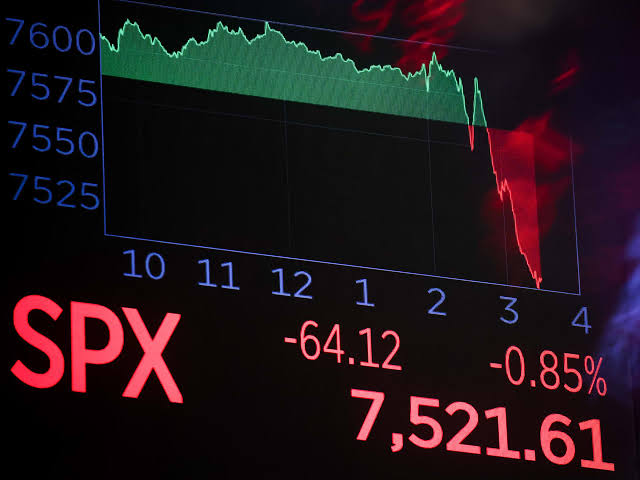

More than 50 percent of American investors admit they feel anxious during periods of market volatility. Price swings can spark uncertainty, challenge long-held beliefs, and trigger emotional decisions that impact financial futures. Knowing how to separate facts from myths empowers you to recognize opportunities and avoid common mistakes, ultimately turning volatility into a more manageable aspect of your investment strategy.
Table of Contents
- Defining Market Volatility and Common Myths
- Types of Market Volatility and Key Triggers
- How Price Swings Affect Investments
- Psychology and Behavior in Volatile Markets
- Risk Management Strategies and Avoiding Pitfalls
Key Takeaways
| Point | Details |
|---|---|
| Understanding Market Volatility | Market volatility measures price fluctuations and indicates both risks and opportunities for strategic investors. |
| Challenging Common Myths | Volatility does not always predict financial collapse; it can create chances for portfolio rebalancing and investment gains. |
| Emotional Impact on Decisions | Investor psychology significantly affects decision-making during volatile periods, leading to common pitfalls such as panic selling. |
| Effective Risk Management | Diversification, strategic asset allocation, and disciplined investment behavior are essential to minimizing risks in volatile markets. |
Defining Market Volatility and Common Myths
Market volatility represents the statistical measurement of price variations within financial markets over specific time periods. When investment prices swing dramatically up or down, investors experience what financial experts call market volatility. These rapid price fluctuations can occur across stocks, bonds, commodities, and other investment vehicles, creating both potential risks and opportunities for strategic investors.
Contrary to popular misconceptions, market volatility isn’t inherently negative. Investors often misunderstand volatility as solely representing financial danger, when in reality, it can signal dynamic market conditions ripe with potential. Investing during market volatility requires understanding that price movements create chances for intelligent portfolio adjustments and potential gains.
Several common myths persist about market volatility that can mislead investors. First, many believe volatile markets always indicate imminent financial collapse. This oversimplification ignores that markets naturally experience cyclical fluctuations. Another prevalent misconception suggests that volatile markets mean investors should immediately sell all holdings. Professional investors recognize volatility as an opportunity to rebalance portfolios, potentially acquiring undervalued assets at reduced prices. Successful navigation requires maintaining a disciplined investment strategy, understanding personal risk tolerance, and avoiding emotional decision-making during turbulent market periods.
Key characteristics of market volatility include unpredictable price swings, increased trading volume, and heightened investor uncertainty. Sophisticated investors develop strategies to manage these fluctuations, such as diversification, dollar-cost averaging, and maintaining a long-term perspective. By understanding volatility’s nuanced nature, investors can transform what appears to be financial chaos into strategic investment opportunities.
Types of Market Volatility and Key Triggers
Market volatility is a complex phenomenon with multiple dimensions that investors must understand to navigate financial landscapes effectively. Financial experts recognize several distinct types of market volatility, each representing unique patterns of price fluctuations and economic interactions. Understanding market trend dynamics reveals the intricate ways different volatility types manifest in financial markets.
Traditionally, market volatility is categorized into three primary types: historical volatility, implied volatility, and future volatility. Historical volatility measures past price movements, analyzing how significantly an asset’s price has varied over previous time periods. Implied volatility represents market expectations about potential future price changes, typically derived from options pricing and investor sentiment. Future volatility attempts to predict potential price variations based on complex statistical models and economic forecasting techniques.
Key triggers for market volatility span multiple interconnected domains. Economic indicators like unemployment rates, inflation data, and Federal Reserve policy announcements can dramatically shift market sentiment. Geopolitical events such as international conflicts, trade negotiations, and significant policy changes create substantial uncertainty that translates into market price fluctuations. Corporate earnings reports, technological disruptions, and unexpected global events like pandemics can also generate significant market volatility, demonstrating the complex and multifaceted nature of financial ecosystems.
Investors must develop sophisticated strategies to manage these volatility triggers. Diversification remains a critical approach, spreading investment risk across multiple asset classes and sectors. Maintaining a long-term perspective, understanding personal risk tolerance, and avoiding emotional decision-making during turbulent periods are essential skills. By recognizing the nuanced characteristics of different volatility types and their potential triggers, investors can transform market uncertainty from a potential threat into a strategic opportunity for portfolio optimization.
How Price Swings Affect Investments
Price swings fundamentally transform investment landscapes, creating complex ripple effects across financial portfolios. Idiosyncratic risk analysis reveals how individual stock price movements interact with broader market dynamics, challenging investors to develop sophisticated risk management strategies. These price fluctuations represent more than simple numerical changes; they reflect intricate economic signals, investor sentiment, and underlying market conditions.

Different investment types experience price swing impacts uniquely. Stocks demonstrate the most pronounced volatility, with individual share prices potentially shifting dramatically based on corporate performance, sector trends, and macroeconomic factors. Bonds typically exhibit more stable price movements, though they remain sensitive to interest rate changes and economic indicators. Investor behavior research demonstrates that different investor categories respond distinctly to price swings, with institutional investors often displaying more measured reactions compared to individual retail investors.
The psychological impact of price swings cannot be understated. Sudden market movements trigger emotional responses that can lead investors to make suboptimal decisions. Panic selling during downturns or impulsive buying during rapid price increases represent common investor pitfalls. Successful investors develop emotional resilience, maintaining a disciplined approach that views price swings as opportunities rather than threats. Strategic approaches like dollar-cost averaging and maintaining diversified portfolios help mitigate the negative psychological impacts of market volatility.
Understanding price swing mechanics requires recognizing their multifaceted nature. Economic indicators, corporate earnings, geopolitical events, and technological disruptions all contribute to price fluctuations. Professional investors treat these swings as data points rather than catastrophic events, using analytical tools to assess potential risks and opportunities. By maintaining a long-term perspective and developing robust investment strategies, investors can transform market volatility from a source of anxiety into a potential avenue for strategic portfolio growth.
Psychology and Behavior in Volatile Markets
Investor psychology plays a critical role in navigating market volatility, transforming financial decision-making from purely analytical processes into complex emotional journeys. Stock market volatility spillover dynamics reveal how investor emotional responses can amplify market fluctuations, creating cascading effects that extend far beyond individual investment choices. Emotional reactions like fear, greed, and panic frequently override rational thinking, leading investors to make suboptimal decisions during turbulent market periods.
Behavioral finance research demonstrates that investors typically fall into predictable psychological traps during volatile markets. Confirmation bias causes investors to seek information that validates their existing beliefs, potentially ignoring critical warning signs. Herding behavior emerges when investors follow crowd sentiment rather than conducting independent analysis, often resulting in systematic market overreactions. Advanced market prediction techniques increasingly incorporate psychological modeling to understand these complex behavioral patterns, recognizing that human emotion is a fundamental market driver.
Successful investors develop robust psychological strategies to counteract emotional market responses. Techniques like establishing predetermined investment rules, maintaining diversified portfolios, and practicing disciplined risk management help mitigate impulsive decision-making. Professional investors view market volatility as an opportunity rather than a threat, maintaining emotional equilibrium by focusing on long-term strategic objectives. By understanding personal psychological triggers and implementing structured investment approaches, individuals can transform market uncertainty from a source of anxiety into a potential avenue for strategic growth.
Understanding individual risk tolerance becomes paramount in managing psychological market responses. Some investors naturally feel more comfortable with market fluctuations, while others experience significant stress during volatile periods. Developing self-awareness about personal emotional reactions, combined with a systematic approach to investment decision-making, allows investors to navigate market uncertainties more effectively. The most successful investors treat market volatility as a complex psychological challenge, requiring continuous learning, emotional intelligence, and a disciplined approach to financial decision-making.
Risk Management Strategies and Avoiding Pitfalls
Successful investment risk management requires a multifaceted approach that goes beyond simple asset allocation. Financial risk management practices emphasize understanding individual risk tolerance, developing comprehensive strategies, and maintaining disciplined investment behaviors. Effective risk management involves proactively identifying potential vulnerabilities in investment portfolios and implementing structured approaches to mitigate potential losses.
Investors can employ several critical strategies to minimize portfolio risks. Diversification remains the cornerstone of risk management, spreading investments across multiple asset classes, sectors, and geographic regions to reduce exposure to single-point failures. Strategic asset allocation allows investors to balance potential returns with acceptable risk levels, creating portfolios that can withstand market fluctuations. Implementing stop-loss orders, maintaining an emergency cash reserve, and regularly rebalancing investment portfolios are additional techniques that help protect against unexpected market downturns.
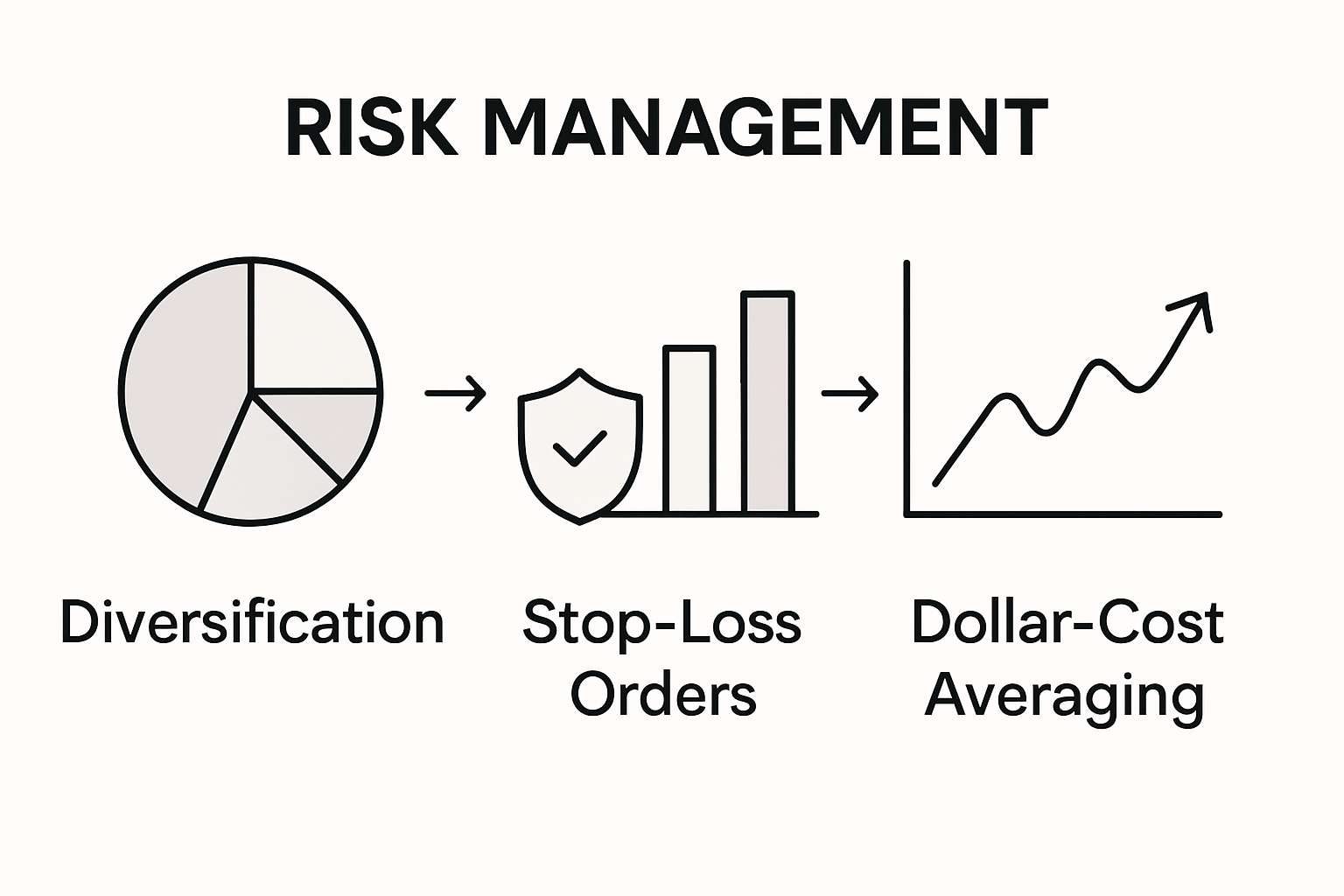
Common investment pitfalls often stem from emotional decision-making and lack of strategic planning. Investors frequently make critical mistakes like attempting to time the market, chasing recent performance trends, or failing to understand their personal risk tolerance. Overconfidence can lead to concentrated investments in single sectors or stocks, dramatically increasing portfolio vulnerability. Successful investors develop a disciplined approach that prioritizes long-term strategic objectives over short-term market noise, maintaining consistent investment principles regardless of temporary market conditions.
Risk management extends beyond financial strategies and encompasses psychological preparedness. Understanding personal emotional triggers, developing a clear investment philosophy, and maintaining realistic expectations are crucial components of sustainable investment success. Investors should continuously educate themselves, stay informed about market trends, and remain adaptable to changing economic landscapes. By combining analytical rigor with emotional intelligence, investors can transform potential market risks into calculated opportunities for portfolio growth and financial stability.
Master Market Volatility with Expert Guidance
Navigating market volatility requires more than just understanding price swings and investor psychology. This article highlights key challenges like managing unpredictable price movements, countering emotional decision-making, and developing solid risk management strategies. If you find it difficult to balance fear and opportunity during turbulent times or need a clear plan to protect and grow your portfolio, you are not alone.
At finblog.com, we specialize in turning market uncertainty into your strategic advantage. Explore how our financial risk management guide can help you implement diversification and disciplined investment tactics. Learn more about mastering investing during market volatility and discover tools to strengthen your emotional resilience. Don’t wait for the next market shift to catch you off guard. Visit finblog.com today and take the first step toward confident and informed investing.
Frequently Asked Questions
What is market volatility?
Market volatility refers to the statistical measurement of price fluctuations in financial markets over specific periods, indicating how dramatically investment prices can swing up or down.
How can investors manage market volatility?
Investors can manage market volatility through strategies like diversification, dollar-cost averaging, and maintaining a long-term investment perspective to reduce risk and capitalize on potential opportunities.
Should I sell my investments during periods of high volatility?
Selling investments during high volatility may not always be the best choice. Professional investors often view volatility as an opportunity to rebalance portfolios and acquire undervalued assets instead of panicking and selling holdings.
What psychological factors influence investor behavior during market volatility?
Psychological factors such as fear, greed, and panic can significantly impact investment decisions during volatile markets, often leading to emotional responses that may result in suboptimal choices like panic selling or impulsive buying.