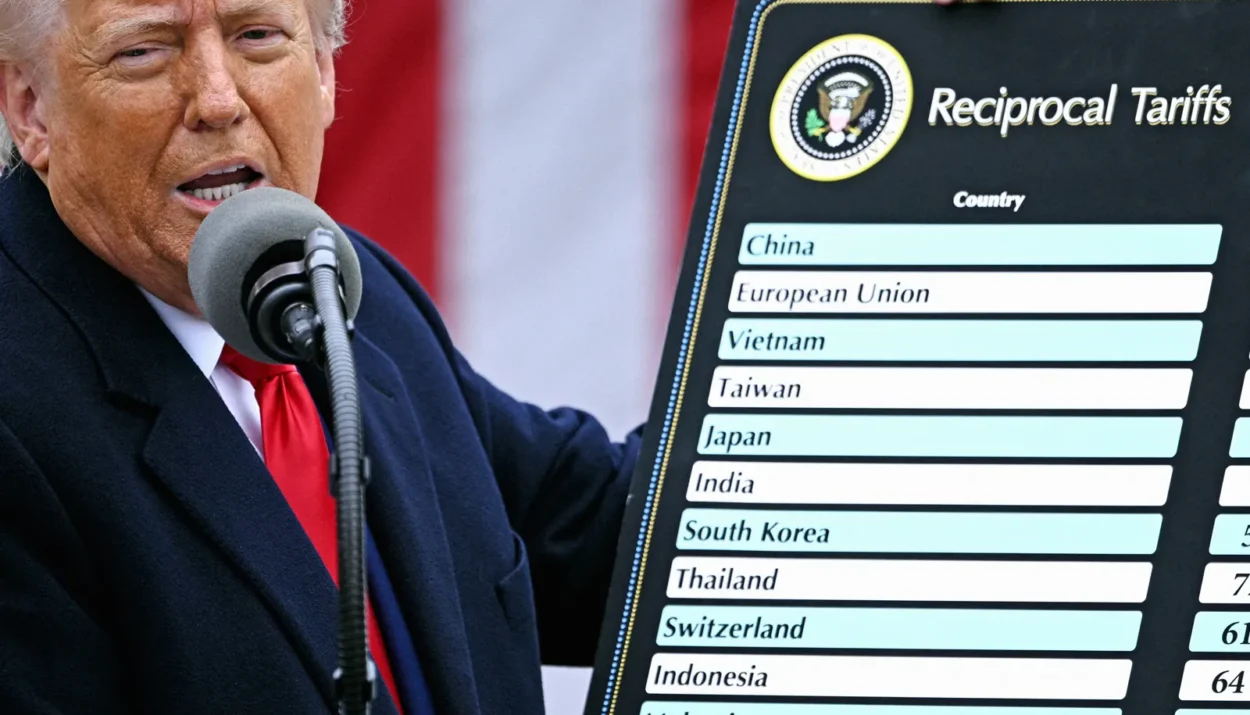

The White House has announced that new tariffs will cover 99.4% of imported goods from 60 countries. Still, a growing list of exemptions means some of the most strategically important products—particularly technology hardware—remain largely shielded from the new duties.
According to Reuters, the administration added 471 products to its tariff exemption list. Combined with previous exclusions, exempted goods now account for about 54% of the total value of US imports, based on an analysis by the American Action Forum.
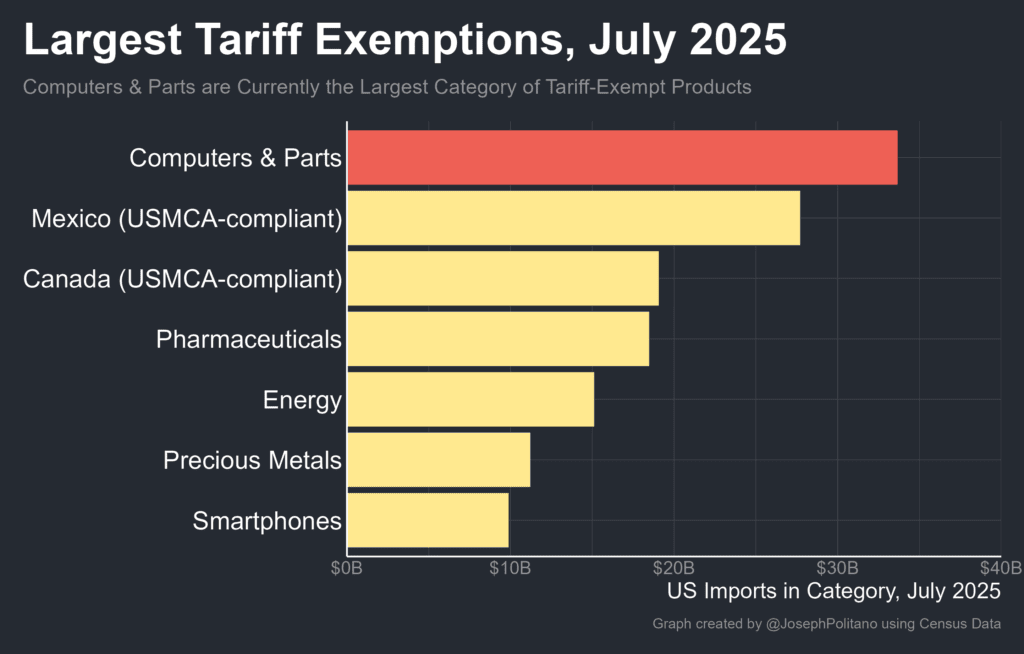
Technology has emerged as the biggest beneficiary of those exemptions.
Data compiled by Joseph Politano, author of the Apricitas Economics newsletter, shows that the US imported $58 billion worth of computer hardware tariff-free in May. That was nearly three times the combined value of the next three largest exempt import categories, underscoring how critical technology equipment remains despite Washington’s tougher trade stance.
The exemptions largely cover computer hardware, semiconductors, servers, and other electronic components that support the rapid expansion of artificial intelligence infrastructure. Keeping those products outside the tariff regime helps limit costs for US technology companies investing heavily in AI data centres and computing capacity.
The contrast highlights a growing gap between the administration’s trade rhetoric and the practical implementation of its tariff policy. While officials continue to promote sweeping import levies aimed at reshaping global supply chains, exemptions have steadily expanded for products considered essential to US economic and technological competitiveness.
For investors, the exemptions suggest that the AI supply chain remains a priority despite broader trade tensions. Companies involved in semiconductors, computing hardware, and data-centre infrastructure may face less direct pressure from tariffs than manufacturers in other industries, helping preserve investment in AI even as trade barriers increase elsewhere.
Disclosure: This article does not represent investment advice. The content and materials featured on this page are for educational purposes only.