

The global race to develop artificial intelligence is creating a shortage of high-end memory chips, raising concerns that countries could soon compete for supplies in the same way they have for advanced AI processors.
Speaking at an industry event, SK Group Chairman Chey Tae-won warned that governments are increasingly treating access to AI memory chips as an issue of economic security, as demand continues to outpace supply.
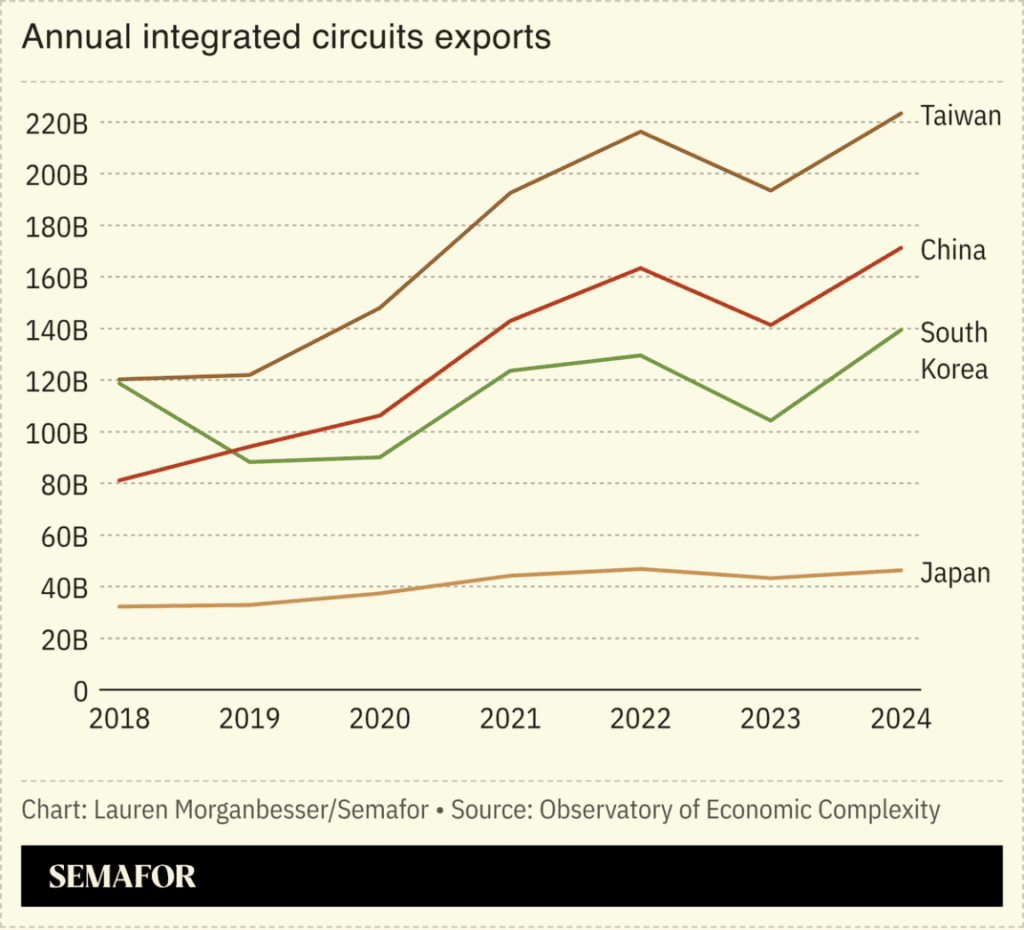
According to Chey, soaring prices for high-bandwidth memory (HBM) chips—critical components used in AI servers and data centers—have triggered what he described as “near-chaotic lobbying” by countries seeking to secure long-term supplies.
“Governments will start pressuring other governments soon,” Chey said, warning that competition for memory chips could become a geopolitical issue.
The comments come as the AI boom continues to drive unprecedented demand for hardware. Companies including Nvidia, AMD, and major cloud providers rely heavily on advanced memory chips produced by manufacturers such as SK Hynix, Samsung Electronics, and Micron Technology.
While export controls have largely focused on restricting access to advanced AI processors, Chey suggested that memory chips may become the next strategic technology as shortages intensify.
Higher memory prices could also have broader economic consequences. As AI infrastructure becomes more expensive to build, technology companies may face rising costs, potentially slowing AI deployment and adding inflationary pressure across parts of the global economy.
For investors, the warning underscores that the AI opportunity extends beyond chip designers. Memory manufacturers remain some of the biggest beneficiaries of AI spending, but persistent supply constraints could also increase geopolitical tensions and reshape global semiconductor supply chains.
Disclosure: This article does not represent investment advice. The content and materials featured on this page are for educational purposes only.