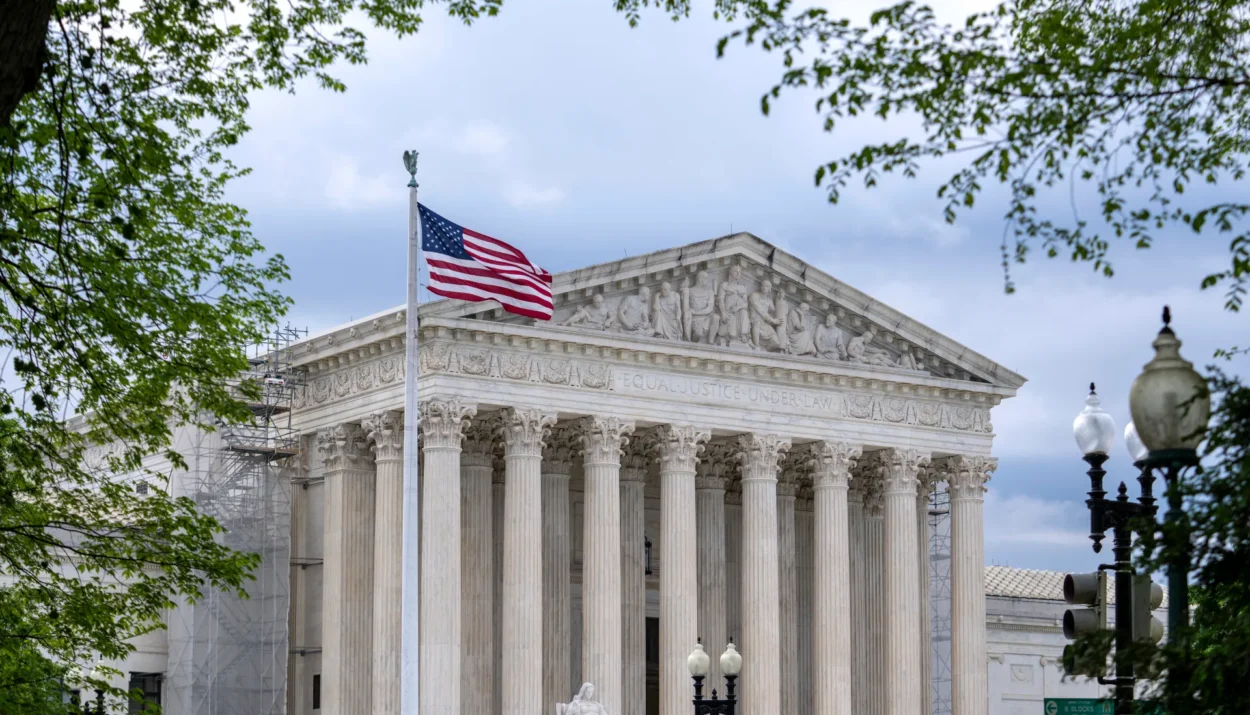

A recent US Supreme Court ruling could significantly reshape campaign financing by allowing political parties to spend unlimited amounts to support their own candidates, a changeexpected to increase election spending in the coming years.
The court struck down federal limits on coordinated party expenditures, overturning a 2001 decision that had capped how much national party committees could spend on advertising and other campaign activities coordinated with candidates. The majority ruled that the spending limits violated the First Amendment.
The decision does not remove existing restrictions on direct donations. Political parties can still contribute only up to $5,000 per election directly to a candidate, while independent groups such as Super PACs remain free to spend unlimited amounts as long as they do not coordinate with campaigns.
The ruling is expected to have the biggest impact on how political parties allocate their resources.
According to campaign finance data analyzed by Quiver Quantitative, Democratic committees have historically relied more heavily on coordinated expenditures than their Republican counterparts. However, the National Republican Senatorial Committee (NRSC) has already indicated it plans to expand coordinated spending following the court’s decision.
The broader trend also points to rapidly growing campaign fundraising. Over the past decade, congressional candidates have seen campaign receipts roughly triple, with individual donors remaining the largest source of funding. At the same time, Super PACs and Hybrid PACs have accumulated billions of dollars, giving them an increasingly influential role in US elections.
While unlimited coordinated spending could push overall campaign costs higher, individual contributions are still expected to remain the primary source of direct funding for candidates. Independent political groups are also likely to continue playing a major role through advertising and voter outreach.
For investors, the ruling is another reminder that politics is becoming increasingly capital-intensive. As campaign spending rises ahead of future elections, industries tied to political advertising, media, data analytics, and campaign technology could see stronger demand during election cycles.
Disclosure: This article does not represent investment advice. The content and materials featured on this page are for educational purposes only.