
The US labor market remains resilient despite rising inflation and geopolitical uncertainty, but economists warn that the Iran conflict and energy shock could quickly change the outlook.
The latest economic data shows a surprisingly stable US labor market, even as inflation pressures build and global tensions escalate following the conflict involving Iran.
New filings for unemployment benefits rose modestly, but not enough to signal weakness. At the same time, inflation data suggests price pressures are strengthening, raising concerns for both policymakers and investors.
Labor Market: Stable, But Fragile
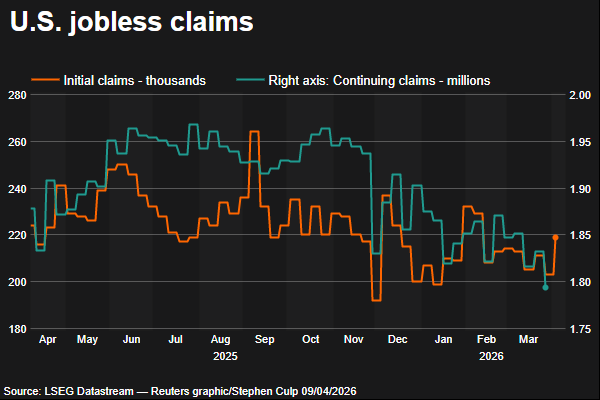
Weekly jobless claims increased by 16,000 to 219,000, slightly above expectations, but still within a range that indicates low layoffs and steady employment conditions.
At the same time, continuing claims dropped to 1.794 million, the lowest level since May 2024, suggesting that many workers are still finding jobs or exiting unemployment rolls.
Economists describe the current environment as a “low-hire, low-fire” economy:
- Companies are cautious about hiring
- But also reluctant to lay off workers
- Uncertainty from tariffs and geopolitics is slowing decision-making
So far, there is no clear sign of labor market deterioration, even with rising global risks.
Inflation: Quietly Heating Up
While employment remains stable, inflation is becoming a bigger concern. The core PCE price index, the Federal Reserve’s preferred inflation measure, rose 0.4% for the second straight month, with annual inflation at 3.0%.
This is well above the Fed’s 2% target. Key drivers include:
- Rising energy costs, partly linked to war fears
- Higher prices for transportation, clothing, and services
- Increasing pressure from Trump’s tariffs and trade policies
Economists now expect inflation to accelerate further, with March CPI projected to rise around 1.0% monthly.
War Impact: A Growing Economic Risk
Even before the Iran war escalated, the US economy was showing signs of slowing momentum.
- GDP growth slowed sharply to 0.5% in Q4
- Consumer spending growth weakened
- Household savings dropped to 4.0%, signaling financial pressure
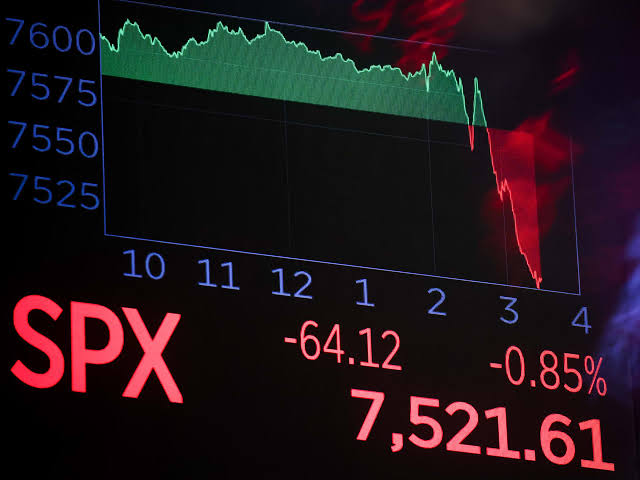
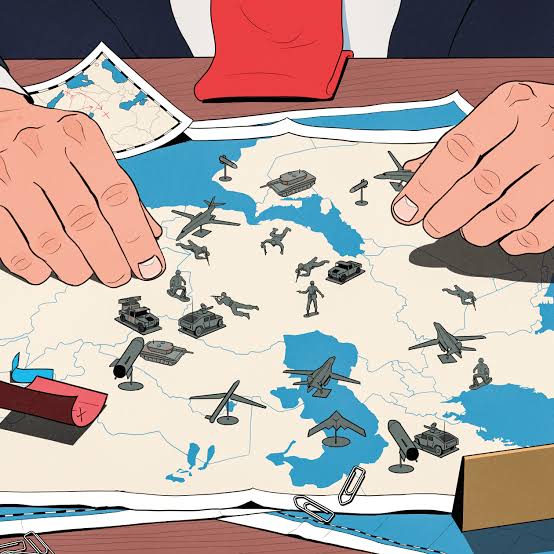
Now, the war adds another layer of uncertainty. Oil prices surged above $4 per gallon gasoline equivalent, while the stock market lost $3.2 trillion in March, highlighting how quickly geopolitical shocks can hit the economy.
Although a temporary ceasefire has been announced, economists warn it may not last and risks remain elevated.
Federal Reserve: Stuck Between Growth and Inflation
The Federal Reserve now faces a difficult balancing act. On one hand:
- The labor market is stable
- Economic growth is slowing
On the other:
- Inflation remains too high
- Energy shocks could worsen price pressures
Some policymakers are already signaling that rate hikes may still be needed, while expectations for rate cuts have significantly declined.
As one economist put it, “the Fed is running out of excuses” for missing its inflation target.
Market Reaction: Calm for Now
Despite the risks, markets reacted relatively positively:
- Stocks moved higher
- Treasury yields eased
- The dollar weakened
Investors appear to be betting that:
- The labor market will hold
- Inflation will not spiral out of control
- And geopolitical tensions may stabilize
The US economy is holding up better than expected, supported by a resilient labor market. But the situation is far from stable.
Inflation is rising. Growth is slowing. And the Iran conflict has introduced a new, unpredictable risk that could quickly shift the outlook. For now, the economy is balanced on a thin line between resilience and vulnerability.
Disclosure: This article does not represent investment advice. The content and materials featured on this page are for educational purposes only.
Related: How Big Tech Created the 2025 AI Boom on Debt
What’s Ahead for Stocks and Gold in 2026? What Markets and Experts Are Watching
Stocks Look Bullish Entering 2026 — But What Could Go Wrong?
FOMO vs. Bubble Angst Signals More Stock Volatility in 2026
Gold Breaks $4,400 as Silver, Copper and Platinum Hit Record Highs: What Comes Next
Markets Enter Final Stretch of 2025 With Santa Rally Hopes: What to watch