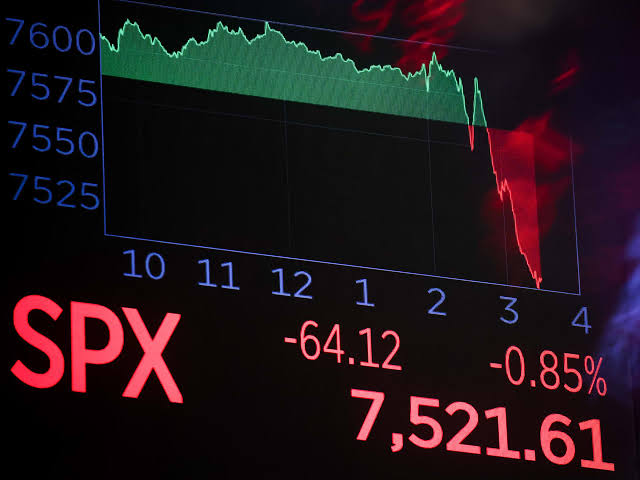

Markets delivered unexpected returns in 2025, defying early predictions of slowdown. The S&P 500 climbed nearly 18% despite trade tensions and policy shifts creating volatility throughout the year. Technology investments and artificial intelligence capital spending drove much of this growth, yet concentration risks emerged as top performers dominated indices. International equities surprised many investors by outpacing U.S. stocks, while a historic shift from mutual funds to active ETFs reshaped how professionals and individuals build portfolios. Understanding these dynamics helps you position your investments for the years ahead.
Table of Contents
- Key takeaways
- Understanding 2025 market performance and its drivers
- Global equities and diversification beyond U.S. markets
- Shifting investor preferences: rise of active ETFs and evolving portfolio allocations
- Expectations for future returns and practical investing approaches
- Explore more insights and tools at Finblog
- Frequently asked questions about investing in 2025
Key Takeaways
| Point | Details |
|---|---|
| Strong 2025 returns | The S and P 500 rose about 17 to 18 percent in 2025 despite volatility from trade policy shifts. |
| International outperformance | International equities outpaced U S stocks, with emerging markets delivering about 26 percent, underscoring the value of global diversification. |
| Shift to active ETFs | A historic shift from mutual funds to active ETFs reshaped how investors build portfolios. |
| Concentration risk persists | Concentration in a small group of mega cap stocks raised risk and suggests future returns may be more muted. |
Understanding 2025 market performance and its drivers
The S&P 500 returned approximately 17-18% in 2025, a robust outcome that surprised many analysts who anticipated weaker results. Early in the year, tariff announcements and shifting trade policies created sharp swings in equity prices. Investors worried about potential economic slowdowns and policy uncertainty, yet markets recovered as corporate earnings remained resilient and technology spending accelerated.
Artificial intelligence infrastructure became the dominant investment theme driving market gains. Companies across sectors poured capital into AI capabilities, data centers, and computing power. This spending spree benefited a concentrated group of technology giants, creating both opportunity and risk. The top ten stocks in major indices accounted for an outsized portion of total returns, raising questions about portfolio concentration.
Key factors shaping 2025 market outcomes:
- Technology sector concentration amplified both gains and vulnerability to corrections
- Federal Reserve policy shifts influenced bond yields and equity valuations throughout the year
- Corporate profit margins held up better than expected despite wage pressures
- Energy markets stabilized after volatile swings in commodity prices
The AI boom brings fresh risks alongside opportunities, as valuations in certain technology subsectors reached levels that demand scrutiny. Investors who concentrated portfolios in a handful of mega-cap names enjoyed strong returns but accepted elevated risk. Diversification strategies that looked beyond the largest U.S. companies provided more balanced exposure to global growth.
“Market concentration in 2025 reached levels not seen since the late 1990s, with the top five stocks representing over 25% of S&P 500 market capitalization.”
Understanding these drivers helps you evaluate whether recent performance patterns will persist. High valuations in dominant sectors suggest future returns may moderate, while overlooked areas of the market could offer better risk-adjusted opportunities. The lesson from 2025 is clear: strong headline returns don’t eliminate the need for thoughtful portfolio construction and risk management.
Global equities and diversification beyond U.S. markets
International stocks delivered exceptional results in 2025, challenging the long-standing dominance of U.S. equities. Emerging markets returned approximately 26%, significantly outpacing domestic indices and rewarding investors who maintained global exposure. This performance shift stemmed from multiple factors, including valuation gaps, currency movements, and reduced concentration risk compared to U.S. markets.

Lower starting valuations in international markets provided a tailwind for returns. While U.S. stocks traded at premium price-to-earnings multiples, many developed and emerging market equities offered more attractive entry points. A weaker U.S. dollar throughout much of 2025 further boosted returns for American investors holding foreign assets, as currency translation added to equity gains.
Advantages of international equity exposure in 2025:
- Reduced dependency on U.S. mega-cap technology performance
- Access to faster-growing economies in Asia and Latin America
- Diversification across different regulatory and economic cycles
- Valuation opportunities in markets trading below historical averages
The stock market reshaping that occurred in 2025 highlighted how global capital flows respond to relative value. Investors increasingly recognized that concentration in U.S. markets created vulnerability, while international alternatives offered compelling risk-reward profiles. Emerging markets benefited from infrastructure investment, growing middle classes, and improving corporate governance standards.
| Market segment | 2025 approximate return | Key drivers |
|---|---|---|
| U.S. large cap | 17-18% | AI spending, tech concentration |
| Emerging markets | 26% | Valuations, currency, diversification |
| Developed international | 15-20% | Lower valuations, sector mix |
| U.S. small cap | 8-12% | Economic uncertainty, rate sensitivity |
Emerging markets prospects for 2026 remain compelling for investors willing to accept higher volatility. The performance gap between U.S. and international equities in 2025 demonstrates that diversification isn’t just a risk management tool. It’s a return enhancement strategy when market leadership rotates. Building portfolios with meaningful international exposure positions you to capture opportunities wherever they emerge globally.
Currency trends and geopolitical developments will continue influencing relative performance across regions. Investors should monitor valuation spreads, economic growth differentials, and policy changes that affect cross-border capital flows. The 2025 experience proves that home country bias can cost you significant returns when global markets offer superior opportunities.
Shifting investor preferences: rise of active ETFs and evolving portfolio allocations
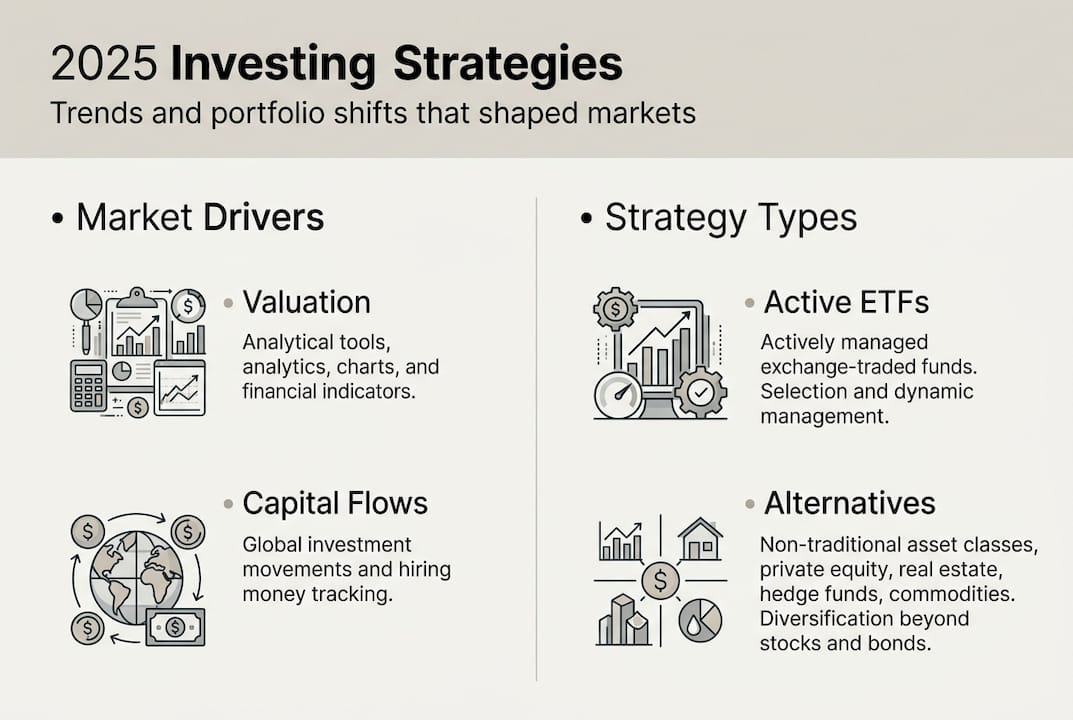
A dramatic transformation in investment vehicles defined 2025, as active ETFs attracted record $580B inflows while active mutual funds experienced $640B in outflows. This shift represents more than a preference for one wrapper over another. It reflects changing investor priorities around costs, transparency, and tax efficiency. Active ETFs combine the benefits of professional management with the structural advantages that made passive ETFs popular.
The ETF structure offers daily transparency into holdings, allowing investors to see exactly what they own. Lower expense ratios compared to traditional mutual funds appeal to cost-conscious investors, while tax efficiency provides an additional advantage. Active managers recognized these benefits and rapidly converted strategies to the ETF format, giving investors access to sophisticated approaches in a more efficient package.
Steps to evaluate active versus passive approaches:
- Assess your conviction in manager skill to justify higher fees
- Compare after-tax returns, not just pre-tax performance
- Evaluate whether market segments are efficiently priced or offer alpha opportunities
- Consider your time horizon and ability to withstand tracking error
- Review historical performance during different market conditions
Beyond vehicle selection, portfolio strategies evolved significantly in 2025 as investors recognized limitations of traditional 70/30 stock-bond allocations. The historical negative correlation between stocks and bonds broke down in recent years, reducing diversification benefits. This prompted a search for alternative sources of return and risk mitigation.
Liquid alternatives, commodities, and digital assets gained acceptance as portfolio diversifiers. These assets offer different return drivers than traditional stocks and bonds, potentially improving risk-adjusted performance. Short-duration income strategies attracted investors seeking yield without excessive interest rate risk, while commodity exposure provided inflation protection.
| Portfolio component | Traditional allocation | Emerging allocation |
|---|---|---|
| U.S. equities | 50-60% | 35-45% |
| International equities | 10-15% | 20-25% |
| Bonds | 30-35% | 20-25% |
| Alternatives | 0-5% | 10-15% |
| Cash/short duration | 0-5% | 5-10% |
Pro Tip: Don’t abandon traditional diversification principles when adding alternatives. Start with small allocations to new asset classes and increase exposure gradually as you understand their behavior in different market environments.
The winning diversification strategies in 2026 will likely build on lessons from 2025. Investors who maintained discipline during volatility and rebalanced systematically captured opportunities as market leadership rotated. The shift toward active ETFs and broader diversification reflects a maturing understanding of portfolio construction in an environment where traditional relationships between asset classes have changed.
This evolution doesn’t mean passive investing is obsolete or that every portfolio needs complex alternatives. It means thoughtful investors are expanding their toolkit and questioning assumptions that worked in previous decades. The flexibility to adjust allocations as market conditions change becomes increasingly valuable when historical patterns no longer provide reliable guidance.
Expectations for future returns and practical investing approaches
Looking ahead, investors face a sobering reality: expected 10-year S&P 500 returns hover around 4.2% annually, well below historical averages. Developed market equities and bonds similarly face muted performance expectations, with projections in the mid-single digits and low single digits respectively. High current valuations across most asset classes compress future return potential, as mean reversion suggests prices will eventually align with fundamentals.
These forecasts don’t predict doom, but they demand realistic planning. If you’ve built financial plans assuming 8-10% annual returns, you may need to adjust expectations or increase savings rates. Lower expected returns make portfolio efficiency more critical, as every percentage point of unnecessary cost or tax drag matters more when baseline returns are modest.
Practical strategies for a lower-return environment:
- Minimize investment costs through low-fee vehicles and tax-efficient structures
- Extend your investment horizon to ride out volatility and capture compounding
- Increase diversification across geographies, sectors, and asset classes
- Consider systematic rebalancing to capture volatility premiums
- Focus on factors with historical return premiums like value and quality
Active management gains importance when passive market returns disappoint. Skilled managers who can identify mispriced securities or time tactical shifts may justify their fees in an environment where beta alone produces limited gains. However, distinguishing genuinely skilled managers from lucky ones remains challenging, requiring rigorous due diligence.
Tactical asset allocation, adjusting portfolio weights based on changing market conditions, offers another approach to enhance returns. This strategy requires discipline to avoid emotional decisions and a framework for identifying genuine opportunities versus noise. Personal finance trends increasingly emphasize holistic planning that integrates investment strategy with tax planning, estate considerations, and risk management.
Pro Tip: Use lower return expectations as motivation to optimize controllable factors. You can’t control market returns, but you can control costs, taxes, and behavioral mistakes that erode wealth over time.
The gap between historical returns and future expectations creates challenges for retirement planning and wealth accumulation. Younger investors may need to save more aggressively, while retirees might adjust withdrawal rates to preserve capital. These adjustments aren’t pleasant, but they’re necessary when market fundamentals support lower forward returns.
Diversification becomes even more critical in this environment. Concentrating in high-flying sectors that drove recent gains exposes you to significant downside if those areas correct. Spreading capital across international markets, alternative assets, and different investment styles reduces dependency on any single source of returns. The investors who thrive in coming years will likely be those who accept modest baseline returns while systematically capturing opportunities as they emerge.
Explore more insights and tools at Finblog
Navigating evolving market conditions requires ongoing education and access to timely analysis. Finblog provides comprehensive guides, market commentary, and practical tools to support your investment decisions. Whether you’re refining your portfolio strategy, exploring new asset classes, or seeking expert perspectives on emerging trends, our platform offers resources tailored to serious investors.
Stay current with market developments that affect your financial future. Our team analyzes investment trends, evaluates strategies, and delivers actionable insights you can apply to your portfolio. From deep dives into specific sectors to broader economic analysis, Finblog serves as your reliable source for investment knowledge. Access our growing library of articles, tools, and expert commentary to enhance your decision-making and portfolio performance in any market environment.
Frequently asked questions about investing in 2025
How did the S&P 500 perform in 2025 amid volatility?
The S&P 500 returned approximately 17-18% in 2025 despite significant volatility from trade policy changes and economic uncertainty. Technology sector concentration and AI infrastructure spending drove much of this performance, though early-year tariff concerns created sharp market swings that tested investor resolve.
Why should investors consider international stocks in 2025?
International equities, particularly emerging markets, outperformed U.S. stocks with returns around 26% in 2025. Lower valuations, a weaker U.S. dollar, and reduced concentration risk compared to U.S. mega-cap dominated indices made international exposure attractive. Diversifying globally reduces dependency on any single market’s performance.
What explains the shift from mutual funds to active ETFs?
Active ETFs attracted record $580B in inflows during 2025 while active mutual funds saw $640B in outflows. The ETF structure offers lower costs, daily portfolio transparency, and superior tax efficiency compared to traditional mutual funds. Investors increasingly prefer these benefits even when seeking active management.
What future returns can investors realistically expect?
Expected 10-year returns for the S&P 500 are approximately 4.2% annually, significantly below historical averages. Developed market equities and bonds face similarly muted projections due to elevated current valuations. Investors should adjust financial plans to reflect these lower baseline return expectations.
How can portfolio diversification help in the current market?
Diversification across international markets, alternative assets, and different investment styles reduces concentration risk and provides exposure to multiple return sources. With traditional stock-bond correlations weakened, adding liquid alternatives, commodities, and tactical allocations can improve risk-adjusted returns. Systematic rebalancing captures opportunities as market leadership rotates across asset classes and geographies.