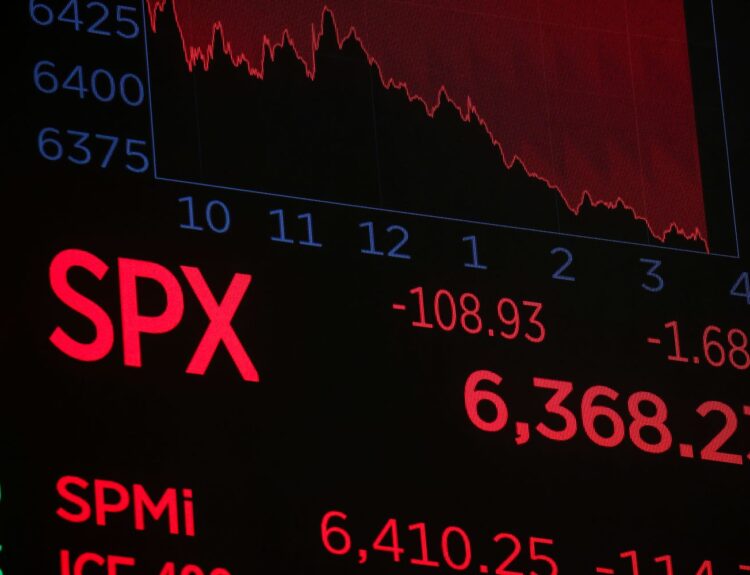

A major shift is underway in the US stock market in 2026. After years dominated by AI giants, investors are now rotating into bonds, international stocks, value shares, and dividend companies as diversification strategies.
The first months of 2026 are showing why diversification matters. Just a year ago, the stock market rally was heavily driven by a small group of technology giants linked to artificial intelligence. Those companies pushed the market to record highs and created one of the most concentrated markets in modern history.
By the end of 2025, the US stock market’s top 10 companies accounted for the largest share of the market since 1932. But the situation is changing quickly this year as investors rethink the risks of the AI boom.
Investors Are Moving Away From AI Stocks
Concerns are growing about the massive spending required to build AI infrastructure and whether those investments will eventually generate strong profits.
This shift has led to what analysts call the “anything but AI” trade, where investors move money into sectors less dependent on artificial intelligence.
Many of the biggest technology stocks that led the market in 2025 are now struggling in 2026.
Examples include:
• Microsoft down about 18.6% this year
• Tesla down roughly 10.5%
• Amazon down about 9%
• Nvidia down nearly 5%
• Broadcom down about 7.7%
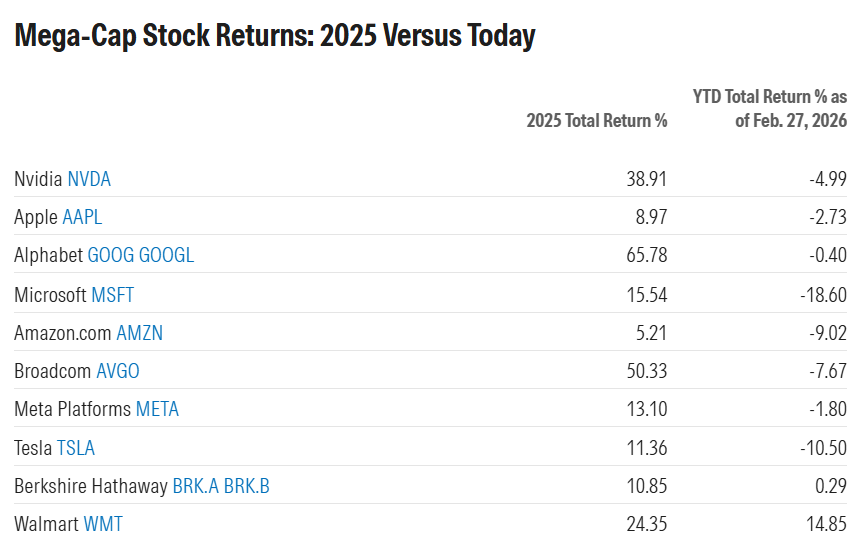
Some companies are holding up better. Walmart, for example, has gained nearly 15% this year as investors shift toward more defensive sectors.
High-Quality Bonds Are Beating Stocks
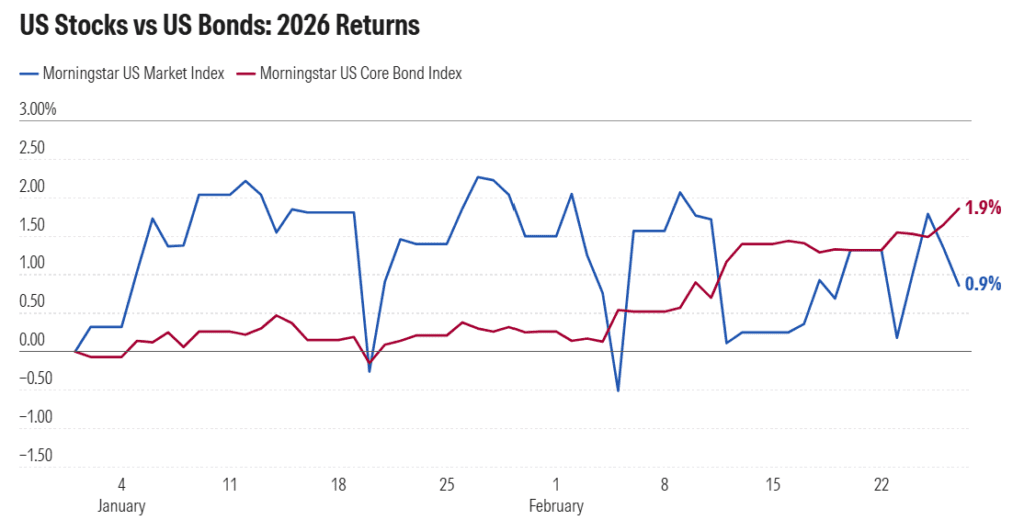
One of the biggest winners so far in 2026 is high quality US bonds.
Bonds traditionally provide stability during periods of market uncertainty, and this year they are slightly outperforming US equities.
While bonds usually generate lower long term returns than stocks, even a small allocation can reduce portfolio volatility when markets become unstable.
International Stocks Are Outperforming the US
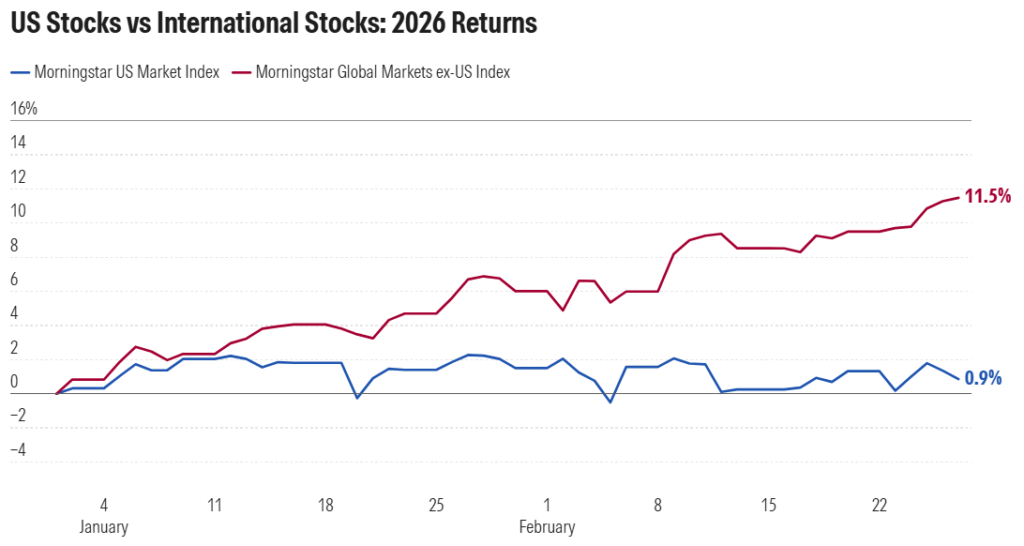
Another strong performer in 2026 has been international equities.
Global stocks outside the US already began outperforming American markets in 2025 after many years of lagging. That trend has continued this year.
Several factors explain the shift:
• Many international markets are less dominated by technology companies
• Global markets are less exposed to the AI spending boom
• Valuations outside the US remain relatively cheaper
Because of this, international stocks are benefiting from the current rotation away from technology.
Value Stocks Are Making a Comeback
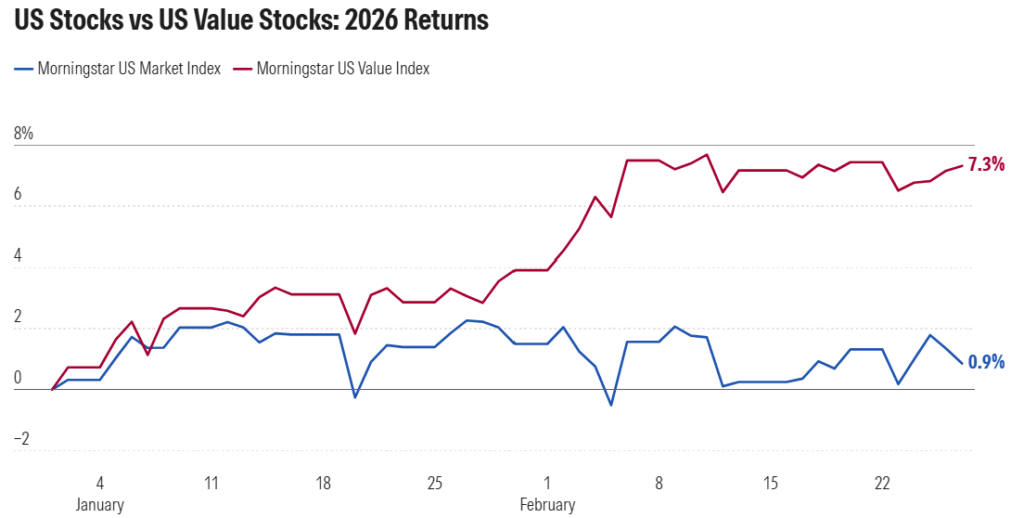
Value stocks are also gaining momentum in 2026.
Value investing focuses on companies that appear undervalued relative to their fundamentals, often in sectors such as:
• Industrials
• Energy
• Financials
• Consumer goods
These sectors have performed well this year, helping value indexes outperform the broader market.
Importantly, value portfolios tend to have less exposure to large technology companies, which has helped them during the recent tech selloff.
Small-Cap Stocks Are Rebounding
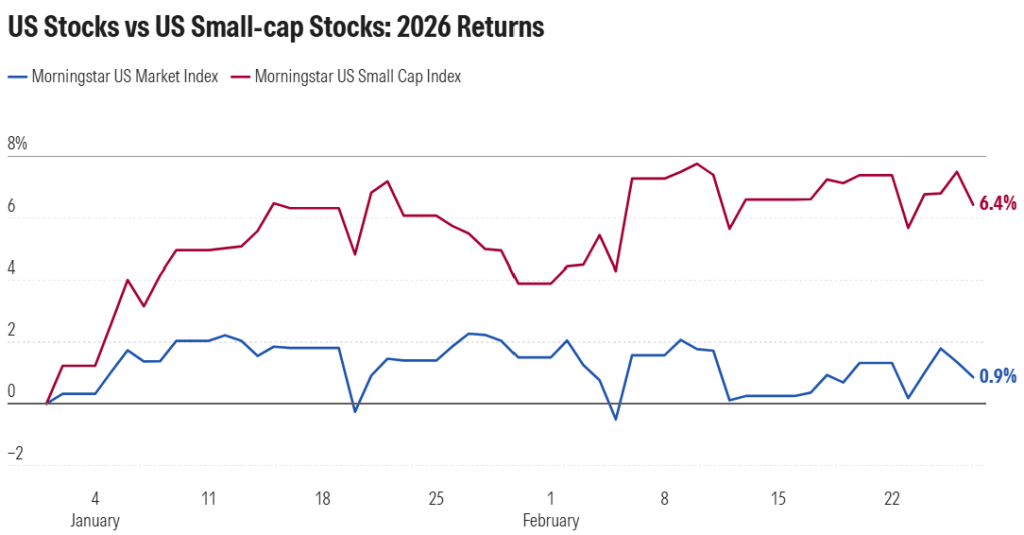
Small-cap companies are another bright spot in 2026.
These smaller firms began recovering late in 2025 and have continued to rise this year. After underperforming large companies for years, small-cap stocks are still considered undervalued by many analysts.
Because they are less tied to the AI boom and mega-cap technology companies, they are benefiting from the market rotation.
Dividend Stocks Are Back in Favor
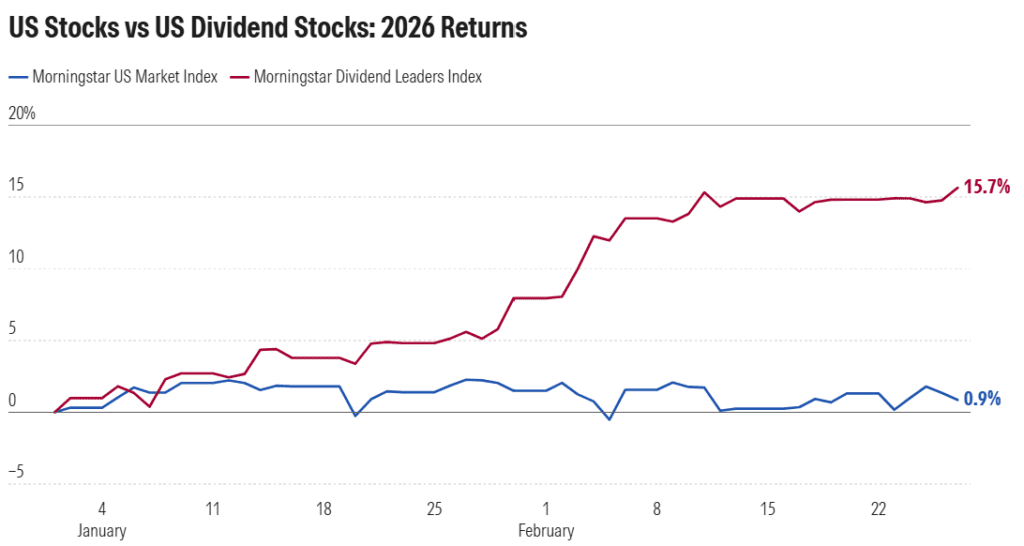
Dividend paying stocks are also outperforming many growth companies.
These firms tend to come from older sectors of the economy such as:
• Utilities
• Healthcare
• Financial services
• Consumer goods
• Industrial companies
Dividend stocks provide steady income and are often seen as safer investments during uncertain market periods.
As investors look for alternatives to high-growth technology stocks, dividend paying companies are attracting renewed interest.
Is the Market Rotation Permanent?
It is still too early to know whether the shift away from AI stocks will continue throughout the year.
Technology companies remain some of the most innovative and profitable businesses in the world, and strong earnings could quickly trigger another rally.
However, the early months of 2026 demonstrate an important lesson for investors: relying on a single theme, even one as powerful as artificial intelligence, can create significant risk.
Diversification across sectors, asset classes, and regions can help investors manage volatility and benefit from changing market trends.
As Morningstar analysts note, the future of markets is always uncertain. The best strategy is often to build portfolios that can survive different economic scenarios rather than relying on a single winning trend.
Disclosure: This article does not represent investment advice. The content and materials featured on this page are for educational purposes only.