

Over half of American millionaires worry that unexpected market moves could undermine their financial legacy. For high-net-worth individuals across North America, wealth protection goes beyond simple investing. Proactive strategies to assess risk and fortify assets matter more than ever in today’s complex economic climate. This guide shares advanced approaches to help American investors strengthen their defenses and build lasting financial security.
Table of Contents
- Step 1: Assess Current Financial Risks
- Step 2: Establish Asset Protection Structures
- Step 3: Implement Legal Safeguards
- Step 4: Diversify Investments For Stability
- Step 5: Regularly Review And Update Protections
Quick Summary
| Key Takeaway | Explanation |
|---|---|
| 1. Assess Financial Risks Thoroughly | Conduct a detailed review of your financial landscape to identify vulnerabilities and potential losses. |
| 2. Create Strong Asset Protection Structures | Use legal techniques like trusts and LLCs to shield your assets from claims and risks. |
| 3. Implement Legal Safeguards Regularly | Develop a comprehensive legal strategy that includes clear contracts and regular reviews for compliance. |
| 4. Diversify Investments Effectively | Spread investments across various asset classes to reduce volatility and enhance stability. |
| 5. Schedule Regular Reviews of Protections | Keep your wealth protection strategy updated by reviewing your financial strategies annually for emerging risks. |
Step 1: Assess Current Financial Risks
Understanding your financial risks is fundamental to creating a robust wealth protection strategy. This assessment helps you identify potential vulnerabilities in your financial portfolio and develop proactive measures to safeguard your assets.
Begin by conducting a comprehensive review of your current financial landscape. Review investment portfolios, analyze income streams, and evaluate potential economic uncertainties. The Global Financial Stability Report highlights critical risk factors including commercial real estate strains, corporate credit challenges, and potential inflation volatility. Examine each of these areas carefully to understand how they might impact your personal financial ecosystem.
Start with a detailed risk assessment by categorizing potential financial threats. These might include market volatility, income disruption, unexpected healthcare expenses, or economic downturns. Quantify potential losses by estimating worst case scenarios for each risk category. Create a matrix that ranks risks by probability and potential financial impact. This systematic approach transforms abstract risks into manageable, actionable insights.
Pro tip: Consider using digital financial risk assessment tools that can help you quantify and visualize potential financial vulnerabilities with greater precision.
Step 2: Establish Asset Protection Structures
Creating robust asset protection structures is critical for safeguarding your wealth from potential legal and financial risks. This strategic approach helps shield your hard earned assets from unexpected claims and potential financial vulnerabilities.
Begin by understanding legal asset protection techniques that separate legal ownership from direct control. These methods typically involve establishing trusts, limited liability companies (LLCs), and other legal entities designed to provide a protective barrier around your assets. Consider creating multiple layers of protection by diversifying your asset holding structures across different legal frameworks.
Consult with legal and financial professionals to design a customized asset protection strategy tailored to your specific financial situation. Each protection structure should be carefully crafted to address your unique risks while maintaining legal compliance. Evaluate options such as irrevocable trusts, family limited partnerships, and offshore asset protection vehicles. Prioritize structures that offer maximum legal protection while maintaining flexibility and accessibility for your financial needs.
Pro tip: Work with specialized asset protection attorneys who can help you navigate complex legal structures and create the most effective protection strategy for your specific financial portfolio.
Here’s a summary comparing common asset protection structures and their key advantages:
| Structure Type | Protection Level | Accessibility | Typical Use Case |
|---|---|---|---|
| Revocable Trust | Moderate | High | Estate planning, easy changes |
| Irrevocable Trust | High | Limited | Shelter from creditors, lawsuits |
| Family Limited Partnership | High | Moderate | Business succession, tax planning |
| LLC (Limited Liability Company) | Moderate | High | Real estate holdings, businesses |
| Offshore Trust | Very High | Low | International diversification |
Step 3: Implement Legal Safeguards
Implementing robust legal safeguards is essential for protecting your financial assets and mitigating potential risks across your wealth management strategy. This critical step involves creating a comprehensive framework of legal protections that shield your resources from potential vulnerabilities.

Start by examining international governance standards that provide best practices for asset protection. These standards emphasize transparency, legal compliance, and prudent risk management. Develop a comprehensive legal strategy that includes drafting clear legal documents, establishing proper contractual protections, and creating well structured agreements that define ownership, liability, and risk allocation.
Consult with specialized legal professionals who can help you navigate complex legal landscapes. Review and update your legal documents regularly to ensure they remain current with changing regulations and potential emerging risks. Focus on creating multiple layers of legal protection that include personal asset protection trusts, comprehensive insurance coverage, carefully structured business entities, and strategic contractual provisions that minimize potential legal exposure.
Pro tip: Schedule annual legal document reviews with your attorney to proactively identify and address potential vulnerabilities in your existing legal safeguards.
Step 4: Diversify Investments for Stability
Diversifying your investment portfolio is a critical strategy for managing financial risk and creating long-term wealth stability. By spreading your investments across multiple asset classes, sectors, and geographic regions, you can build a resilient financial foundation that can withstand market fluctuations.
Understand the core principles of investment diversification strategies to protect your financial future. This approach involves strategically allocating your assets across different investment types including stocks, bonds, real estate, commodities, and potentially international markets. Aim to create a balanced portfolio where potential losses in one sector can be offset by gains in another, reducing overall portfolio volatility.
Begin by assessing your current investment mix and identifying areas for broader distribution. Consider allocating investments across various sectors such as technology, healthcare, energy, and finance. Look beyond domestic markets to include international and emerging market opportunities. Regularly rebalance your portfolio to maintain your desired asset allocation, typically conducting a comprehensive review annually or when significant market changes occur.
Pro tip: Consider using low cost index funds or exchange traded funds to achieve instant diversification across multiple companies and sectors with minimal transaction costs.
Step 5: Regularly Review and Update Protections
Maintaining the effectiveness of your wealth protection strategy requires consistent monitoring and proactive updates. Financial landscapes evolve rapidly, and your protective measures must adapt to keep pace with changing economic conditions, technological advancements, and emerging risks.
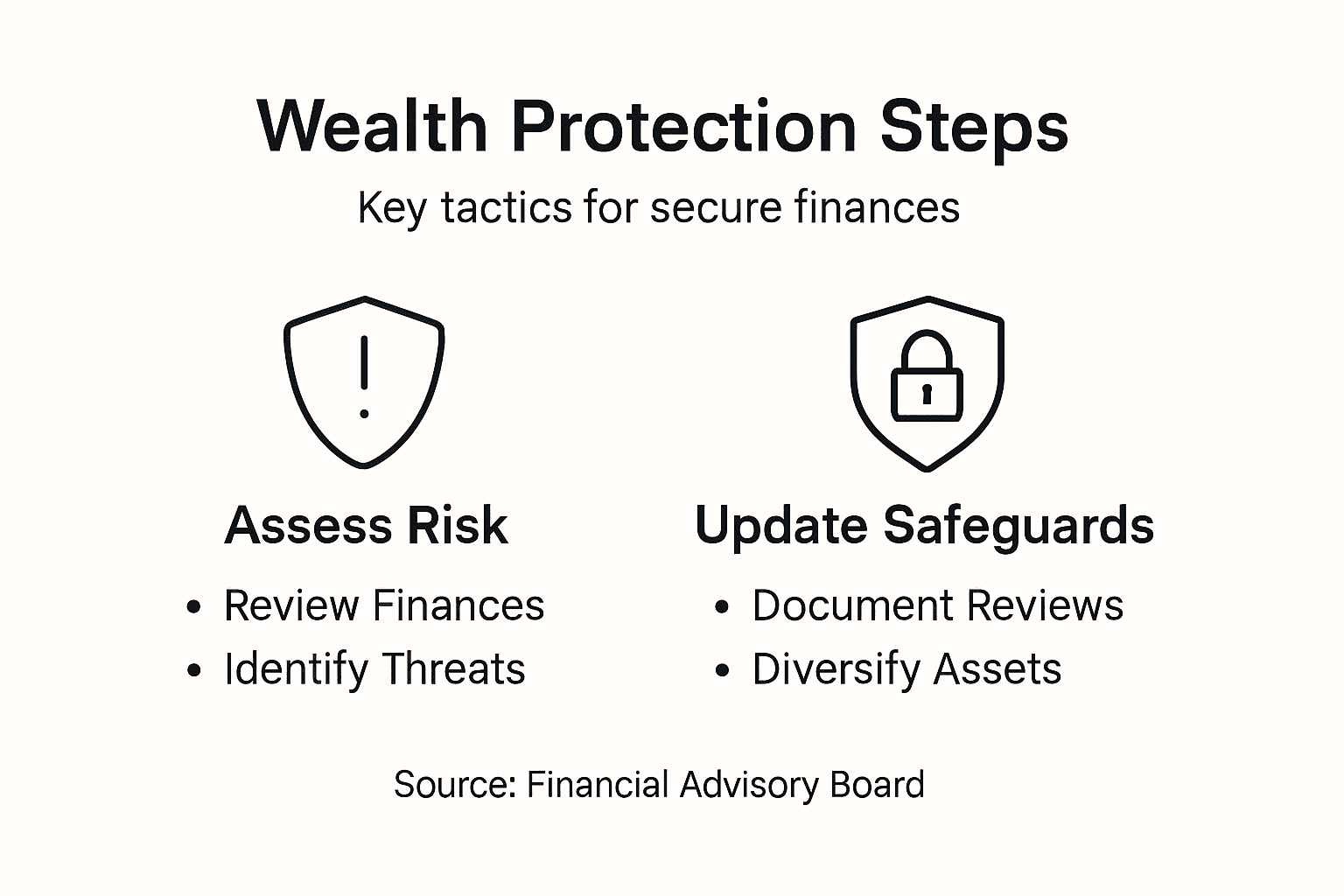
Implement a systematic approach to financial consumer protection frameworks that ensures your safeguards remain robust and relevant. Schedule comprehensive reviews of your legal documents, insurance policies, investment strategies, and asset protection structures at least annually. Pay special attention to changes in tax laws, regulatory environments, personal financial circumstances, and potential new risks that could impact your wealth.
Create a structured review process that includes detailed documentation and professional consultation. Engage financial advisors, legal experts, and tax professionals to help you identify potential vulnerabilities and recommend strategic updates. Develop a checklist that covers key areas such as estate planning, insurance coverage, investment allocations, tax strategies, and legal protections. Be prepared to make timely adjustments that align with your evolving financial goals and protect your assets from emerging economic challenges.
Pro tip: Set recurring calendar reminders for your annual financial review to ensure you never miss an opportunity to update and strengthen your wealth protection strategy.
For additional clarity, here’s how regular reviews help address evolving risks:
| Review Focus | Why It Matters | Potential Impact |
|---|---|---|
| Legal Documents | Ensures compliance, accuracy | Avoids disputes, reflects new laws |
| Insurance Policies | Maintains adequate protection | Covers new risks, optimizes premiums |
| Investment Mix | Adjusts for market changes | Enhances returns, reduces volatility |
| Asset Structures | Keeps strategies effective | Closes gaps, optimizes tax benefits |
Secure Your Financial Future with Expert Guidance
Protecting your wealth involves careful risk assessment, legal safeguards, and diversified investments. This article lays out essential steps to shield your assets from market volatility, legal challenges, and economic uncertainty. If you want to move beyond theory and create a personalized, actionable strategy consider the expert insights and tailored advice available at finblog.com.
Don’t leave your financial security to chance. Visit finblog.com today to access professional consultations and educational resources designed to help you implement proven wealth protection structures. Start your journey toward a resilient portfolio and a secure financial future now by exploring our comprehensive financial solutions. Take control of your wealth and safeguard what matters to you most.
Frequently Asked Questions
What are the key steps to assess my current financial risks?
Understanding your financial risks involves conducting a comprehensive review of your financial landscape, including investments and income streams. Start by analyzing potential vulnerabilities, such as market volatility and unexpected expenses, to quantify potential losses. Create a risk matrix to rank these threats by their impact within the next 30 days.
How can I establish effective asset protection structures?
To create asset protection structures, consider legal entities like trusts and limited liability companies (LLCs) that separate legal ownership from control. Work with professionals to craft a tailored strategy that includes multiple layers of protection and regularly evaluate their effectiveness against new risks and regulations.
What legal safeguards should I implement to protect my wealth?
Implementing legal safeguards involves drafting clear legal documents and establishing contracts that define ownership and minimize liabilities. Schedule annual reviews of all legal documentation and ensure compliance with current laws to adjust your protections as needed.
How does investment diversification contribute to financial stability?
Diversifying your investments by spreading them across various asset classes and sectors helps stabilize your financial portfolio against market fluctuations. Assess your current investment mix and aim for a balanced allocation, rebalancing at least annually or when market conditions change significantly.
Why is it important to regularly review my wealth protection strategies?
Regularly reviewing your wealth protection strategies ensures they remain effective in an evolving financial landscape. Set up a systematic review process at least once a year to adjust for changing regulations, personal circumstances, or emerging risks to maintain optimal asset protection.
What should I focus on during my financial review?
Focus on areas such as legal documents, insurance policies, investment allocations, and asset protection structures during your financial review. Document any changes and recommendations, and make necessary adjustments to enhance your financial security within the next 60 days.
Recommended
- Generational Wealth Planning: Securing Your Legacy – Finblog
- Complete Guide to Wealth Preservation Strategies – Finblog
- Wealth Management Explained: Complete Guide – Finblog
- 7 Safe Investment Options for Your Financial Future – Finblog
- Tax Planning Strategies 2025: Complete Guide for IRS Issues – Unique Solutions to IRS Tax Problems