

Confusion around asset management often stems from outdated assumptions and common myths that can derail thoughtful investment strategies. Professionals and investors may believe quick fixes or simple cost-cutting will deliver results, yet leading research highlights the need for long-term planning, risk awareness, and a balance between technology and human expertise. This guide helps clarify what asset management really involves while addressing misconceptions that could impact performance and client outcomes from North America to Europe and beyond.
Table of Contents
- Defining Asset Management And Common Myths
- Major Types Of Asset Management Explained
- How Asset Management Works Today
- Key Regulatory And Compliance Standards
- Costs, Risks, And Mistakes To Avoid
Key Takeaways
| Point | Details |
|---|---|
| Holistic Approach to Asset Management | Effective asset management encompasses systematic acquisition, maintenance, and disposal of assets to maximise value across organizational sectors. |
| Importance of Technology and Human Expertise | Modern asset management relies on technology for data analysis and efficiency, while human expertise is crucial for strategic decision-making and risk assessment. |
| Diverse Asset Management Types | Different asset management strategies, such as Investment Management and Wealth Management, require tailored approaches to meet specific organizational and investment goals. |
| Regulatory Compliance is Essential | Adhering to regulatory frameworks is critical for maintaining market integrity and protecting investors, necessitating comprehensive documentation and compliance strategies. |
Defining Asset Management and Common Myths
Asset management is a strategic discipline focused on optimizing the value, performance, and lifecycle of organizational and investment assets. Understanding asset management anatomy reveals a complex process that goes far beyond simple financial tracking.
At its core, asset management involves systematically acquiring, maintaining, upgrading, and disposing of assets to maximize their potential value. This comprehensive approach applies across multiple sectors – from financial investments to infrastructure and industrial equipment. Key characteristics include:
- Holistic evaluation of asset performance
- Long-term strategic planning
- Risk mitigation and optimization strategies
- Continuous monitoring and improvement processes
Many professionals harbor misconceptions about asset management that can significantly impact their investment strategies. Debunking common asset management myths helps investors and organizations develop more robust approaches.
Common myths include believing that asset management is a quick fix for performance issues or that aggressive cost-cutting automatically improves outcomes. In reality, effective asset management requires nuanced, strategic thinking that balances financial considerations with broader organizational goals.
Technology plays an increasingly important role in modern asset management, but human expertise remains crucial. Automated tools provide valuable data and insights, yet strategic decision-making still depends on skilled professionals who can interpret complex information and develop adaptive strategies.
Here’s a summary of how technology and human expertise complement each other in modern asset management:
| Aspect | Technology Contribution | Human Expertise Role |
|---|---|---|
| Data Analysis | Processes large data sets rapidly | Interprets and applies insights |
| Risk Detection | Identifies patterns and anomalies | Assesses real-world business impact |
| Efficiency | Automates routine processes | Adapts strategies to dynamic goals |
| Strategic Planning | Enables predictive modeling | Makes final strategic decisions |
Pro tip: Develop a comprehensive asset management strategy that integrates technological tools with human expertise, focusing on long-term value creation rather than short-term cost reductions.
Major Types of Asset Management Explained
Asset management encompasses diverse strategies tailored to specific investment and organizational needs. Types of asset management reveal a complex landscape with specialized approaches for different asset classes and objectives.
The primary types of asset management include:
- Investment Management: Focusing on securities like stocks, bonds, and mutual funds
- Wealth Management: Personalized financial strategies for high-net-worth individuals
- Real Estate Asset Management: Optimizing property portfolio performance and value
- Infrastructure Asset Management: Managing public and private infrastructure investments
- Digital Asset Management: Handling digital media, intellectual property, and technological resources
- Fixed Asset Management: Tracking and maintaining physical organizational assets
Each asset management type requires unique skills and approaches. Understanding asset management anatomy reveals the intricate strategies professionals use to maximize value across different sectors.
Investment management, perhaps the most widely recognized type, involves strategic allocation of financial resources. Wealth managers work closely with clients to develop personalized investment portfolios that align with individual financial goals, risk tolerance, and long-term objectives.

Real estate and infrastructure asset management play crucial roles in both private and public sectors. These specialized disciplines focus on optimizing property portfolios, managing complex infrastructure projects, and creating sustainable value through strategic planning and risk mitigation.
Pro tip: Diversify your asset management approach by understanding the unique characteristics of different asset classes and tailoring strategies to specific investment goals.
How Asset Management Works Today
Modern asset management is a dynamic, technology-driven process that transforms how organizations and investors optimize their resources. Asset management lifecycle stages provide a comprehensive framework for strategic decision-making and value creation.
The core stages of contemporary asset management include:
- Planning: Identifying asset requirements and strategic objectives
- Acquisition: Procuring assets through strategic sourcing and contract management
- Deployment: Integrating assets into operational workflows
- Utilization: Monitoring performance and maximizing asset productivity
- Maintenance: Ensuring optimal condition and preventing operational disruptions
- Retirement: Strategically replacing or disposing of assets
Modern asset management processes leverage advanced technologies to create more intelligent, data-driven strategies. Digital tools now enable real-time tracking, predictive maintenance, and sophisticated performance analytics that were impossible just a decade ago.
Technology has revolutionized asset management by introducing automation, machine learning, and complex data analysis. These innovations allow professionals to make more precise predictions about asset performance, maintenance needs, and potential risks. Predictive algorithms can now forecast equipment failures, optimize maintenance schedules, and recommend strategic replacements before traditional methods would detect potential issues.
For investors and organizations, this means a more dynamic, responsive approach to managing resources. Asset managers can now make more informed decisions, reduce operational costs, and create more value through strategic, data-driven approaches that continuously adapt to changing market conditions.
Pro tip: Integrate advanced digital tracking tools and predictive analytics into your asset management strategy to gain real-time insights and maximize resource efficiency.
Key Regulatory and Compliance Standards
Regulatory compliance in asset management represents a critical framework that protects investors, maintains market integrity, and ensures transparent financial practices. The complex landscape of regulations demands rigorous adherence and sophisticated understanding from financial professionals.
Key regulatory standards and frameworks include:
This table highlights the key regulatory frameworks in asset management and their primary focus areas:
| Regulatory Framework | Main Focus | Impact on Asset Management |
|---|---|---|
| Sarbanes-Oxley (SOX) | Financial reporting | Ensures accuracy and accountability |
| SEC Regulations | Investment practices | Mandates transparency and disclosure |
| FINRA Rules | Professional conduct | Sets operational compliance standards |
| Basel Accords | Banking risk | Guides capital and risk policies |
| Dodd-Frank | Systemic risk | Increases market oversight |
| Investment Advisers Act | Fiduciary duty | Protects client interests |
- Sarbanes-Oxley Act (SOX): Ensuring financial reporting accuracy and corporate accountability
- Securities and Exchange Commission (SEC) Regulations: Governing investment practices and disclosure requirements
- Financial Industry Regulatory Authority (FINRA) Rules: Establishing professional conduct standards
- Basel Accords: International banking risk management and capital requirements
- Dodd-Frank Wall Street Reform: Enhancing financial system transparency and risk management
- Investment Advisers Act: Regulating investment advisory services and fiduciary responsibilities
Financial institutions must navigate an increasingly complex regulatory environment that demands comprehensive documentation, risk assessment, and ongoing compliance monitoring. This requires sophisticated internal controls, robust reporting mechanisms, and continuous staff training to maintain regulatory standards.
The consequences of non-compliance can be severe, including substantial financial penalties, legal actions, and potential loss of operational licenses. Asset managers must develop proactive compliance strategies that integrate regulatory requirements into their core operational processes, utilizing advanced technological solutions for tracking, reporting, and risk mitigation.
Regulatory standards continue evolving, reflecting changing market dynamics, technological advancements, and emerging financial risks. Successful asset management now requires a dynamic approach that balances investment performance with rigorous compliance and risk management protocols.
Pro tip: Implement a comprehensive compliance management system that provides real-time regulatory tracking and automated reporting to minimize potential risk exposure.
Costs, Risks, and Mistakes to Avoid
Asset management challenges represent a critical intersection of financial strategy, operational efficiency, and risk mitigation. Understanding these challenges is essential for developing robust investment and asset management approaches that protect and maximize value.
Common risks and potential mistakes in asset management include:
- Unplanned Asset Breakdowns: Causing unexpected maintenance costs
- Poor Inventory Control: Leading to lost or untracked assets
- Inadequate Risk Assessment: Exposing organizations to financial vulnerabilities
- Inefficient Cost Management: Reducing overall investment performance
- Lack of Strategic Depreciation Planning: Misunderstanding asset value trajectories
- Insufficient Technology Integration: Limiting real-time tracking capabilities
Asset management challenges often stem from systemic operational gaps that prevent comprehensive visibility and strategic resource allocation. Organizations frequently underestimate the complexity of maintaining and optimizing diverse asset portfolios.
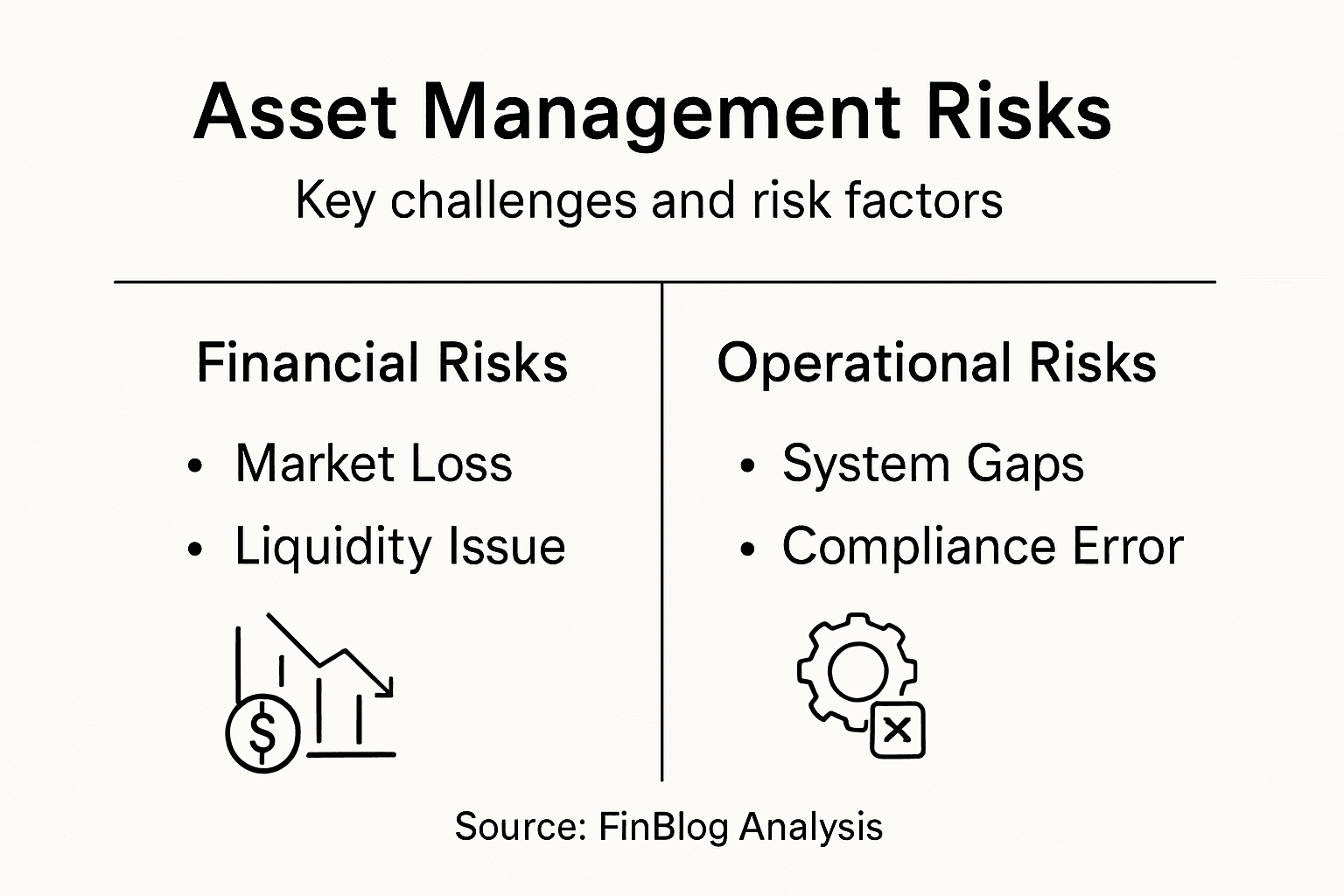
Financial professionals must develop sophisticated approaches that balance cost reduction with risk management. This requires continuous monitoring, adaptive strategies, and leveraging advanced technological tools to track asset performance, predict maintenance needs, and optimize resource allocation.
Successful asset management demands a holistic perspective that goes beyond traditional accounting methods. By implementing comprehensive tracking systems, conducting regular performance audits, and maintaining flexible investment strategies, organizations can mitigate potential risks and maximize long-term value creation.
Pro tip: Develop a dynamic asset management strategy that integrates real-time data tracking, predictive maintenance protocols, and comprehensive risk assessment frameworks.
Take Control of Your Asset Management Strategy Today
Navigating the complexities of modern asset management requires more than just financial tracking. As the article highlights, challenges like unplanned breakdowns, inefficient cost management, and evolving regulatory demands can undermine your investment success. Whether you are managing investment portfolios, real estate assets, or digital resources, understanding the entire asset lifecycle and integrating technology with expert insight is critical to maximizing long-term value.
At FinBlog, we recognize these pain points and offer tailored financial consulting and educational content designed to empower serious investors and professionals. Discover proven strategies to optimize asset performance, mitigate risks, and ensure compliance with key regulations. Ready to advance your asset management approach with smart, actionable guidance? Start here with our expert resources at FinBlog and unlock your full investment potential today. Explore more insights on the asset management lifecycle that can transform your portfolio and secure your financial future.
Frequently Asked Questions
What is asset management?
Asset management is a strategic discipline focused on optimizing the value, performance, and lifecycle of organizational and investment assets through systematic acquisition, maintenance, upgrading, and disposal.
What are the main types of asset management?
The primary types of asset management include investment management, wealth management, real estate asset management, infrastructure asset management, digital asset management, and fixed asset management, each tailored to specific investment and organizational needs.
How does technology impact modern asset management?
Technology enhances modern asset management through automation, data analysis, and predictive modeling, enabling more precise decision-making, real-time tracking, and optimization of asset performance.
What are common risks in asset management?
Common risks in asset management include unplanned asset breakdowns, poor inventory control, inadequate risk assessment, inefficient cost management, and insufficient technology integration, which can hinder overall investment performance.
Recommended
- Master Building an Investment Portfolio for Profits – Finblog
- 7 Safe Investment Options for Your Financial Future – Finblog
- Understanding Tax Efficient Investing: How It Works – Finblog
- Dynamic Asset Allocation Strategies for Volatile Markets – Finblog
- How to Optimize Investment Strategies Gold for Maximum Return
- Cryptocurrency Portfolio Management Explained: Smarter Strategies