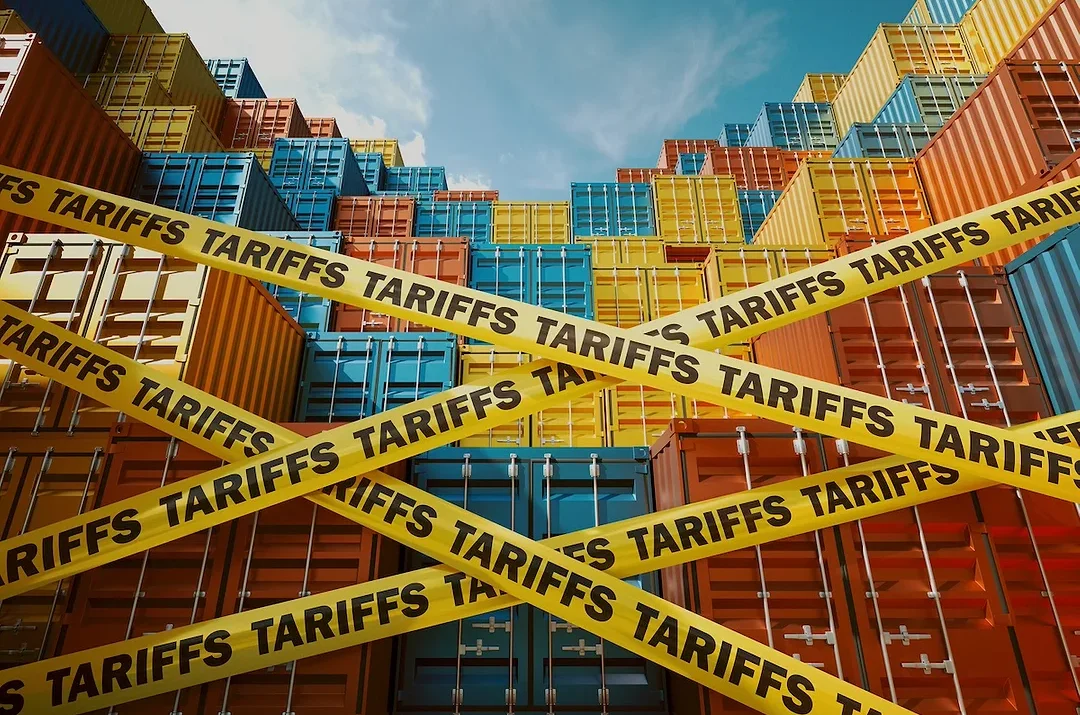

US tariff revenue declined sharply at the end of 2025, highlighting how President Donald Trump’s aggressive trade policy is reshaping global commerce and slowing imports into the US.
A new US Treasury report released Tuesday showed the government collected $27.89 billion in tariff revenue in December. That marked a drop of nearly $3 billion from November and a more than 10% decline from the October peak.
Tariff revenue still historically high, but momentum is fading
Despite the monthly pullback, total tariff revenue for 2025 reached $264.05 billion, the highest annual figure on record. Still, December marked the second consecutive monthly decline, following Trump’s decision to scale back several key tariffs in November.
October had been the high-water mark, with $31.35 billion collected. Revenue slipped to $30.76 billion in November, before falling further in December.
The slowdown reflects a broader shift in trade behavior as importers adjust supply chains and volumes in response to sustained tariff pressure.
Trade deficit narrows as imports retreat
New data from the Commerce Department showed the US trade deficit narrowed sharply in November to $29.4 billion, the lowest level since mid-2009. The release was delayed due to last year’s government shutdown.
Economists say the smaller trade gap is not being driven by stronger exports, but by less overall trade, particularly fewer imports entering US ports. Tariffs have discouraged shipments, pushing trade activity to settle at lower levels.
A dramatic shift from just one year ago
The scale of change is striking when viewed over a longer timeline.
In December 2024, the US collected just $6.81 billion in tariff revenue. By comparison, December 2025 revenue was more than four times higher. Total tariff collections in all of 2024 stood near $79 billion, far below last year’s total.
When Trump began rolling out his tariff regime early last year, monthly revenue jumped from $7.25 billion in February and climbed steadily through October before reversing course.
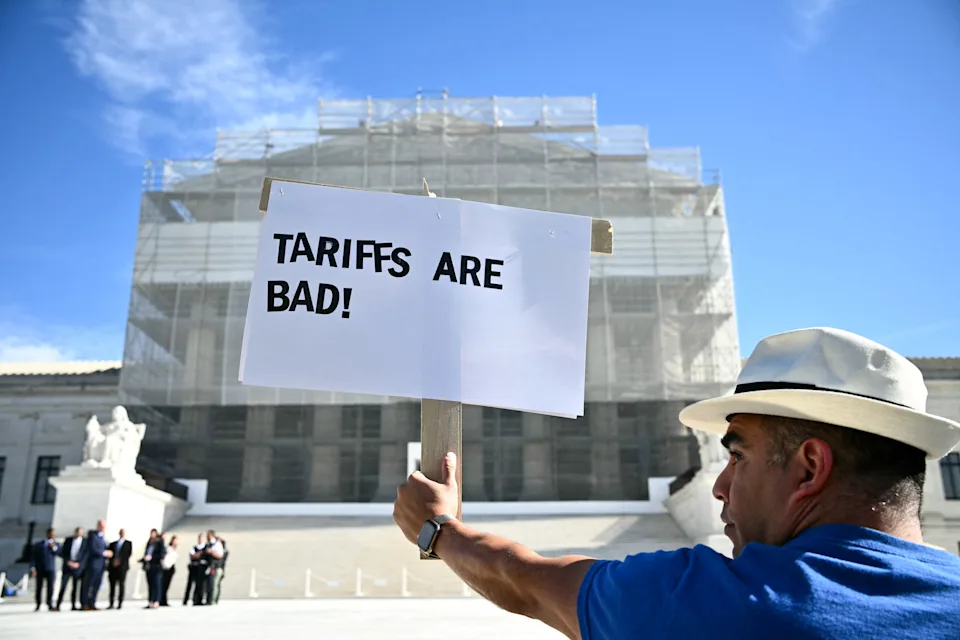
Tariffs are not closing the budget gap
The Treasury report also showed the US ran a $602 billion deficit during the first three months of the fiscal year, including a $145 billion deficit in December alone. That shortfall far exceeded monthly tariff revenue, despite Trump’s repeated claims that tariffs are helping balance the budget.
Speaking in Detroit on Tuesday, Trump again highlighted tariffs as a major revenue source, saying they are bringing “hundreds of billions” into the Treasury. The numbers, however, suggest tariffs remain small relative to overall government spending.
Long-term expectations are being revised lower
The step-down in revenue was widely expected. The Congressional Budget Office recently cut its projected tariff revenue for the next decade by $1 trillion, reflecting weaker trade volumes and importer adaptation.
Tariffs remain central to Trump’s broader agenda. Last week, he argued that tariff revenue could support a $500 billion increase in the US military budget, a figure that would exceed total annual tariff collections by more than double.
Legal and geopolitical risks remain
Uncertainty around tariffs is set to continue in 2026.
Trump this week threatened 25% tariffs on goods from any country doing business with Iran. At the same time, the US Supreme Court could soon rule on the legality of Trump’s sweeping tariff authority in Learning Resources, Inc. v. Trump.
Speaking in Detroit, Trump warned that an adverse ruling would hurt the US and suggested alternative measures would follow if the court limits his powers.
Global trade is adapting elsewhere
While trade into the US has slowed, global commerce is reorganizing rather than shrinking outright.
Shipping data from Project44 shows US imports from China fell 28% in 2025, while exports to China dropped 38%, marking one of the sharpest bilateral trade contractions in recent history.
At the same time, the European Union last week backed a landmark trade agreement with Mercosur nations in Latin America, creating one of the world’s largest free trade zones and signaling that global trade flows are shifting away from the US rather than disappearing.
For now, tariffs continue to generate large sums for the Treasury. But the latest figures show that as trade adapts, the revenue boost from tariffs is no longer accelerating and the broader economic costs are becoming harder to ignore.
Disclosure: This article does not represent investment advice. The content and materials featured on this page are for educational purposes only.
Why Latin American markets are leading global returns in 2026