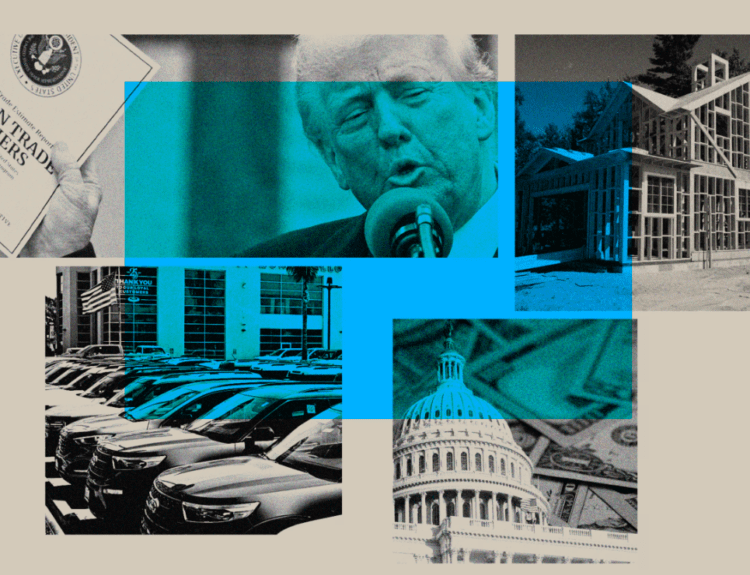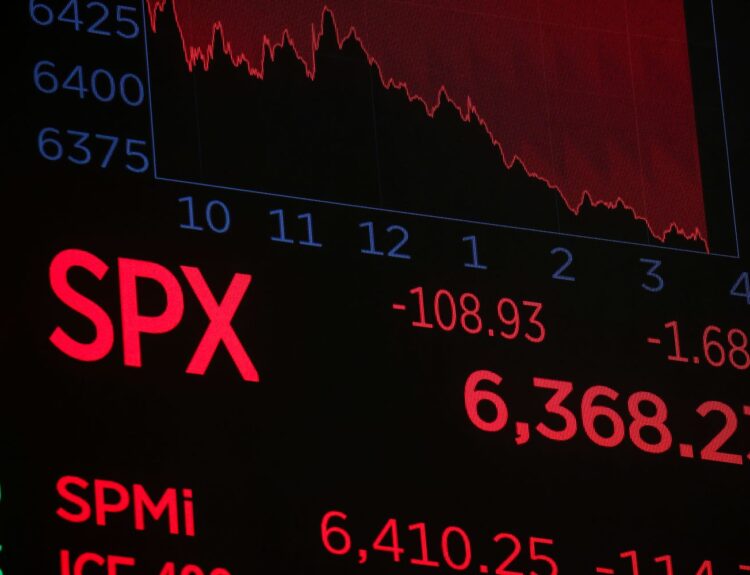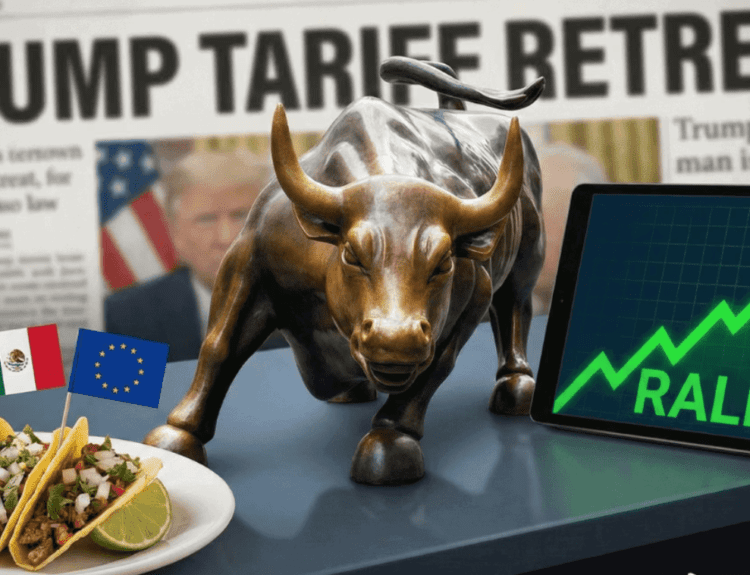

US stocks attempted to recover on Tuesday after a sharp selloff driven by renewed trade tensions and growing anxiety over AI spending. President Donald Trump’s new 10% global tariffs took effect at midnight, introduced under Section 122 following last week’s Supreme Court decision that struck down earlier emergency-based levies.
Markets had already been shaken on Monday by a widely shared “AI doomsday” research note that imagined a severe economic downturn tied to rapid AI adoption. Bitcoin continued to slide, underscoring broader pressure on risk assets.
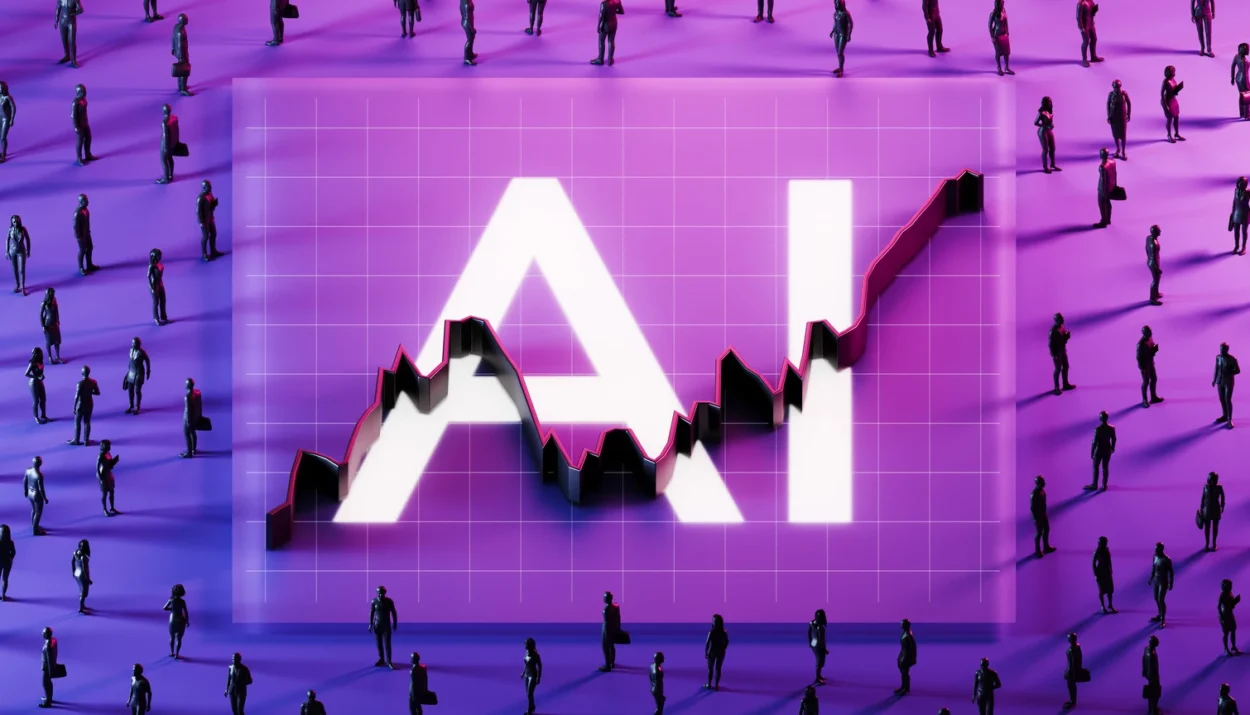
AI Boom — and Bust — at the Same Time
AI is creating a rare market dynamic: a boom in infrastructure spending alongside a bust in certain tech stocks.
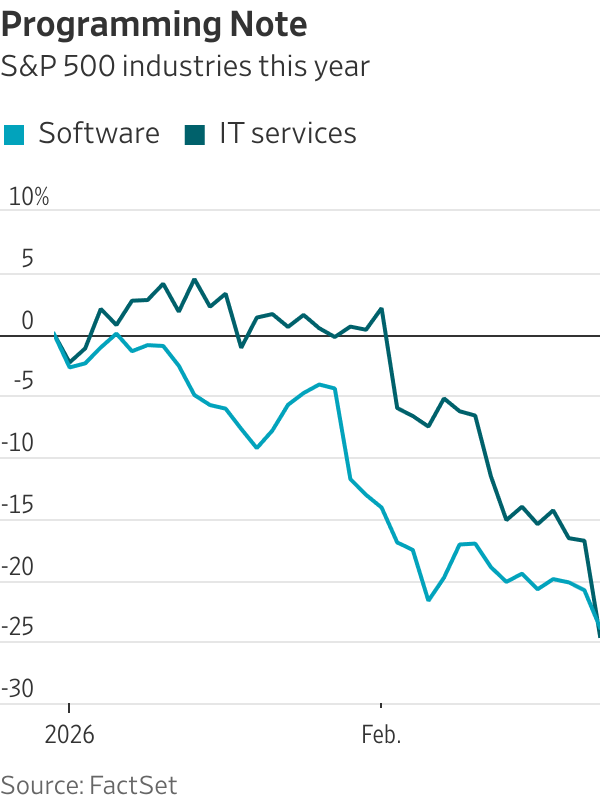
Companies are pouring billions into AI data centres, chips, and research. Yet shares of firms that could be disrupted by AI, particularly software and services companies, have dropped sharply. The S&P 500 software and services sector has been under heavy pressure this year.
At the same time, even major AI leaders are struggling:
- Microsoft is down 21% this year
- Amazon has fallen 11%
- Alphabet and Meta Platforms have largely stalled
Investors are increasingly concerned about overinvestment in AI infrastructure. According to a Bank of America fund manager survey, managers are now more worried about excessive capital expenditure than insufficient spending, the first time that concern has flipped.
Heavy AI investment requires strong profit growth to justify it. But as more tech giants compete in the space, pricing power may weaken, potentially squeezing margins.
Oracle, which has taken on significant debt to fund AI expansion, has fallen 28% this year.
Infrastructure Winners Stand Out
While software shares struggle, companies tied to building and powering data centers have surged:
- Caterpillar is up 32%
- GE Vernova has gained 27%
- Sandisk is up 181%
- Western Digital has risen 63%
- Seagate Technology has gained 48%
Semiconductor names have been mixed. Nvidia, Broadcom, and AMD are flat to slightly lower this year, while ASML has helped push the broader semiconductor sector up 18%.
The shift reflects a market trying to determine who ultimately benefits from AI’s expansion, and who loses.
Related: AI Boom Could Trigger 38% S&P 500 Crash, Research Scenario Warns
Trade Uncertainty Adds Pressure
Adding to volatility, Trump’s new tariffs have introduced fresh uncertainty. The administration has indicated it may pursue additional trade tools if needed, keeping markets cautious.
Meanwhile: ( Author is watching)
FedEx: The parcel-delivery company filed a lawsuit seeking a full refund plus interest for what it paid in levies stemming from Trump’s tariffs enacted last year.
Novo Nordisk: The Wegovy maker said an obesity drug it is developing with China’s United Laboratories International helped patients lose weight in a clinical trial. Shares fell, however, extending Monday’s losses that followed disappointing results from another trial.
Hims & Hers Health: The telehealth platform’s fourth-quarter sales disappointed, as did its guidance for this quarter. The stock declined around 7% in premarket trading.
Home Depot: The home-improvement retailer is among the companies due to post earnings this morning.
Apple: The iPhone maker will move some production of its Mac Mini desktop computer to the US from Asia, its latest initiative to reshore parts of its vast supply chain.
Whirlpool: The appliance maker said it would issue $800 million in new shares to help pay off its debt and investment in automation. Shares dropped 7.5% in off-hours trading.
Luxury Brands Face a Different Disruption
While AI dominates headlines, another structural shift is happening in luxury goods.
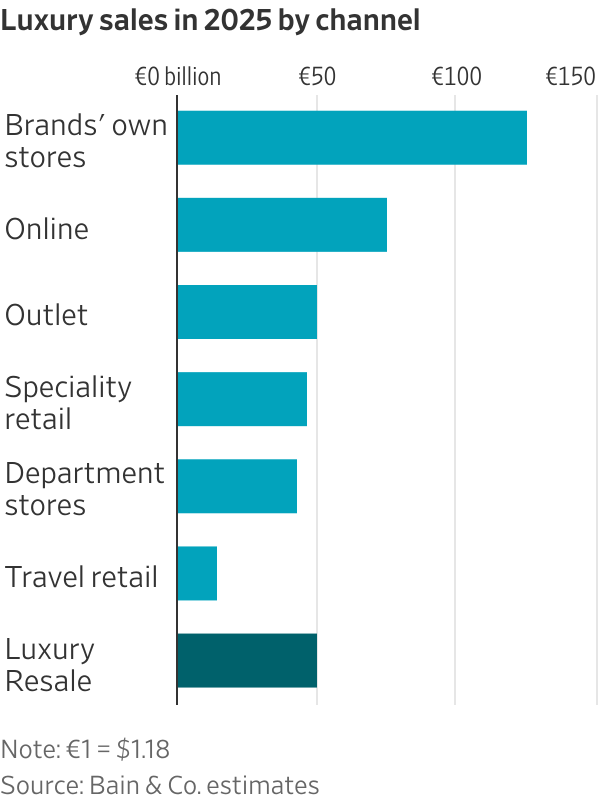
The global luxury resale market reached €50 billion (about $59 billion) last year, according to Bain & Company. That makes resale roughly the same size as the off-price channel used by luxury brands.
Resale is growing faster than traditional luxury retail. Thousands of small resellers now operate through livestreams, Shopify stores, and platforms like Vestiaire Collective. Brands have little control over how their products are displayed or priced in these channels.
Luxury companies face a dilemma:
- Ignore resale and lose control
- Or participate and risk weakening brand exclusivity
The resale market is approaching a tipping point, and brands are still deciding how to respond.
Broader Market Unease
The rapid rotation between AI winners and losers has left investors uneasy. The scale and speed of the boom-and-bust dynamic raise questions about whether markets are correctly pricing long-term outcomes.
For now, capital continues flowing into physical infrastructure tied to AI, while software valuations reset lower. The ultimate economic impact of AI, whether a productivity boom or profit squeeze, remains uncertain.
Source: The Wall Street Journal, Markets A.M. Newsletter, James Mackintosh, February 2026.
Disclosure: This article does not represent investment advice. The content and materials featured on this page are for educational purposes only.