

Investing alone can feel limiting when you lack sufficient capital or expertise to diversify effectively. Starting an investment club offers a practical solution by pooling resources and knowledge with like-minded individuals, enabling you to access broader opportunities and learn collaboratively. This guide walks you through the essential steps to launch and manage a successful investment club in 2026, from selecting trustworthy members to navigating legal requirements and making democratic investment decisions that benefit everyone involved.
Table of Contents
- Understanding Investment Clubs: Benefits And Essential Concepts
- Preparing Your Investment Club: Key Requirements And Legal Setup
- Executing And Managing Your Investment Club Effectively
- Common Challenges And Tips For Long-Term Success
- Explore More Resources To Grow Your Investment Knowledge
- What Is An Investment Club And How Does It Work?
- How Do Investment Clubs Handle Taxes?
- What Are The Most Important Steps To Start An Investment Club?
- What Challenges Should I Expect In Managing An Investment Club?
Key takeaways
| Point | Details |
|---|---|
| Pooled resources | Investment clubs combine member funds to access greater investment returns and diversification opportunities. |
| Clear governance | A detailed operating agreement establishes rules, voting procedures, and dispute resolution mechanisms. |
| Legal structure | Registering as a partnership or LLC provides tax benefits and liability protection for all members. |
| Democratic decisions | Members share equal voting rights, ensuring collaborative choices on every investment. |
| Regular engagement | Consistent meetings and contributions maintain momentum and accountability within the club. |
Understanding investment clubs: benefits and essential concepts
An investment club brings together individuals who pool money for potentially greater returns than they could achieve investing solo. By combining capital, members access stocks, bonds, and other securities that might be financially out of reach individually. This collaborative approach transforms investing from a solitary activity into a shared learning experience.
Beyond financial advantages, clubs provide forums for learning about markets and strategies. Members share research, debate opportunities, and analyze performance together. Beginners gain insights from experienced investors, while veterans benefit from fresh perspectives and collective due diligence. This educational component makes clubs particularly valuable for those exploring how to start investing without formal training.
Most clubs operate under two common structures:
- General partnerships where members share equal liability and decision-making power
- Limited liability companies that protect personal assets while maintaining collaborative governance
- Hybrid models combining elements of both structures for specific tax or legal advantages
The democratic nature of clubs ensures every member has equal say regardless of contribution size. Decisions happen through majority vote, preventing any single person from dominating investment choices. This equality fosters accountability and encourages thorough research before proposing opportunities.
“Investment clubs democratize wealth-building by making sophisticated strategies accessible to everyday investors who might otherwise lack confidence or capital to participate in markets.”
Successful clubs balance structure with flexibility. While formal agreements govern operations, the best groups maintain open communication and adapt rules as circumstances change. This combination of discipline and responsiveness helps clubs navigate market volatility and member transitions smoothly.
Preparing your investment club: key requirements and legal setup
Launching a club requires careful groundwork. Starting involves gathering members, choosing a name, determining contributions, selecting officers, drafting agreements, obtaining tax identification, registering as a business, opening brokerage accounts, and establishing meeting schedules. Each step builds toward a functional organization capable of making sound investment decisions.
Member selection matters enormously. Choose individuals who demonstrate financial responsibility, share similar investment philosophies, and commit to regular participation. Trustworthiness tops the priority list since you will collectively manage pooled funds. Aim for 10 to 20 members to ensure diverse perspectives without making decision-making unwieldy.
- Define contribution amounts and payment schedules that members can sustain long-term
- Elect officers including president, treasurer, and secretary to handle administrative duties
- Draft a comprehensive operating agreement covering voting procedures, profit distribution, and exit terms
- Apply for an Employer Identification Number from the IRS for tax reporting purposes
- Register as an LLC or partnership with your state to gain legal recognition
- Open a dedicated brokerage account in the club’s name to separate personal and collective assets
The operating agreement serves as your club’s constitution. It should address contribution requirements, meeting frequency, voting thresholds for different decision types, procedures for admitting new members, and protocols for members who wish to exit. Clear documentation prevents disputes and ensures everyone understands their rights and obligations from day one.

Legal registration provides liability protection that shields personal assets from club debts or lawsuits. While partnerships offer simplicity, LLCs deliver stronger protection at minimal additional cost. Consult with an attorney familiar with investment clubs to determine which structure best fits your group’s needs and state regulations.
Pro Tip: Schedule your first official meeting only after completing legal registration and opening the brokerage account. This prevents confusion about whether decisions made during informal gatherings carry official weight.
Obtaining proper tax identification allows the club to file returns and issue member statements correctly. Understanding tax implications of investing through a club structure helps members prepare for reporting requirements on their personal returns. Most clubs function as pass-through entities, meaning profits and losses flow directly to individual members rather than being taxed at the club level.
Executing and managing your investment club effectively
Once established, operational excellence determines long-term success. Regular meetings create rhythm and accountability. Most clubs convene monthly to review portfolio performance, discuss potential investments, and vote on proposals. Consistent scheduling helps members plan ahead and maintains engagement even during busy periods.
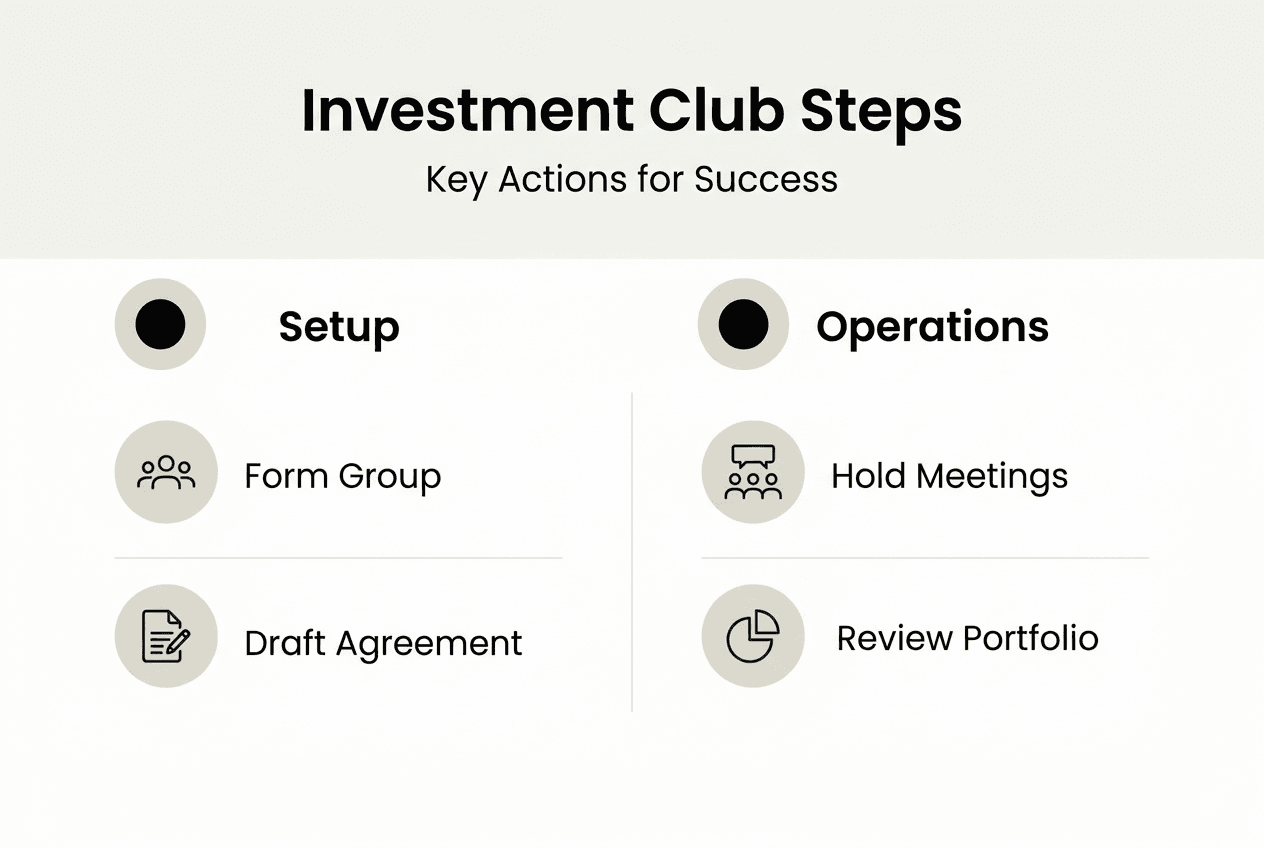
Meetings should follow a structured agenda. Start with financial reports from the treasurer detailing current holdings, recent transactions, and account balances. Next, members present researched investment opportunities, explaining their rationale and answering questions. Democratic voting ensures equal say in all decisions, with most clubs requiring simple majority approval for purchases.
Transparent record-keeping builds trust and simplifies tax reporting. The treasurer maintains detailed logs of:
- Individual member contributions and payment dates
- All investment purchases and sales with transaction costs
- Dividend and interest income received
- Current portfolio valuations and individual member ownership percentages
Choosing the right brokerage platform matters significantly. Select providers that explicitly support club accounts and offer features like multiple account holders, detailed reporting, and reasonable fees. Some brokers specialize in investment clubs, providing tools to track individual member stakes as the portfolio grows. Comparing best investing platforms helps identify options suited to collaborative investing.
Pro Tip: Establish a research rotation where different members lead investment analysis each month. This distributes workload, develops everyone’s skills, and prevents burnout among your most enthusiastic participants.
Regular contributions build the fund systematically. Whether members contribute monthly, quarterly, or on another schedule, consistency matters more than amount. Even modest regular deposits compound over time, providing capital for new opportunities while demonstrating member commitment.
Developing an investment plan guides club strategy. Define target asset allocation, risk tolerance, and investment criteria during early meetings. Some clubs focus on dividend-paying stocks, others pursue growth opportunities, and many blend approaches. Clear guidelines help evaluate proposals objectively rather than chasing trends or acting on emotions.
| Activity | Frequency | Responsible Party |
|---|---|---|
| Portfolio review | Monthly | Treasurer |
| Investment research | Ongoing | All members |
| Voting on purchases | Monthly meetings | All members |
| Tax document preparation | Annually | Treasurer or accountant |
| Operating agreement review | Annually | Officers |
Tracking performance honestly keeps clubs grounded. Calculate returns regularly, comparing results against relevant benchmarks. Celebrate successes but analyze failures equally thoroughly. Understanding why investments succeed or fail accelerates collective learning and improves future decision-making.
Common challenges and tips for long-term success
Even well-structured clubs encounter obstacles. Platform and broker issues rank among the most frustrating challenges. Some brokers discontinue club account support, forcing groups to transfer holdings and navigate complex paperwork. Others impose fees or restrictions that weren’t apparent during account opening. Research thoroughly before selecting a broker, and maintain backup options in case your primary provider changes policies.
Interpersonal conflicts test club cohesion. Disagreements about investment choices, contribution amounts, or governance procedures can fracture groups. Without proper frameworks, ventures face unforeseen challenges that undermine even the best intentions. Your operating agreement should include dispute resolution procedures, whether through officer mediation, member votes, or external arbitration.
Common friction points include:
- Members who miss contributions or meetings repeatedly
- Disagreements about risk levels or investment types
- Unequal research effort among members
- Personality conflicts that disrupt productive discussion
Addressing issues promptly prevents resentment from building. Officers should facilitate difficult conversations privately before problems escalate. Sometimes parting ways with a member, following proper exit procedures, serves everyone’s interests better than forcing incompatible personalities to collaborate.
Learning from both wins and losses strengthens clubs over time. After each investment reaches its planned holding period or exit point, conduct a thorough post-mortem. What assumptions proved correct? Which factors did you miss? How can research improve next time? This reflective practice transforms experience into expertise.
“The most successful investment clubs treat every decision as a learning opportunity, understanding that developing sound judgment matters more than any single trade’s outcome.”
Maintaining engagement during market downturns challenges many clubs. When portfolios decline, some members lose enthusiasm or skip meetings. Leaders must emphasize long-term perspective and use downturns as buying opportunities. Reviewing how to evaluate opportunities during volatility helps members stay rational when emotions run high.
Updating your operating agreement periodically ensures it reflects current circumstances. As clubs mature, initial rules may need adjustment. Perhaps contribution amounts should increase, voting thresholds change, or new officer roles emerge. Schedule annual reviews to assess whether your governance structure still serves the group effectively.
Selecting brokers that genuinely support club accounts avoids disruption. Verify that platforms offer features like percentage-based ownership tracking, multiple authorized traders, and proper tax reporting for partnerships or LLCs. Don’t assume any broker works for clubs without explicit confirmation.
Explore more resources to grow your investment knowledge
Starting an investment club represents just the beginning of your collaborative investing journey. As you build experience analyzing opportunities and managing portfolios together, deepening your individual knowledge accelerates collective success. Whether you’re exploring fundamental analysis, technical indicators, or portfolio theory, continuous learning sharpens decision-making skills that benefit the entire group.
Our comprehensive beginner’s investing guide covers essential concepts that complement club participation beautifully. Understanding asset classes, risk management, and valuation methods helps you contribute more meaningfully to club discussions and research efforts. The guide breaks down complex topics into accessible explanations perfect for members at any experience level.
Choosing the right platforms for your club’s brokerage account requires careful comparison. Our detailed 2026 platform reviews evaluate brokers based on fees, features, account types, and customer service quality. These insights help clubs avoid providers that might discontinue support or impose unexpected restrictions later.
Explore Finblog for additional articles, tools, and resources designed to strengthen your investing capabilities and support your club’s growth.
What is an investment club and how does it work?
An investment club is a group of individuals who pool money to invest collaboratively in stocks, bonds, or other securities. Members contribute regular amounts, research opportunities together, and vote democratically on all investment decisions. Profits and losses are distributed proportionally based on each member’s ownership stake, which grows with continued contributions.
Clubs typically meet monthly to review portfolio performance and evaluate new opportunities. Each member has equal voting rights regardless of contribution size, ensuring collaborative decision-making. This structure combines financial benefits of pooled capital with educational advantages of shared learning and diverse perspectives.
How do investment clubs handle taxes?
Investment clubs pass income and losses directly to members who report these on individual tax returns. The club itself files an informational return showing total income, expenses, and each member’s allocated share. Members then include their portion on personal returns, paying taxes at their individual rates.
This pass-through treatment means clubs avoid double taxation that corporations face. However, members must report their share of club income even if profits remain invested rather than distributed. Understanding tax implications helps members plan for potential tax liability from club activities.
What are the most important steps to start an investment club?
Gathering trustworthy members who share investment philosophies and demonstrate financial responsibility forms your foundation. Select individuals committed to regular participation and collaborative decision-making. Aim for 10 to 20 members to balance diverse perspectives with manageable group dynamics.
Drafting a comprehensive operating agreement establishes governance rules, contribution requirements, voting procedures, and exit protocols. Register your club legally as a partnership or LLC, obtain an Employer Identification Number, and open a dedicated brokerage account. Hold regular meetings to maintain engagement and accountability as you build your portfolio together.
Reviewing beginner investing fundamentals helps new members contribute meaningfully from the start.
What challenges should I expect in managing an investment club?
Brokerage platform problems create significant headaches when providers discontinue club account support or impose unexpected restrictions. Research brokers thoroughly before opening accounts, confirming they explicitly support investment clubs with appropriate features and reporting. Maintain backup options in case your primary provider changes policies.
Disagreements about investment choices, risk levels, or member responsibilities can fracture groups without clear governance. Your operating agreement should include dispute resolution procedures and protocols for addressing non-participating members. Learning from both successful and failed investments strengthens collective judgment, turning experience into expertise that improves future decision-making.