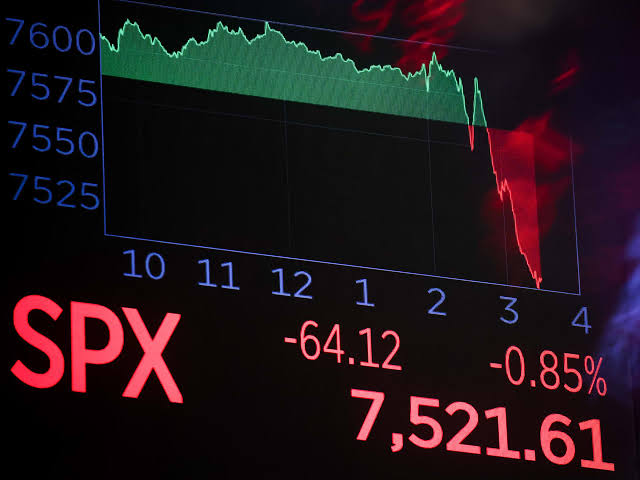

Over ninety percent of investors admit emotions influence their financial decisions, even when they know the numbers tell a different story. The psychology behind investing quietly shapes every trade and strategy, often pushing us to choices that logic alone cannot explain. By understanding how thoughts and feelings drive investment behavior, readers gain the tools to recognize hidden mistakes and approach finance with greater clarity and confidence.
Key Takeaways
| Point | Details |
|---|---|
| Psychological Influences | Investors are affected by cognitive biases and emotional triggers that can distort decision-making and lead to market inefficiencies. |
| Awareness of Biases | Recognizing biases such as loss aversion and overconfidence is crucial for improving investment strategies and outcomes. |
| Emotional Intelligence | Developing emotional distance and self-awareness can mitigate the impact of emotional triggers on financial decisions. |
| Strategic Framework | Successful investors implement systematic processes to counteract psychological pitfalls and maintain a disciplined, long-term investment approach. |
Table of Contents
- Defining The Psychology Of Investing
- Behavioral Finance And Key Investment Biases
- Emotional Triggers Influencing Investor Behavior
- Impact Of Psychology On Financial Decision-Making
- Common Mistakes And Strategies For Wise Investing
Defining the Psychology of Investing
Investing isn’t just about numbers. It’s about understanding the complex mental landscape that drives financial decision-making. Behavioral finance emerges as a powerful lens for comprehending how psychological factors fundamentally shape investment strategies and outcomes.
According to research in behavioral economics, investors are not the purely rational actors traditional economic theories assumed. Instead, our financial choices are deeply influenced by cognitive biases, emotional responses, and social dynamics. As research from Wikipedia reveals, psychological factors drive systematic errors and market inefficiencies that challenge conventional economic assumptions.
Key psychological elements impacting investment decisions include:
- Emotional reactivity: Panic selling during market downturns
- Confirmation bias: Seeking information that validates existing beliefs
- Loss aversion: Feeling losses more intensely than equivalent gains
- Herd mentality: Following crowd behaviors rather than independent analysis
Understanding these psychological mechanisms isn’t about criticism—it’s about self-awareness. By recognizing how our minds naturally process financial information, investors can develop more strategic, disciplined approaches to managing investments. Learn more about building a robust investment portfolio that accounts for these psychological nuances and helps you make more objective decisions.
Behavioral Finance and Key Investment Biases
Behavioral finance reveals the hidden psychological mechanisms that transform rational investment theory into messy human reality. According to research from Investopedia, investors are prone to several cognitive and emotional biases that systematically distort financial decision-making.
The most prevalent investment biases include:
Here’s a comparison of common investment biases and their effects:
| Bias | Description | Typical Impact on Investors |
|---|---|---|
| Confirmation Bias | Seeking info that confirms beliefs | Overlooking contrary data |
| Loss Aversion | Feeling losses more deeply than gains | Avoiding necessary risks |
| Recency Bias | Focusing on recent events or trends | Overreacting to market changes |
| Familiarity Bias | Preferring what is well-known | Poor diversification |
| Overconfidence | Overestimating predictive abilities | Excess risk-taking |
| Herd Mentality | Following the crowd’s behavior | Irrational market movement |
- Confirmation Bias: Seeking information that validates existing beliefs
- Loss Aversion: Feeling losses more intensely than equivalent gains
- Recency Bias: Overemphasizing recent experiences and market trends
- Familiarity Bias: Preferring investments in known or familiar territories
Recent literature reviews highlight that these biases emerge from intuitive judgments that consistently push investors away from analytical reasoning. Overconfidence, for instance, can lead investors to overestimate their predictive abilities, while herding behavior causes individuals to follow market crowds instead of making independent assessments.

Recognizing these biases is the first step toward mitigating their impact. Successful investors develop self-awareness and implement systematic strategies to counteract these natural psychological tendencies. Explore strategies for building a resilient investment portfolio that accounts for these inherent cognitive limitations and promotes more rational decision-making.
Emotional Triggers Influencing Investor Behavior
Investors are not rational machines—they are human beings driven by complex emotional responses that significantly impact financial decision-making. Emotional triggers play a profound role in shaping investment strategies, often operating beneath conscious awareness and challenging traditional economic theories of pure rationality.
According to the Somatic Marker Hypothesis, our bodily-based emotional responses fundamentally guide decision-making processes. Research from Investopedia suggests that emotions create powerful neurological markers that associate specific financial options with visceral reactions, potentially skewing judgment in unpredictable ways.
Key emotional triggers that dramatically influence investment behavior include:
- Fear of Missing Out (FOMO): Driving impulsive investment decisions
- Panic: Causing sudden, irrational sell-offs during market volatility
- Greed: Pushing investors to take excessive risks
- Overconfidence: Leading to unrealistic performance expectations
Recognizing these emotional triggers is crucial for developing disciplined investment strategies. Successful investors learn to create emotional distance, implement systematic decision-making processes, and understand common investing mistakes to avoid that stem from unchecked emotional responses. By developing emotional intelligence and self-awareness, investors can transform these triggers from potential pitfalls into opportunities for more thoughtful financial planning.
Impact of Psychology on Financial Decision-Making
Financial psychology transforms how we understand investment choices, revealing that money decisions are far more complex than simple mathematical calculations. Our brain’s intricate emotional and cognitive processes continuously shape financial behaviors in ways we often fail to recognize or consciously control.
The human mind approaches financial decisions through multiple psychological lenses. Emotional states like anxiety, excitement, and fear directly influence risk perception and investment strategies. An investor experiencing stress might make dramatically different choices compared to the same investor during a calm, rational moment. These psychological fluctuations can lead to significant deviations from optimal financial planning.
Key psychological factors impacting financial decision-making include:
- Emotional State: Influencing risk tolerance and investment choices
- Cognitive Biases: Distorting objective financial assessment
- Personal Financial History: Shaping subconscious money beliefs
- Social Conditioning: Affecting financial expectations and behaviors
Developing financial self-awareness becomes crucial in mitigating these psychological influences. Learn about creating a comprehensive financial plan that accounts for these subtle mental dynamics and helps you make more strategic, emotionally balanced investment decisions. By understanding how psychology impacts our financial choices, we can design more robust, personalized investment approaches that align with both our financial goals and psychological tendencies.
Common Mistakes and Strategies for Wise Investing
Investing wisdom emerges not from perfection, but from understanding and navigating psychological pitfalls that can derail financial success. According to research, investors frequently make systematic errors driven by complex psychological mechanisms that distort rational decision-making.
Research from business library sources highlights several critical mistakes that consistently undermine investment strategies:
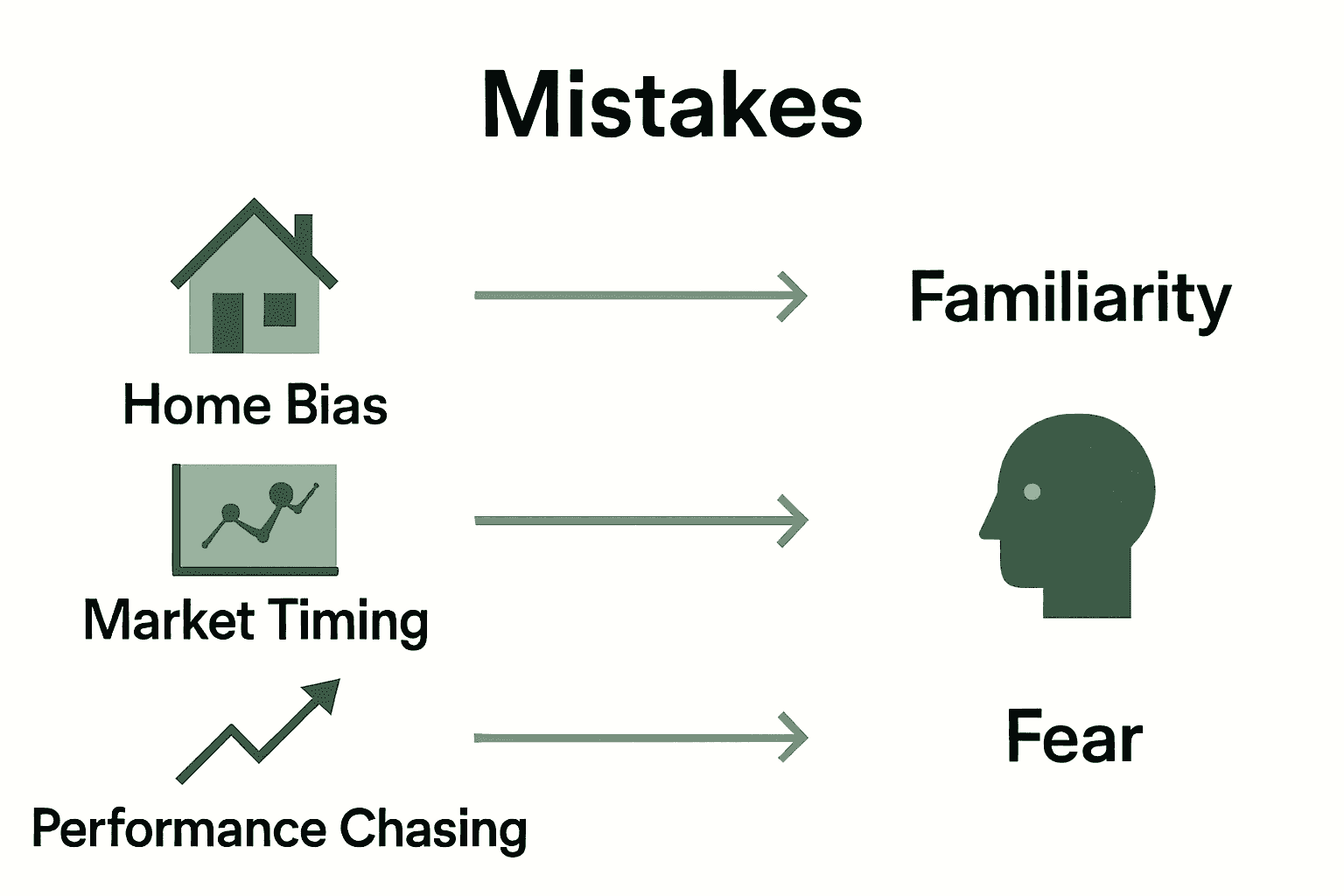
- Home Bias: Overinvesting in familiar markets or companies
- Performance Chasing: Pursuing investments based on past returns
- Market Timing: Attempting to predict short-term market movements
- Lack of Diversification: Concentrating investments in narrow sectors
To counteract these psychological traps, successful investors develop strategic approaches that prioritize discipline and self-awareness. This means creating systematic investment processes that minimize emotional interference, regularly rebalancing portfolios, and maintaining a long-term perspective. Explore safe investment options that can help mitigate risk and provide stable growth, reducing the likelihood of making impulsive, emotion-driven decisions. The key is developing an investment strategy that acknowledges human psychological limitations while creating structured frameworks for consistent, rational financial planning.
Take Control of Your Investment Mindset With Expert Guidance
Reading about the psychology of investing, you have seen how emotions, biases, and hidden beliefs often shape decisions more than you might realize. Do you struggle with fear during market drops or find yourself second-guessing choices because of herd mentality or confirmation bias? If you want to move beyond common investing mistakes and create a more rational, confident approach, now is the perfect time to take action.
Transform your investing habits today by tapping into the in-depth resources and expert support at finblog.com. Start by discovering how to build a robust investment portfolio that accounts for psychological pitfalls, or learn practical ways to avoid the most common investing mistakes covered in this guide. Ready for a strategy built around both your goals and your unique tendencies? Visit finblog.com and take your first step toward smarter investing right now.
Frequently Asked Questions
What is behavioral finance and how does it relate to investing?
Behavioral finance is a field that combines psychology and finance to understand how cognitive biases and emotional factors influence investment decisions, leading to systematic errors and market inefficiencies.
How can I recognize cognitive biases in my investment decisions?
You can recognize cognitive biases by self-awareness and analyzing your decision-making process. Biases like confirmation bias, loss aversion, and herd mentality can lead to flawed judgments. Keeping a journal of your investment choices may help identify patterns.
What are some common emotional triggers that impact investing?
Common emotional triggers include fear of missing out (FOMO), panic during market downturns, greed leading to excessive risk-taking, and overconfidence affecting performance expectations. Recognizing these triggers is crucial for rational decision-making.
What strategies can help mitigate psychological pitfalls in investing?
Strategies to mitigate psychological pitfalls include implementing systematic investment processes, maintaining a long-term perspective, diversifying investments, and regularly rebalancing your portfolio to minimize emotional interference.