

Trump’s sweeping tariffs were meant to revive US manufacturing, but one year later, the data shows higher prices, fewer jobs, and no real industrial comeback.
Nearly a year after Donald Trump launched his “Liberation Day” tariffs, the results are becoming clear and they are far from what was promised.
On April 2, 2025, Trump imposed a universal 10% tariff, with additional reciprocal tariffs reaching up to 50% on major trading partners, using emergency powers under the International Emergency Economic Powers Act (IEEPA). He framed it as a turning point:
“Foreign nations will finally be asked to pay for the privilege of access to our market.”
But one year later, the reality looks very different. Prices went up, not down. Instead of protecting consumers, tariffs pushed prices higher.
Economists estimate that consumer goods prices rose nearly 2%, with 90–95% of tariff costs passed directly to consumers. That means households, not foreign producers, carried most of the burden.
Separate analysis shows US households paid around $1,000 more on average over the past year due to tariff-related costs.
Even now, there has been little relief, as price pressures remain embedded across supply chains.
Manufacturing did not recover.
The core promise of tariffs was clear: bring manufacturing back to the US.
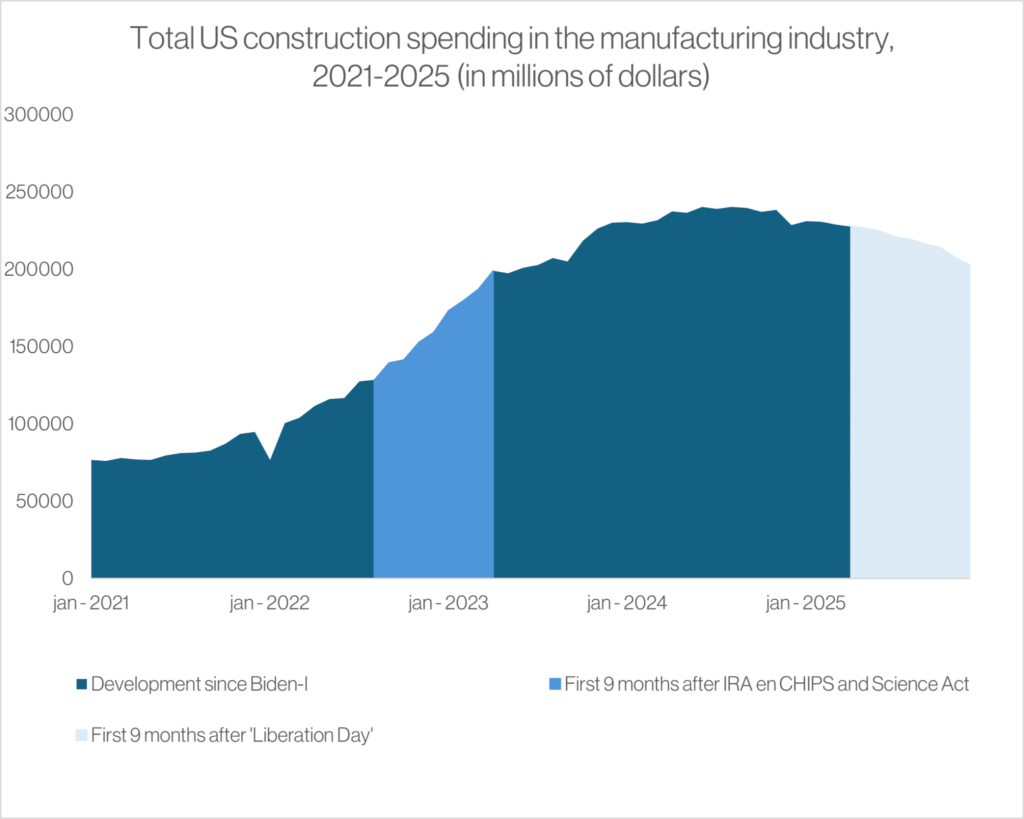
That did not happen.
- Manufacturing jobs fell by around 100,000 in 2025
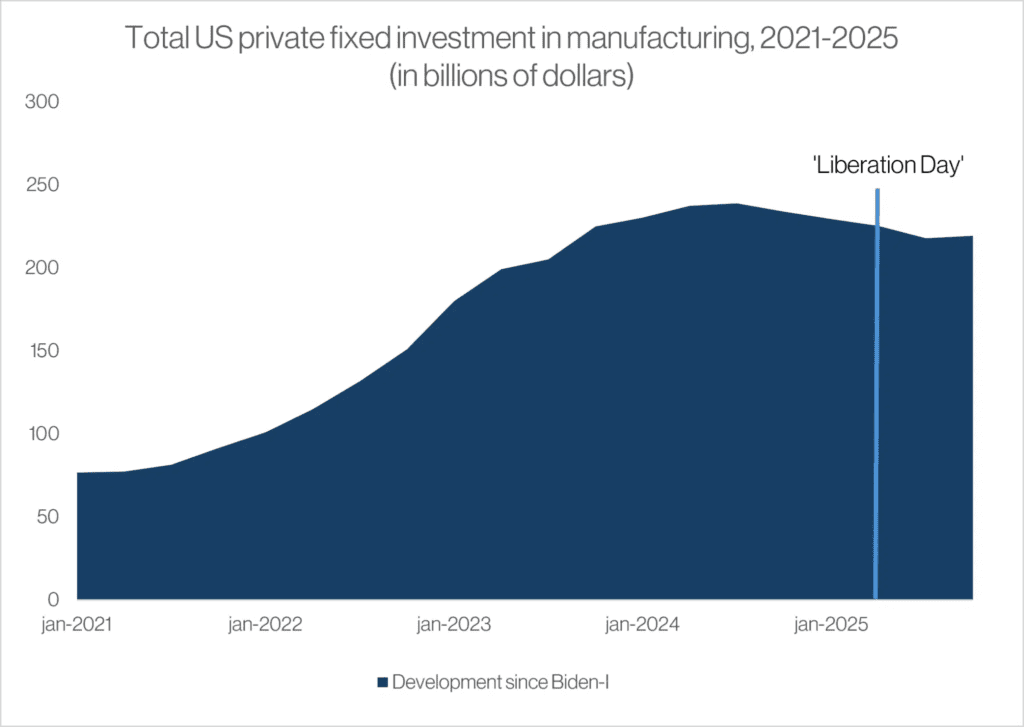
- Investment and construction spending declined after tariffs were introduced
- Production growth remained weak and marginal
Instead of a boom, the sector showed continued weakness across key indicators, including employment, investment, and business activity.
Experts point to structural issues.
US companies still rely heavily on imported intermediate goods, meaning tariffs often increase production costs rather than support domestic output. At the same time, labor shortages and high wages make reshoring difficult.
Trade deficit grew, not shrank
Another key goal was to reduce the US trade deficit. But the opposite happened. Despite aggressive tariffs, the trade deficit actually expanded, showing that tariffs alone were not enough to rebalance global trade flows.
This highlights a deeper issue: Trade is driven by structural demand, not just tariffs. Legal backlash changed everything
By early 2026, the policy faced a major turning point. The US Supreme Court ruled most of the emergency tariffs unconstitutional, forcing the government to begin a complex refund process for businesses that had paid them.
That process is still unfolding and could trigger waves of litigation between companies and consumers, especially over who ultimately absorbs or recovers the costs.
And even here, uncertainty remains. Refunds may not immediately reach consumers, creating what experts describe as a “vicious cycle” of delayed impact.

Tariffs are still here, just in a different form
Despite the ruling, tariffs did not disappear.
Within hours, the Trump administration introduced a new global 10% tariff under the Trade Act of 1974, with a 150-day limit, and has already suggested raising it to 15%.
So while the original tariffs were struck down, the policy direction remains unchanged.
One year later, the outcome is clear:
- Higher prices for consumers
- Job losses instead of job growth
- No meaningful manufacturing revival
- Wider trade deficits
- Ongoing legal and economic uncertainty
At the same time, global trade tensions have intensified, and supply chains remain under pressure.
So here is the real question markets are now asking: If tariffs failed to deliver growth but increased costs… will doubling down on them change anything?
That is the debate shaping the next phase of US trade policy.
Disclosure: This article does not represent investment advice. The content and materials featured on this page are for educational purposes only.