

The global trade outlook is weakening as the Middle East war drives up energy prices and disrupts key shipping routes, raising risks for economies and food security worldwide.
The World Trade Organization warned that the conflict could significantly slow trade growth in 2026, especially if oil prices remain elevated.
Trade Growth Could Drop Sharply
The WTO outlined two scenarios:
- Base case: Global trade grows 1.9% in 2026, down from 4.6% in 2025
- Worst case (high energy prices): Growth slows further to just 1.4%
This would mark a sharp slowdown, driven largely by rising energy costs and supply disruptions.
Energy Shock Is the Key Risk
The war has pushed oil and gas prices higher while disrupting flows through the Strait of Hormuz, a critical route for around 20% of global oil supply.
WTO chief Ngozi Okonjo-Iweala warned:
“Sustained increases in energy prices could increase risks for global trade… with spillovers for food security and cost pressures.”
Higher energy costs are already affecting:
- Transportation and shipping
- Food production via fertilizer costs
- Consumer prices globally
Supply Chains Under Pressure
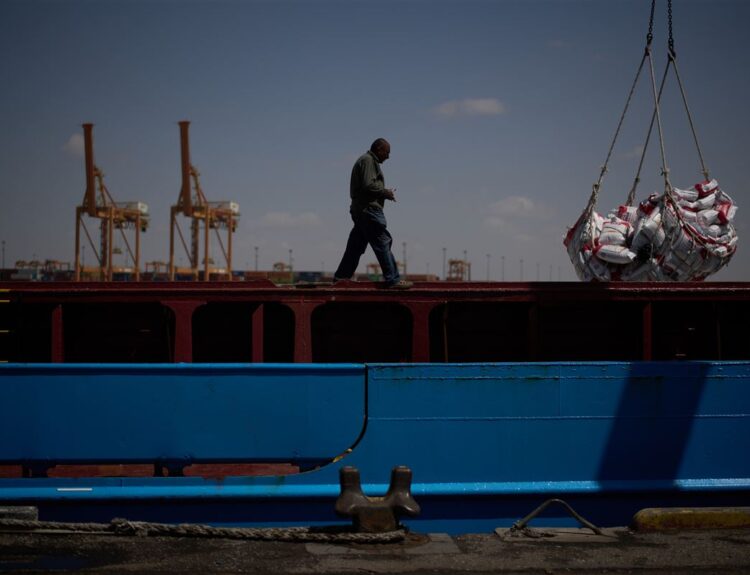
Shipping through the Strait of Hormuz has nearly collapsed, with traffic dropping from over 130 vessels per day to almost zero.
The WTO warned that this disruption threatens: Global supply chains, Energy exports, Food security in vulnerable regions
Asia and Europe, which rely heavily on imported fuel, are expected to be hit hardest.
Growth and GDP at Risk
If high energy prices persist:
- Global GDP growth could drop by 0.3 percentage points
- Trade growth could fall even further
Services trade is expected to remain more resilient, but even that could slow. The WTO says global trade is still holding up for now, supported by technology demand and digital services, but the outlook is deteriorating quickly.
Without stable energy markets and open supply routes, the conflict risks turning into a broader global economic shock.
Disclosure: This article does not represent investment advice. The content and materials featured on this page are for educational purposes only.
Related: How a Quarterly Earnings Shake-Up Could Reshape Wall Street Jobs