



Facing the challenge of complex tax rules can be overwhelming, especially as legislation continues to evolve for the upcoming 2026 filing season. For professionals in demanding fields like technology and finance, solid tax planning is more than a yearly checklist—it is a crucial part of protecting your income and financial goals. This guide delivers clear, actionable steps to help you organize documents, identify deductions, and use strategies that make your tax preparation smarter and more effective.
Table of Contents
- Step 1: Assess Your Financial Records
- Step 2: Identify Eligible Tax Deductions And Credits
- Step 3: Organize Necessary Tax Documents
- Step 4: Implement Strategies To Minimize Liabilities
- Step 5: Review And Verify Your Tax Plan
Quick Summary
| Key Point | Explanation |
|---|---|
| 1. Organize financial documents effectively | Gather all essential documents like W-2s, 1099s, and receipts to streamline tax preparation and verify accuracy. |
| 2. Identify available tax deductions and credits | Review common deductions such as education and health-related credits to maximize potential tax savings for the 2026 tax year. |
| 3. Implement proactive tax strategies | Contribute to retirement accounts and manage income to reduce liabilities and enhance savings opportunities throughout the year. |
| 4. Verify your tax plan thoroughly | Conduct a meticulous review of income, deductions, credits, and calculations to prevent errors and ensure accurate filing. |
Step 1: Assess your financial records
Preparing for your 2026 tax filing starts with a comprehensive assessment of your financial records. Understanding what documents you need and how to organize them can significantly streamline your tax preparation process and help you identify potential deductions.
Start by gathering all essential financial documents, including:
- Income statements: W-2 forms, 1099s for freelance or contract work
- Investment documents: Brokerage statements, dividend income records
- Expense receipts: Medical bills, charitable donations, business expenses
- Property records: Mortgage interest statements, property tax documents
The IRS Individual Online Account provides a centralized platform to review your tax information and track important financial details. Create an account to access your tax history, verify income reports, and ensure all your financial information is accurate and complete.
Organize these documents chronologically and create digital and physical backup copies. This systematic approach not only helps with tax preparation but also provides a clear financial snapshot for potential audits or future financial planning.
Here’s how common tax-related documents support your financial planning and IRS compliance:
| Document Type | Role in Tax Filing | Added Benefit for You |
|---|---|---|
| Income Statements | Report annual earnings | Identify missed income or errors |
| Investment Records | Track capital gains and losses | Spot opportunities for tax harvesting |
| Expense Receipts | Substantiate deductions | Maximize eligible deduction amounts |
| Property Documents | Verify real estate expenses | Prep for audits or future refinancing |
Pro tip: Consider using a dedicated tax preparation folder or digital app to track and categorize financial documents throughout the year, making your annual tax assessment much smoother.
Step 2: Identify eligible tax deductions and credits
Maximizing your tax savings begins with a strategic approach to identifying all available deductions and credits for the 2026 tax year. Understanding these financial benefits can significantly reduce your overall tax liability and potentially increase your tax refund.
Start by examining the most common tax deductions and credits, which include:
- Income-based credits: Earned Income Tax Credit, Child Tax Credit
- Education deductions: Student loan interest, tuition and fees
- Retirement contributions: Traditional IRA and 401(k) deductions
- Health-related credits: Medical expense deductions, Health Savings Account contributions
- Homeowner benefits: Mortgage interest, property tax deductions
The IRS provides comprehensive guidance on available tax credits and deductions that can help you minimize your tax burden.
Carefully review the inflation adjustments for tax provisions to understand the updated thresholds and eligibility requirements. Some credits have specific income limits and phase-out ranges, so it’s crucial to determine your exact qualification status.
Determine whether itemizing deductions or taking the standard deduction will provide the most tax benefit. Keep detailed documentation for all claimed deductions, as the IRS may require proof of these expenses during audit processes.

Pro tip: Create a digital spreadsheet to track potential deductions throughout the year, making it easier to compile and verify your tax documentation when filing season arrives.
Step 3: Organize necessary tax documents
Preparing for your 2026 tax filing requires a systematic approach to document organization that can save you time, reduce stress, and potentially maximize your tax benefits. Gathering essential financial documents is the foundation of a smooth tax preparation process.
Create a comprehensive tax document checklist that includes:
- Income documentation: W-2 forms, 1099s, investment income statements
- Expense receipts: Medical bills, charitable donations, business expenses
- Personal identification: Social Security cards, government-issued IDs
- Financial statements: Bank statements, investment account records
- Previous tax returns: Returns from the last three to seven years
Proper organization helps prevent errors, supports accurate reporting, and ensures you don’t miss potential deductions.
Consider creating both digital and physical filing systems. Scan important documents and store them securely in cloud storage with encrypted backup. Arrange physical documents in clearly labeled folders, categorizing them by type and tax year. Keep your most recent documents easily accessible and store older records in a secure, cool, and dry location.
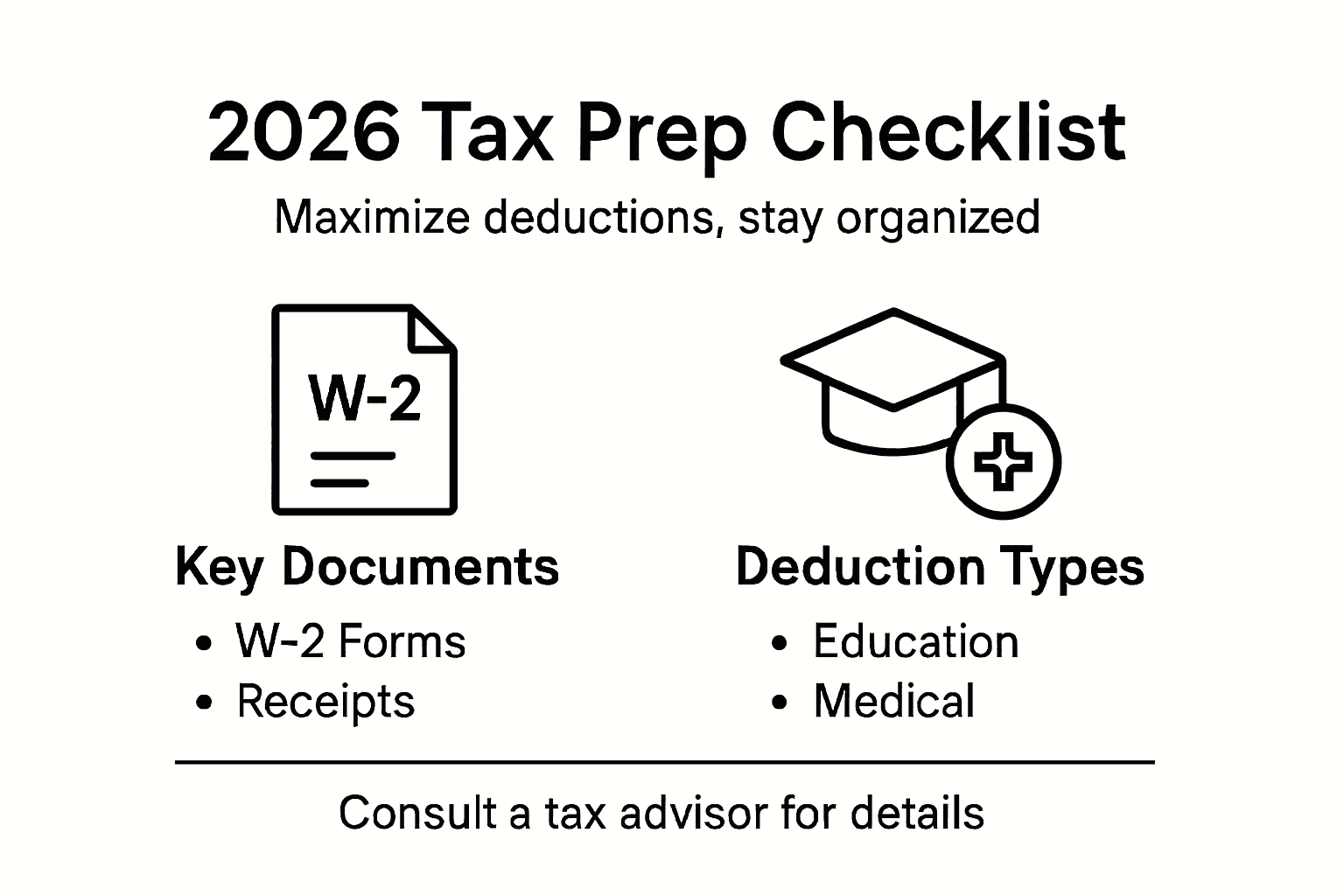
Pro tip: Invest in a fireproof and waterproof document storage box to protect your critical financial records from unexpected disasters.
Step 4: Implement strategies to minimize liabilities
Reducing your tax burden requires strategic planning and proactive financial management. Proactive tax strategies can help you legally minimize your tax liabilities and maximize potential savings.
Consider implementing these key strategies to reduce your tax burden:
- Retirement account contributions: Maximize 401(k) and IRA contributions
- Income management: Spread income across different tax years
- Expense tracking: Document all potential tax-deductible expenses
- Investment strategies: Utilize tax-efficient investment vehicles
- Credit optimization: Leverage available tax credits for your situation
Strategic tax planning can result in significant savings and improved financial health.
Pay special attention to new legislative provisions that offer tax reduction opportunities. Some strategies might include contributing to health savings accounts, taking advantage of education credits, or exploring business expense deductions if you have self-employment income.
Review this summary of popular tax-saving strategies and their long-term effects:
| Strategy | Short-Term Effect | Long-Term Impact |
|---|---|---|
| Maximize Retirement Savings | Lower taxable income now | Greater retirement growth |
| Use HSA Contributions | Reduce current-year taxes | Build tax-free medical savings |
| Itemize Deductions | Potential refund increase | More detailed annual records |
| Income Shifting | Lower current tax bracket | Smoother year-to-year cash flow |
Pro tip: Consider consulting a tax professional who can provide personalized strategies tailored to your specific financial situation and help you navigate complex tax regulations.
Step 5: Review and verify your tax plan
Finishing your tax preparation requires a meticulous review process to ensure accuracy and maximize potential benefits. Carefully verifying your tax documentation helps prevent errors that could delay refunds or trigger audits.
Conduct a comprehensive review of your tax plan using these key checkpoints:
- Income verification: Confirm all income sources are correctly reported
- Deduction accuracy: Double-check all claimed deductions
- Credit eligibility: Validate claimed tax credits against current regulations
- Mathematical precision: Review all calculations for accuracy
- Supporting documentation: Ensure all necessary receipts and forms are available
Thorough verification can save you from potential complications during tax processing.
Utilize digital tools and IRS online resources to cross-reference your information. Pay special attention to recent legislative changes that might impact your tax strategy, and be prepared to make last-minute adjustments if necessary.
Pro tip: Create a final tax preparation checklist and set aside dedicated time for a calm, methodical review of all documents to catch any potential discrepancies before submission.
Take Control of Your 2026 Tax Strategy Today
Planning for taxes can feel overwhelming when faced with the challenge of organizing countless documents and identifying every possible deduction and credit. This article highlights crucial pain points such as managing income reports, understanding deduction eligibility, and implementing effective tax-saving strategies to reduce your liabilities. If you want to move beyond confusion and maximize your tax benefits with confidence, professional guidance is essential.
At finblog.com, we specialize in empowering adults and serious investors to navigate complex tax regulations and optimize their financial outcomes. Explore expert insights on how to assess your finances, organize critical documents, and take advantage of updated tax provisions by visiting our landing page. Start your journey with trusted resources and personalized advice that help you stay ahead of tax season demands.
Ready to transform your tax planning approach and secure bigger savings for 2026 Start now with finblog.com and gain access to proven strategies and professional support designed just for you.
Frequently Asked Questions
How can I identify eligible tax deductions for 2026?
To identify eligible tax deductions for 2026, start by reviewing common categories such as medical expenses, education costs, and retirement contributions. Compile a list of potential deductions based on your financial activities throughout the year.
What documents should I gather to maximize my deductions for the 2026 tax season?
Gather essential documents like W-2 forms, 1099s, and receipts for deductible expenses. Organize these documents early to ensure you capture all eligible deductions well ahead of tax season.
Should I itemize deductions or take the standard deduction for my 2026 taxes?
Decide to itemize deductions or take the standard deduction by comparing the total of your itemized deductions against the standard deduction amount. Calculate which option offers the greater tax benefit to maximize your savings.
How can I keep track of my tax-deductible expenses throughout the year?
Keep track of your tax-deductible expenses by maintaining a dedicated folder, either physical or digital, where you store receipts and relevant documents. Regularly update this folder to ensure that you have a comprehensive record come tax time.
What proactive strategies can help lower my tax liability for 2026?
Proactive strategies to lower your tax liability include maximizing contributions to retirement accounts, tracking deductible expenses, and utilizing tax credits. Implement these strategies consistently to improve your overall tax position.
How can I verify my tax documentation before filing in 2026?
Verify your tax documentation by reviewing your income statements, deductions, and credits for accuracy. Double-check calculations and ensure all necessary supporting documentation is available to avoid errors during filing.
Recommended
- How to Save on Taxes: Proven Strategies for Professionals – Finblog
- Understanding Tax Efficient Investing: How It Works – Finblog
- Tax Loss Harvesting Explained: Boosting Investment Returns – Finblog
- Understanding the Tax Implications of Investing – Finblog
- Combien cotiser ? Kits objectifs & discipline d’épargne en période d’inflation – Cirkkle