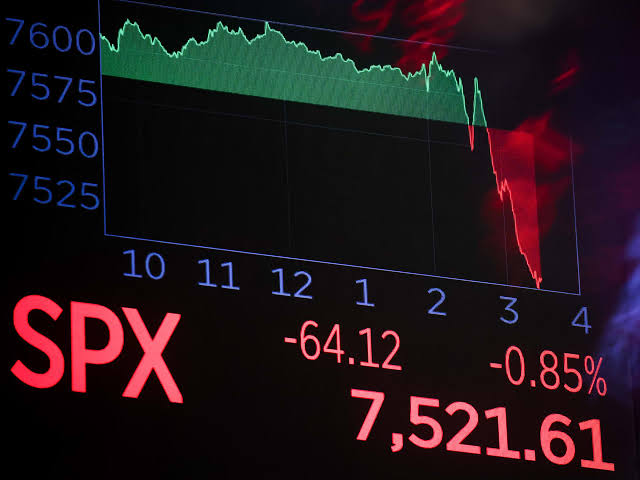

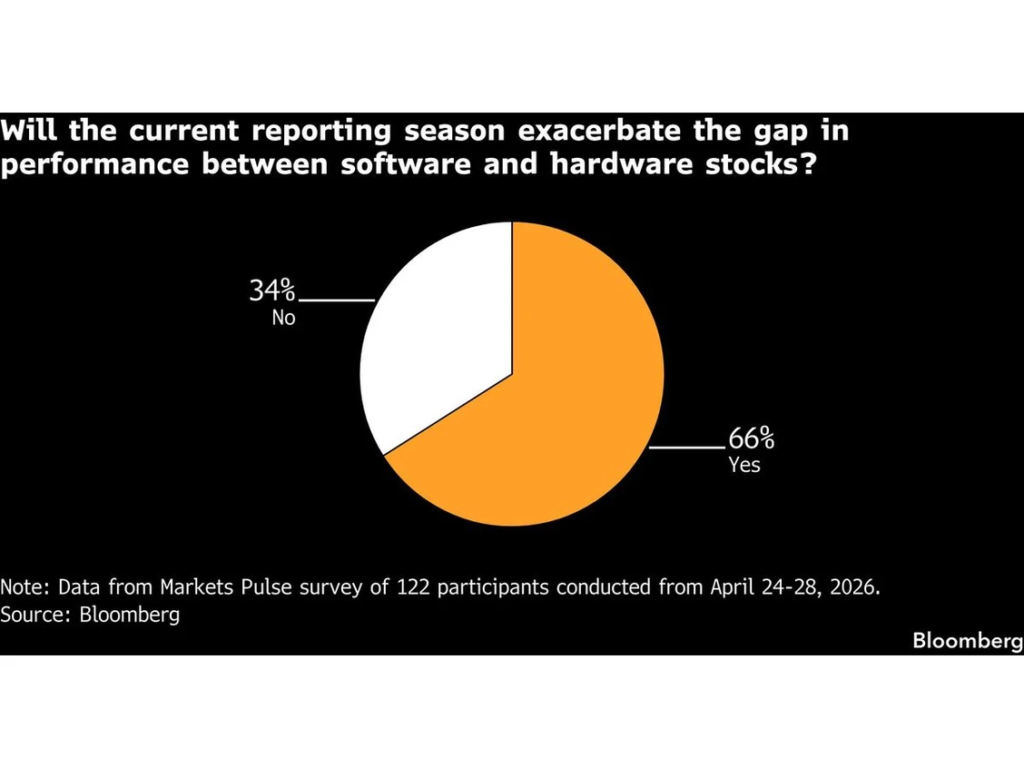
The AI rally is still alive… but it’s no longer lifting everyone equally. Technology stocks may look strong on the surface this earnings season, but a deeper shift is happening underneath. A new Bloomberg Markets Pulse survey shows a growing divide between chipmakers and software companies, as artificial intelligence reshapes the sector.
AI Is Creating Winners and Losers
A majority of investors still believe the rally has room to run.
- 65% of respondents expect the “Magnificent Seven” to move higher after earnings
- But confidence is split on how strong that upside will be
The reason is simple: AI is no longer a uniform growth story. Instead, it’s creating a gap between:
- Hardware companies building the infrastructure
- Software firms struggling to defend their value
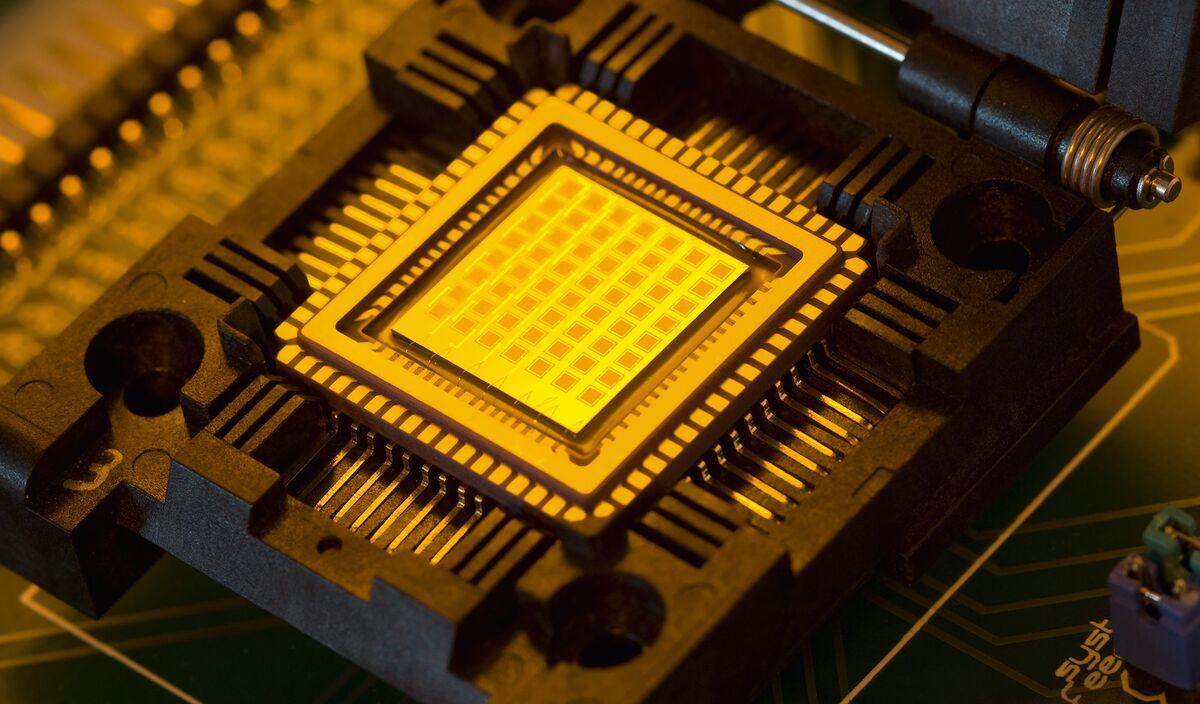
Chip Stocks Are Dominating the Market
The biggest winners so far are semiconductor companies.
- The VanEck Semiconductor ETF (SMH) has surged, including a massive 28% jump this month alone
- Meanwhile, the iShares Expanded Tech Software ETF (IGV) just posted its worst quarter since the 2008 financial crisis
This marks the widest outperformance of chips over software on record. Companies like Nvidia continue to benefit from massive demand for AI infrastructure, including data centers and advanced chips.
Software Faces a New Threat
While hardware thrives, software is entering a more uncertain phase. According to market participants, AI is turning some software into a commodity.
Lower barriers to entry and low switching costs mean:
- Some products can be easily replicated or replaced
- Competitive advantages are eroding faster
- Profitability could come under pressure
In short, not all tech companies are equally protected in the AI era.
Massive Spending, But Growing Doubts
The AI boom is being fueled by an enormous wave of investment.
- Up to $1 trillion in capital expenditure is expected over the next year
- Spending is spreading beyond tech into energy and infrastructure
But investors are starting to question whether it’s justified.
- More than half of survey participants said AI spending may not deliver expected returns
- Still, optimism is rising slightly, with 41% now supporting the investment case
Rising Costs Add Another Layer of Risk
At the same time, costs are increasing across the board.
- Energy prices are rising, especially with oil above $100
- Chip production requires huge amounts of power
- Higher input costs could limit output or reduce margins
Despite this, the strength of AI-related stocks has helped support the broader market, even in a challenging macro environment.
The AI boom is not ending. It’s evolving.
- Chips and infrastructure are leading the rally
- Software is becoming more vulnerable
- Spending is massive, but not fully trusted
The result: a tech market that looks strong from the outside… but is increasingly divided inside. AI is still driving growth. But now, it’s deciding who wins and who falls behind.
Disclosure: This article does not represent investment advice. The content and materials featured on this page are for educational purposes only.
Related: ETFs vs Mutual Funds: What Investors Need to Know in 2026