

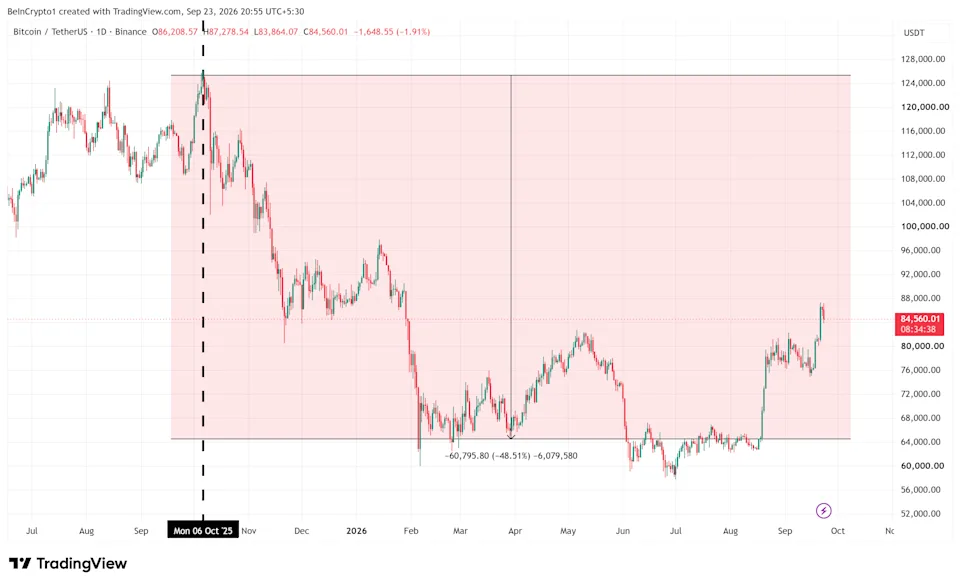
None of the 15 institutions interviewed by Bitwise reduced their crypto allocations during a roughly 50% market decline. Several bought more, suggesting their reasons for investing survived the selloff.
The findings cover the downturn between late 2025 and the second quarter of 2026, rather than this week’s trading. Participants included pension funds, university endowments, sovereign wealth funds and family offices.
In its September 23 announcement, Bitwise summarised their approach:
“No institution named a price decline as a reason it would sell.”
Why They Stayed Invested
For these investors, the deciding factor was whether their original reasons for holding crypto remained valid.
Every participant with crypto exposure owned Bitcoin, usually as its largest and longest-held digital asset. Many viewed it as a potential store of value, sometimes alongside gold.
However, their commitment generally involved small portfolio allocations. Most reported putting 1%–2% of investable assets into crypto, although the full range was 0.5%–13%.
That distinction matters. As a simple illustration, a 50% loss on a position initially worth 2% of a portfolio would reduce the portfolio’s starting value by about 1%, assuming everything else stayed unchanged.
Related: “Old Coin” (Gold) vs “New Coin” (Bitcoin)
What Would Make Them Sell?
According to Cointelegraph’s coverage, respondents identified a regulatory reversal, an industry-wide credibility crisis or the failure of their investment case as possible reasons to exit.
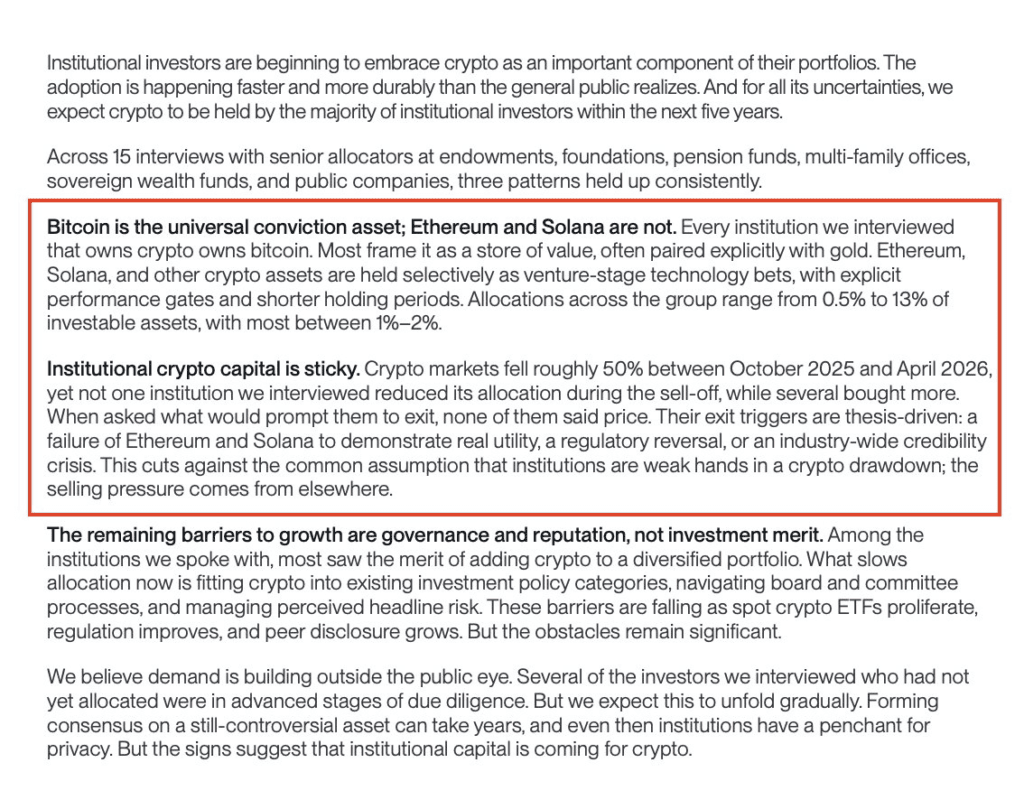
Their confidence in Ether and Solana was more conditional. These positions were generally smaller and assessed over shorter periods. Some investors wanted evidence that growing network activity would translate into greater value for the tokens themselves.
A Small Study, Not the Whole Market
The interviews offer insight into 15 institutions, not proof that all institutional investors held through the decline. Bitwise also sells crypto investment products, making its commercial interest relevant when interpreting its optimistic conclusions.
The striking finding is that these investors combined conviction with limited exposure and clear reasons to sell. Their approach was more considered than simply holding at any price.
Disclosure: This article does not represent investment advice. The content and materials featured on this page are for educational purposes only.