



A global boom in corporate investment could keep upward pressure on bond yields, even as central banks raise rates to fight inflation, according to Topdown Charts’ Callum Thomas.
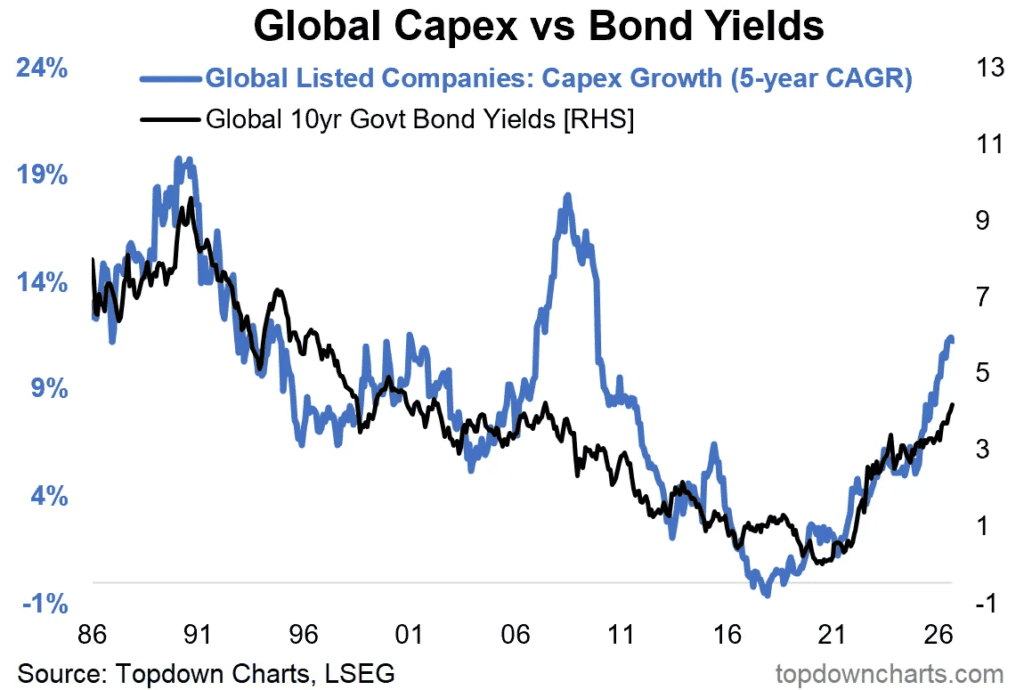
His analysis compares five-year annualised growth in corporate capital expenditure with average 10-year government bond yields worldwide.
Capital expenditure, or capex, means spending on assets such as factories, equipment and data centres.
Why More Investment Can Push Yields Higher
Thomas identifies two connections. Expanding investment increases demand for financing, potentially raising its cost. It also accompanies stronger economic activity, which can add to inflation pressures.
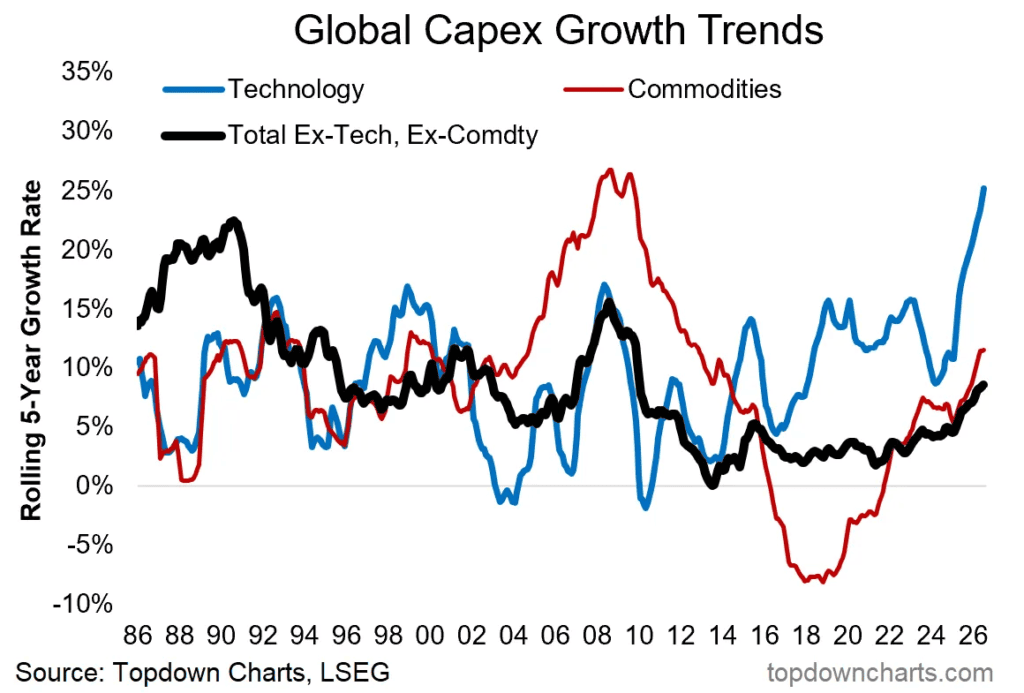
US technology companies are leading the expansion, but Thomas sees investment accelerating across industrials, utilities and commodity businesses, as well as developed and emerging markets.
Related: Fed Raises Rates for the First Time Since 2023 as Inflation Persists
What Could Turn the Bond Market Around?
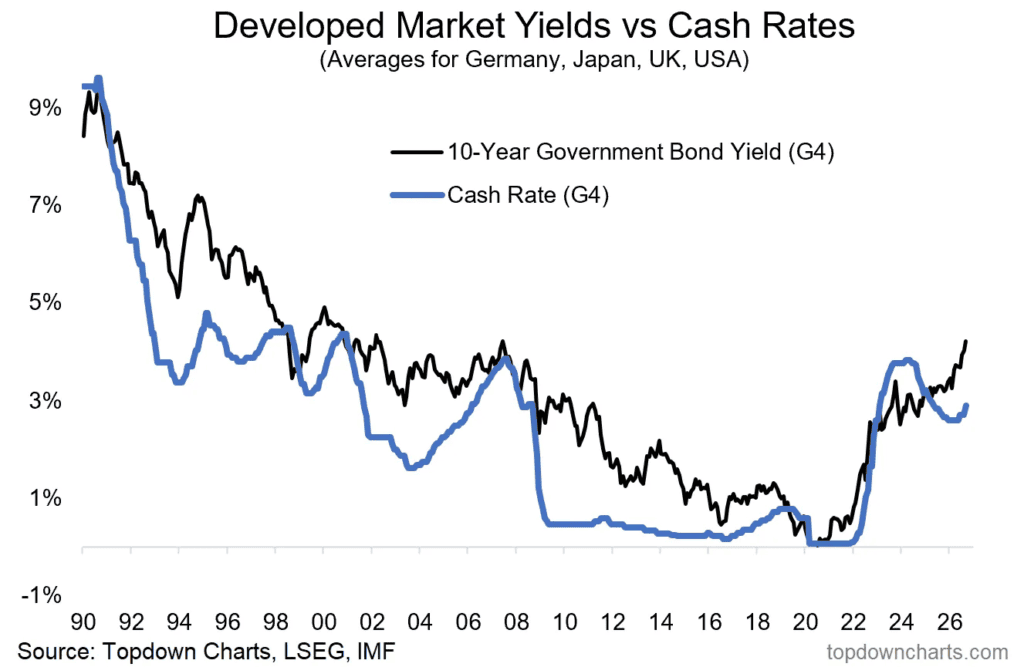
Thomas argues that higher policy rates could eventually cool investment and inflation, helping longer-term yields peak.
“Peak capex will probably coincide with peak bond yields.”
That is his forecast, rather than a fixed rule. He highlights 2007–2011 as a period when the relationship broke down amid commodity-price shocks and the financial crisis.
Related: Warsh Says Inflation Is “Too High” as Fed Raises Rates
Corporate investment deserves a place alongside inflation and central-bank decisions on investors’ watchlists. A slowdown in spending growth could offer a clue that pressure on bond yields is easing, but it would not guarantee an immediate turnaround.
Disclosure: This article does not represent investment advice. The content and materials featured on this page are for educational purposes only.