
President Donald Trump says the Iran war will end “immediately” after the November midterm elections, but senior White House officials and outside experts are warning that Tehran may be able to keep fighting for much longer.
Trump told reporters that Iran “can’t hold out any longer” and argued that Tehran is prolonging the conflict to influence the November 3 election. He also said oil prices would fall once the war ends.
White House Advisers See a Different Timeline
Behind closed doors, some of Trump’s closest advisers reportedly have a much more cautious view.
Vice President JD Vance, Secretary of State Marco Rubio and other senior officials have discussed the possibility that Iran could continue resisting the US blockade, sanctions and military pressure through the rest of Trump’s term, potentially beyond January 2029.
That would turn what was initially expected to be a short conflict into a years-long war, increasing pressure on US military resources and global energy markets.
Related: Iran turns to crypto to shore up economy
Iran’s Economy Is Weak, but Still Functioning
Iran is clearly under severe pressure. The IMF expects the economy to shrink 5.4% this year, while annual inflation reached 88.6% by early summer and the rial fell beyond 2 million per US dollar.
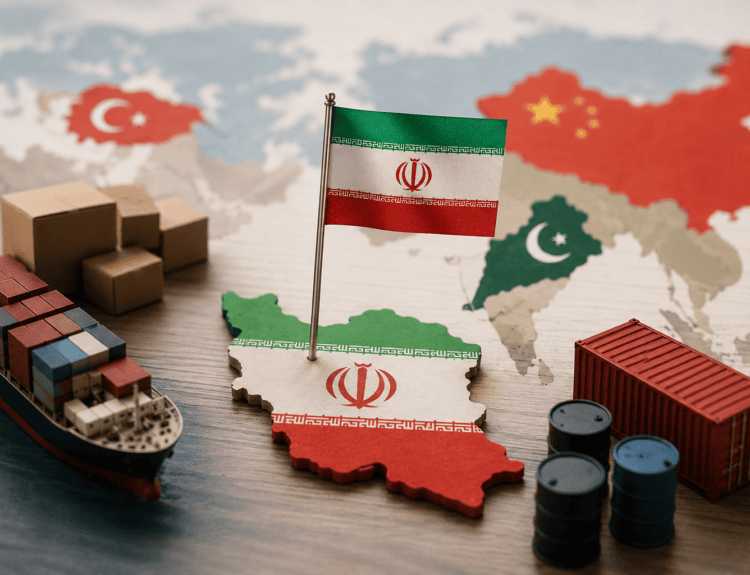
But Foreign Affairs argues that Tehran has spent years adapting to sanctions. Iranian businesses have reduced imports, developed alternative trade networks and learned to operate with fewer resources.
Imports are expected to fall to around $40 billion this year, from $58 billion last year and $72 billion the year before. That reflects deep economic weakness, but it also reduces Iran’s immediate need for foreign currency.
The bigger problem is that much of the economic pain is falling on ordinary Iranians rather than the state itself. As Foreign Affairs argues, the government can continue prioritizing military and political needs even while living standards deteriorate.
Related: Why Trump’s War Hasn’t Broken Iran’s Economy
Oil Remains the Market Risk
A prolonged conflict would also keep pressure on energy markets.
Brent crude has moved above $100 a barrel, while disruption around the Strait of Hormuz continues to threaten one of the world’s most important energy routes.
Related: Oil Tops $100 as US-Iran Conflict Escalates
Investor takeaway: Trump is betting that Iran will soon run out of room to resist. His own advisers and outside analysts are less confident. If the conflict stretches well beyond the midterms, oil prices, inflation and geopolitical risk could remain elevated much longer than markets currently expect.
Disclosure: This article does not represent investment advice. The content and materials featured on this page are for educational purposes only.