



The monthly US Jobs Report remains one of the most important indicators for the economy and financial markets, but the Government Accountability Office (GAO) says declining survey participation and occasional large revisions are making the numbers harder to measure precisely.
The report is built from two major surveys. A household survey determines the unemployment rate, while an establishment survey collects employment, working-hours and earnings data from businesses and government agencies.
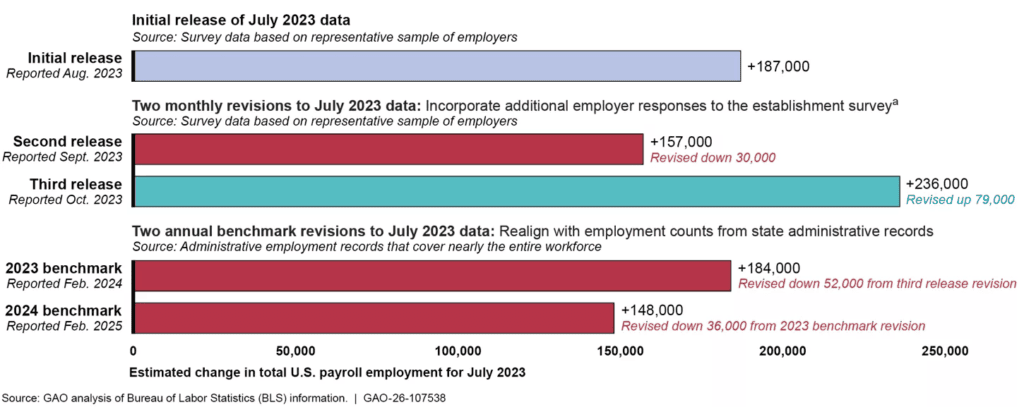
Revisions are a normal part of the process because some employers submit their information after the initial report. However, the GAO found two growing concerns:
- Large revisions can make the first estimate less useful for immediate economic decisions.
- Survey response rates have fallen substantially since COVID-19, making some figures, including unemployment, less precise.
The issue matters because the Federal Reserve closely watches employment and unemployment when setting interest rates, while businesses and financial institutions use the data for hiring and investment decisions. Despite the concerns, experts interviewed by the GAO said the Jobs Report generally continues to provide accurate, timely and useful information.
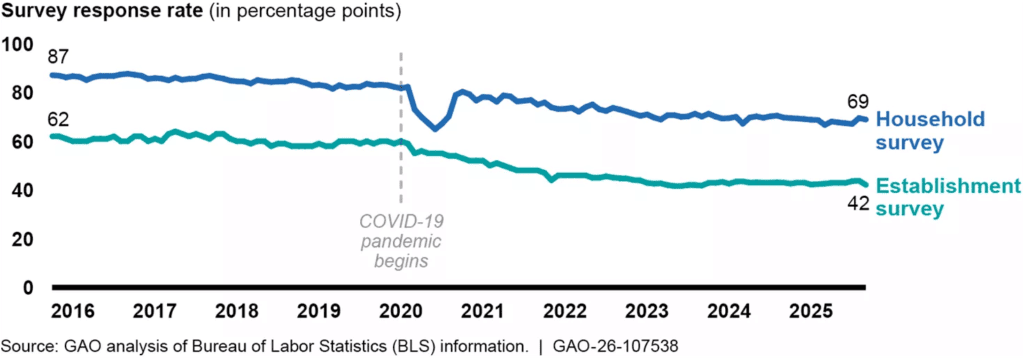
BLS is already changing some of its methods and plans to introduce an online response option for the household survey in 2027, although funding constraints could delay the project.
Investor takeaway: A strong or weak monthly jobs number can move stocks, bonds and expectations for Fed policy, but investors should remember that the first estimate is not necessarily the final picture of the labor market.
Source: U.S. Government Accountability Office
Disclosure: This article does not represent investment advice. The content and materials featured on this page are for educational purposes only.