

Stocks and bonds are often treated as competing investments, but long-term market history shows they usually have more in common than investors might think.
According to Topdown Charts, both asset classes have produced positive returns during most periods. The major difference is that when both are rising, stocks tend to outperform bonds, helping explain why equities have historically been the stronger long-term wealth-building asset.
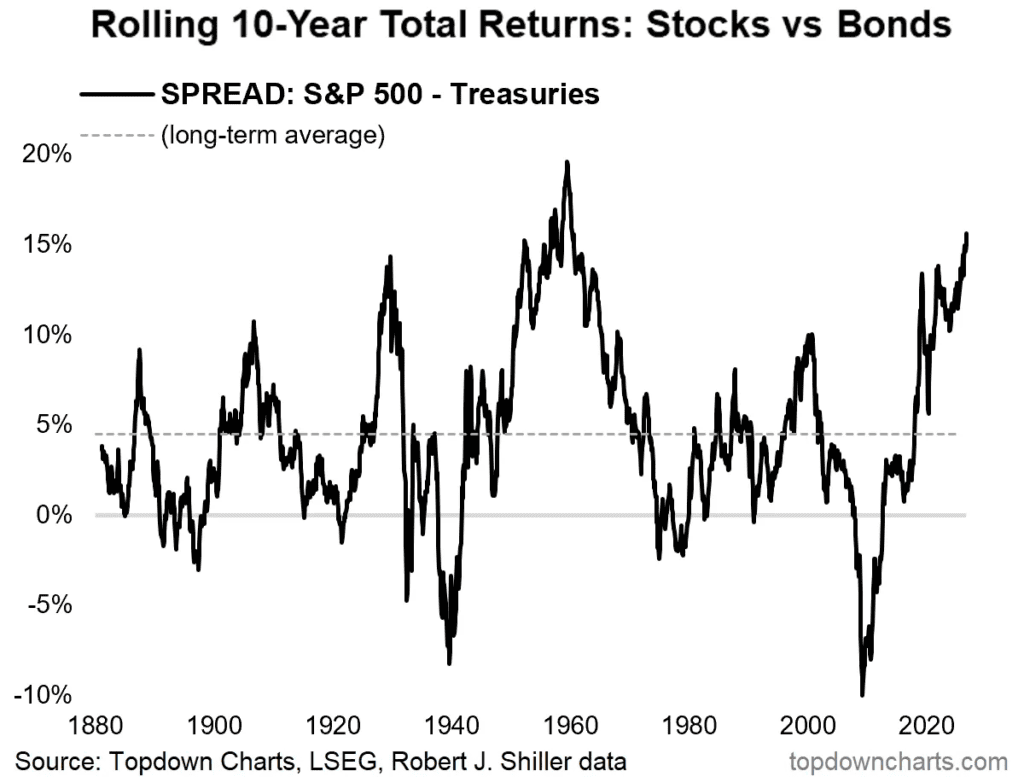
The relationship changes when markets turn lower. During periods when stocks fall, bonds have historically beaten equities most of the time, reinforcing their traditional role as a defensive part of a portfolio.
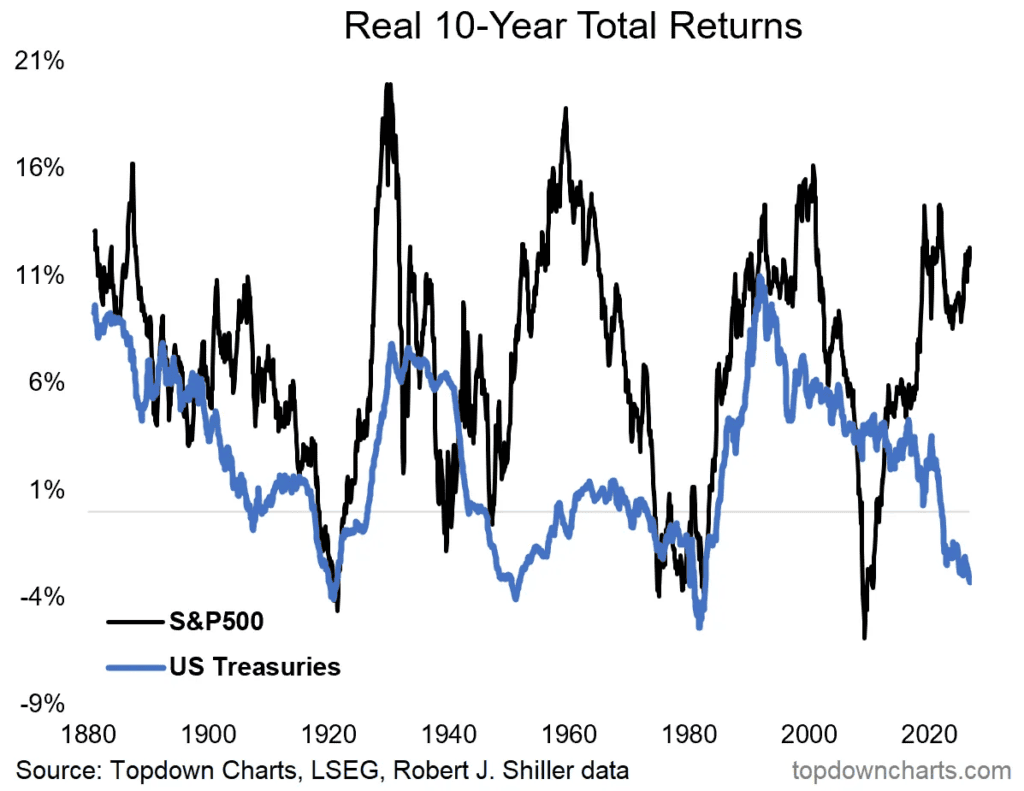
That distinction matters now because the relative attractiveness of the two assets has changed. Topdown Charts has previously highlighted that stocks are expensive compared with bonds, while higher yields have made bonds more attractive than they were during the ultra-low-rate era.
So the choice is not necessarily stocks or bonds. Stocks have historically offered greater upside when markets are healthy, while bonds can become particularly valuable when economic growth weakens and equities come under pressure.
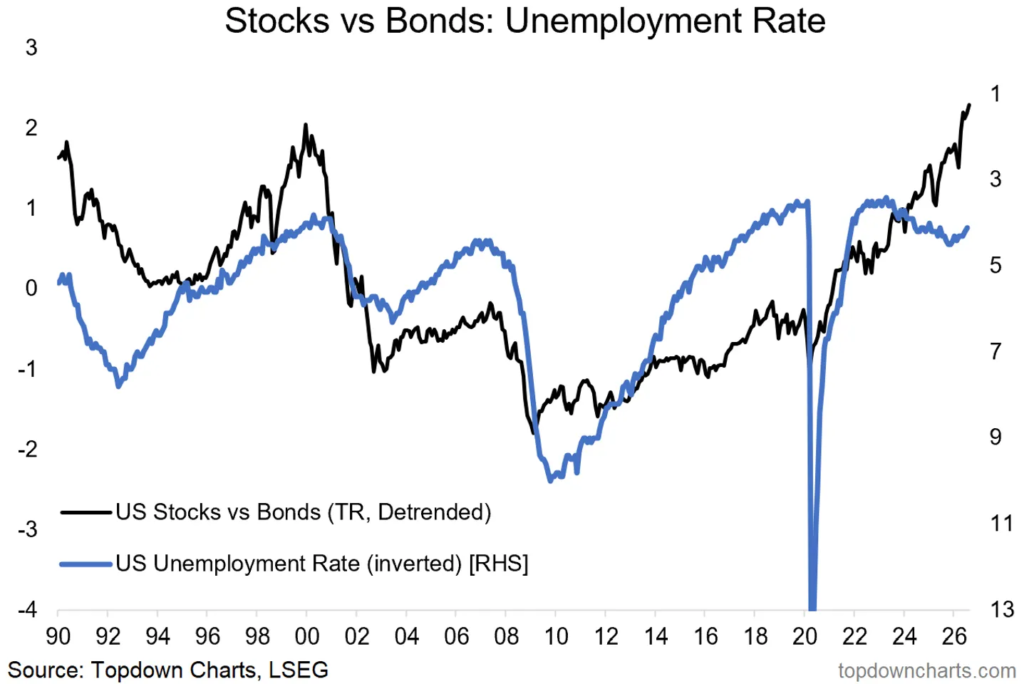
Investor takeaway: Stocks remain the stronger long-term growth asset historically, but today’s higher bond yields give investors a more attractive alternative and potentially better protection if the equity rally eventually turns lower.
Disclosure: This article does not represent investment advice. The content and materials featured on this page are for educational purposes only.
Related: Japan Bond Market Explained: Why Yen Carry Trade Still Moves Stocks And Crypto?