


TL;DR:
- Financial literacy is essential for making effective money decisions, yet Americans’ scores are at a decade low.
- Low financial literacy increases debt risk and reduces savings, impacting long-term financial security.
Financial literacy is defined as the knowledge and skills needed to manage money effectively, make sound investment decisions, and achieve long-term financial goals. The importance of financial literacy reaches every area of personal finance, from building a monthly budget to choosing the right retirement account. Yet the 2026 TIAA Institute-GFLEC survey found that U.S. adults answered only 47% of financial literacy questions correctly, the lowest score in a decade. That number tells a clear story: financial literacy why is it important is not an abstract question. It is a measurable gap with real consequences for debt, savings, and financial security.
Why is financial literacy important for your financial well-being?
Financial literacy is the foundation of every sound money decision you make. Without it, you cannot evaluate a loan offer, build an emergency fund, or assess whether an investment carries too much risk. Economist Annamaria Lusardi describes financial literacy as a fundamental life skill on par with reading and writing. That framing matters because it shifts the conversation from optional self-improvement to a basic requirement for functioning in a modern economy.

The need for financial literacy grows as financial products become more complex. Variable-rate mortgages, index funds, and income-driven student loan repayment plans all require a baseline understanding to use correctly. Choosing the wrong product through ignorance is not a minor inconvenience. It can cost thousands of dollars over a lifetime and derail retirement plans entirely.
Adults who receive formal financial education score significantly higher on literacy assessments and are more likely to save and manage debt effectively. That outcome is not accidental. Education builds the mental models people need to recognize a bad deal, resist high-pressure sales tactics, and plan ahead.
What are the core components of financial literacy?
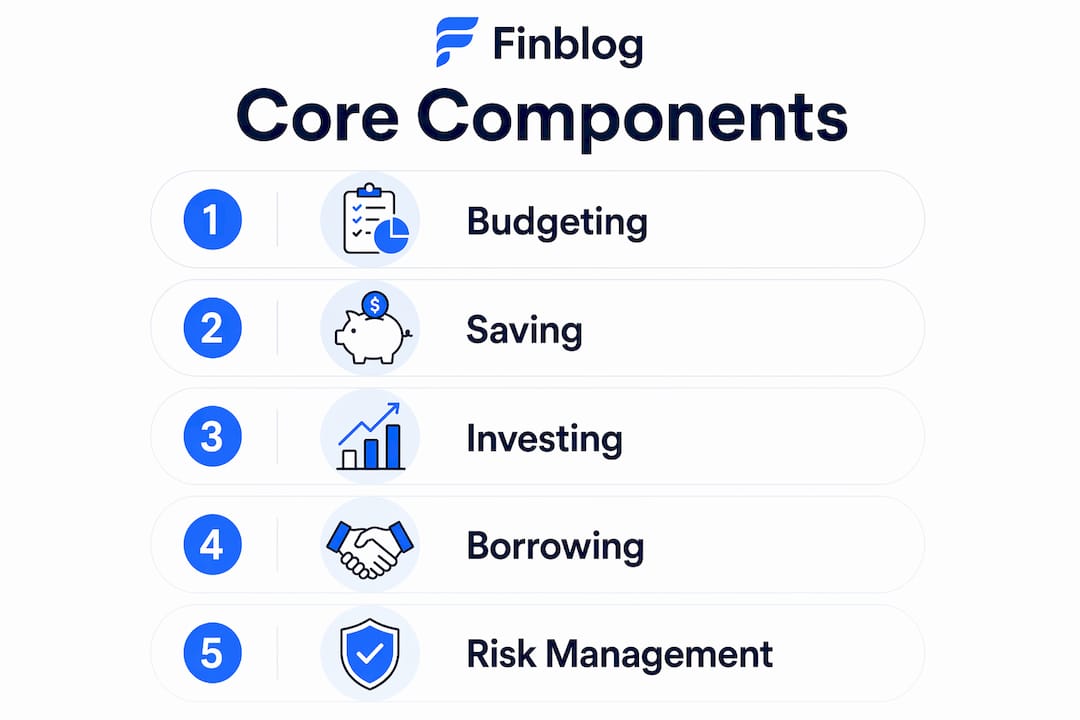
Financial literacy covers a wider range of skills than most people realize. The Personal Finance Index (P-Fin Index), developed by the TIAA Institute and the Global Financial Literacy Excellence Center (GFLEC), measures financial literacy across 28 question areas including earning, saving, investing, borrowing, managing debt, insuring, and understanding risk. Each area represents a real decision you face at some point in your financial life.
The core pillars break down as follows:
- Budgeting: Tracking income and expenses to avoid overspending and identify savings opportunities.
- Saving: Building an emergency fund and setting aside money for short and long-term goals.
- Investing: Understanding how stocks, bonds, mutual funds, and retirement accounts work and how risk affects returns.
- Credit and debt management: Reading credit reports, understanding interest rates, and paying down high-cost debt first.
- Risk and insurance: Evaluating what financial shocks you could face and what products protect against them.
- Evaluating information sources: Distinguishing credible financial guidance from misinformation, especially online.
| Component | Role in financial health |
|---|---|
| Budgeting | Controls cash flow and prevents overspending |
| Saving | Creates a buffer against unexpected expenses |
| Investing | Builds long-term wealth through compounding returns |
| Debt management | Reduces interest costs and protects credit scores |
| Risk evaluation | Prepares you for financial shocks before they happen |
Pro Tip: Start with the P-Fin Index self-assessment at the GFLEC website to identify which of the eight financial literacy areas you score lowest in. That gap is your highest-priority learning target.
How does financial literacy impact individual financial outcomes?
Low financial literacy carries measurable, documented costs. Individuals with very low literacy are twice as likely to be debt-constrained and five times more likely to lack savings to cover one month of living expenses. Those risks persist even after controlling for income and education level, which means literacy itself is the variable that matters.
The share of Americans with very low financial literacy has grown from 20% a decade ago to 25% today. That one-in-four figure represents tens of millions of people making financial decisions without the tools to evaluate them properly.
Financial resilience is where the gap shows up most sharply. True resilience requires budgeting, debt management, and risk evaluation working together, not just having a savings account. Yet only 56% of adults report being able to access extra funds within 30 days of a financial shock. That statistic means nearly half of American adults are one unexpected car repair or medical bill away from a financial crisis.
Social media has made the problem worse in a specific way. Platforms spread both useful personal finance content and rampant misinformation at the same speed. People without foundational knowledge cannot distinguish good advice from bad, which means they are equally likely to follow a sound budgeting tip and a predatory investment scheme. The solution is not to avoid social media. The solution is to build enough baseline knowledge to evaluate what you read.
“Complex financial products contribute to confusion, and blaming consumers alone is misguided. Systemic overhaul and improved consumer knowledge are both necessary for financial stability.”
What systemic disparities affect financial literacy globally?
Financial literacy access is not equal, and the consequences of that inequality compound over time. Account ownership stands at 85% in high-income economies and only 45% in low-income economies. Without a bank account, you cannot build a credit history, save safely, or access investment products. The financial literacy gap and the financial access gap reinforce each other.
Within the United States, the disparities follow predictable lines. Lower-income households, communities of color, and first-generation college students consistently score lower on financial literacy assessments. That gap is not primarily a motivation problem. It reflects unequal access to financial education at home and in school.
Four structural factors drive these disparities:
- K-12 education gaps: Most states do not require a standalone personal finance course for graduation, leaving students from low-income households without the foundational knowledge their wealthier peers absorb at home.
- Language and cultural barriers: Financial products and educational materials are rarely available in languages other than English, excluding large portions of the population.
- Digital finance complexity: Mobile banking, cryptocurrency, and digital payment platforms require a new layer of financial knowledge that many adults have not been taught.
- Predatory product targeting: High-fee financial products are disproportionately marketed to communities with lower financial literacy, creating a cycle of debt.
Teaching financial literacy in K-12 education acts as a leveler by giving every student an equal financial foundation regardless of home background. States that mandate personal finance courses have measurably better outcomes for young adults in credit scores and savings rates.
Pro Tip: If you are a parent or educator, the Council for Economic Education’s “Survey of the States” tracks which states require personal finance courses. Use it to advocate for stronger requirements in your district.
How can you improve your financial literacy for better money management?
Building financial literacy is a process, not a single event. The most effective approach starts with the basics and adds complexity only after the foundation is solid. Jumping straight into cryptocurrency or options trading without understanding compound interest or credit scores is a common and costly mistake.
A practical path forward looks like this:
- Start with budgeting. Use the 50/30/20 framework: 50% of after-tax income to needs, 30% to wants, and 20% to savings and debt repayment. This single framework resolves most cash flow problems.
- Build an emergency fund first. Before investing, accumulate three to six months of living expenses in a high-yield savings account. This removes the pressure to liquidate investments at a loss during a crisis.
- Learn before you invest. Read the prospectus or fund summary before putting money into any investment product. If you cannot explain how the product makes money, do not buy it yet.
- Use reputable sources. The Consumer Financial Protection Bureau (CFPB), the Securities and Exchange Commission (SEC), and the National Endowment for Financial Education (NEFE) all publish free, unbiased educational materials.
- Verify before you act. Cross-check any financial advice you find on social media against at least two credible sources before making a decision.
Adults who receive structured financial education are 80% more likely to save regularly for retirement and report significantly higher confidence in their financial decisions. That outcome is achievable for anyone who commits to consistent learning. Finblog’s beginner’s guide to financial literacy is a practical starting point for readers who want a structured path through the fundamentals. For those ready to move into investing, the 2026 investing and wealth guide covers portfolio construction, risk tolerance, and long-term wealth-building strategies.
Equity crowdfunding platforms like CrowdedHero also publish educational content on alternative investments, which can help you understand asset classes beyond traditional stocks and bonds before committing capital.
Key Takeaways
Financial literacy is the single most important factor separating people who build lasting wealth from those who remain trapped in cycles of debt and financial insecurity.
| Point | Details |
|---|---|
| Literacy is declining | Only 47% of financial literacy questions answered correctly in 2025, the lowest in a decade. |
| Low literacy has real costs | Very low literacy makes you twice as likely to be debt-constrained and five times more likely to lack savings. |
| Resilience requires multiple skills | Budgeting, debt management, and risk evaluation together determine your ability to handle financial shocks. |
| Systemic gaps exist | Account ownership is 85% in high-income economies vs. 45% in low-income economies, showing unequal access. |
| Education changes outcomes | Adults with financial education are significantly more likely to save regularly and feel confident about retirement. |
Financial literacy is a life skill, not a luxury
I have spent years watching people make expensive financial mistakes that had nothing to do with intelligence. A software engineer who could not explain how his 401(k) allocation worked. A nurse who paid minimum balances on three credit cards for a decade without realizing the total interest cost exceeded the original purchases. These are not edge cases. They are the predictable result of a system that treats financial education as optional.
What frustrates me most about the current literacy decline is that the information has never been more accessible. The CFPB, the SEC, and dozens of nonprofit organizations publish free, high-quality materials. The problem is not access to information. The problem is that most people do not know what they do not know, so they never seek it out.
The social media misinformation angle deserves more attention than it typically gets. A person with no financial foundation who encounters a viral post about a “guaranteed” 30% annual return has no framework to recognize the red flag. Financial literacy does not just help you make good decisions. It helps you recognize bad ones before they cost you.
My honest recommendation: treat financial education the way you treat physical health. You do not wait until you have a crisis to start paying attention. You build habits before you need them. Start with one concept this week, whether that is understanding your credit score, reading your pay stub line by line, or calculating your actual savings rate. Small, consistent steps compound just like interest does.
— Povilas
Finblog resources for building your financial knowledge
Finblog covers the full range of personal finance topics, from first-time budgeting to long-term wealth management. Whether you are starting from zero or looking to sharpen your investing knowledge, the Finblog resource hub brings together guides, frameworks, and practical tools built for serious learners. The site’s content is organized by experience level, so you can move from foundational money management concepts to more advanced investment strategies without getting lost. If the research in this article made you want to take your financial education further, Finblog is a direct next step.
FAQ
What is financial literacy, and why does it matter?
Financial literacy is the ability to understand and apply financial skills including budgeting, saving, investing, and debt management. It matters because low literacy directly increases the risk of debt problems and lack of savings, regardless of income level.
Why is financial literacy important for students?
Financial literacy is important for students because habits formed early, such as budgeting and avoiding high-interest debt, determine financial outcomes for decades. K-12 financial education acts as an equalizer, giving students from all backgrounds a common financial foundation.
What happens when financial literacy is low?
Individuals with very low financial literacy are twice as likely to be debt-constrained and five times more likely to lack savings to cover one month of living expenses. These risks persist even when controlling for income and education.
How does social media affect financial decision-making?
Social media spreads both credible personal finance advice and misinformation at the same speed. People without foundational financial knowledge cannot reliably distinguish between the two, which increases the risk of poor financial decisions.
How can I start improving my financial literacy today?
Start with free resources from the CFPB or NEFE to build foundational knowledge in budgeting and saving. Then use structured guides, such as those available on Finblog, to progress into investing and long-term wealth management.