


TL;DR:
- The stock market is a system where investors buy and sell shares of publicly traded companies to grow wealth. It operates through exchanges like NYSE and Nasdaq, with prices fluctuating constantly based on supply and demand. Beginners should focus on long-term investing, diversify their portfolios, and learn key terms to build confidence and avoid risky trades.
The stock market is defined as the system where investors buy and sell ownership shares of publicly traded companies, enabling both capital growth for businesses and wealth accumulation for individuals. This introduction to stock market investing covers everything you need to build a real foundation: how markets work, the difference between trading and investing, and the terms you will encounter on day one. The market has delivered positive returns in 73% of the past 96 years. That track record makes it one of the most reliable long-term wealth-building tools available to ordinary investors.
How does the stock market work?

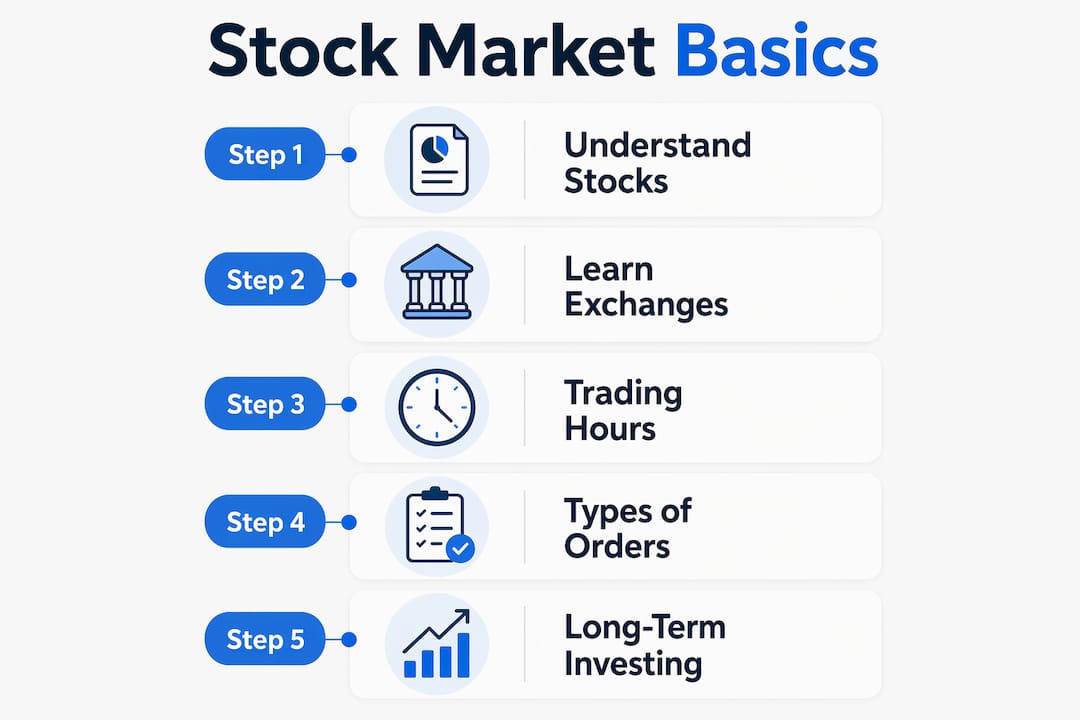
The stock market operates through two main venues: formal exchanges and over-the-counter (OTC) markets. The New York Stock Exchange (NYSE) and Nasdaq are the two largest formal exchanges in the United States. OTC markets handle stocks that do not meet the listing requirements of major exchanges.
Companies enter the market through an initial public offering (IPO). An IPO is when a private company sells shares to the public for the first time, raising capital to fund operations or expansion. After the IPO, those shares trade on the secondary market, where investors buy and sell among themselves rather than directly with the company.
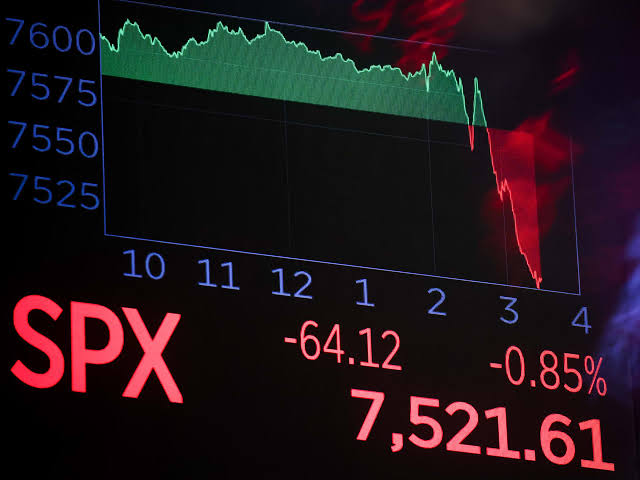
Stock prices fluctuate constantly through a process called price discovery. Price discovery works like an auction: buyers submit bids and sellers submit asks, and a trade executes when both sides agree on a price. Factors like company earnings, economic data, and investor sentiment all shift those bids and asks in real time.
Key participants in this system include:
- Retail investors: Individual investors buying and selling for personal accounts
- Institutional investors: Entities like pension funds and mutual funds trading large volumes
- Brokers: Firms or platforms that execute trades on behalf of investors
- Market makers: Firms that maintain liquidity by always standing ready to buy or sell a stock
Trading hours on major U.S. exchanges run from 9:30 a.m. to 4:00 p.m. Eastern Time on weekdays. Pre-market and after-hours sessions exist but carry lower liquidity and wider price spreads, making them less predictable for beginners.
Pro Tip: Start by watching how a stock’s bid and ask prices move during regular trading hours before placing any real orders. This builds intuition for how price discovery actually feels in practice.
What are the basics of stock trading versus long-term investing?
Stock trading and long-term investing are two distinct approaches, and confusing them is one of the most common beginner mistakes. Stock trading focuses on short-term price movements to generate profits, often requiring frequent trades and precise market timing. Long-term investing, by contrast, means buying shares and holding them for years or decades, letting compounding do the heavy lifting.
Active traders are defined by volume. Active trading means executing 10 or more trades per month. That pace demands constant market monitoring, real-time data access, and a high tolerance for loss.
Day trading sits at the extreme end of active trading. Day trading involves buying and selling the same stock within a single day and is considered high-risk even for professionals. Beginners are strongly advised to avoid it. The combination of transaction costs, emotional pressure, and the need for institutional-grade tools makes consistent profitability extremely rare for novices.
Long-term investing removes most of that pressure. Here is a practical framework for choosing your approach:
- Define your time horizon. If you need the money within three years, the stock market carries too much short-term risk for that capital.
- Assess your risk tolerance. Short-term trading amplifies both gains and losses. Long-term investing smooths out volatility over time.
- Calculate your available time. Active trading requires hours of daily attention. Long-term investing can work with a few hours per month.
- Set a realistic return expectation. Long-term investors benefit from the market’s historical upward trend. Traders must outperform that trend after costs, which most do not.
- Choose a strategy and commit. Switching between trading and investing mid-stream is how most beginners lose money.
Diversification reduces portfolio volatility and is one of the most effective risk management tools available to any investor. Spreading capital across sectors, industries, and asset classes means one bad stock does not sink your entire portfolio. You can read more about this tradeoff in Finblog’s guide on active vs. passive investing.
Pro Tip: If you are unsure whether to trade or invest, default to long-term investing. You can always add a small “practice” allocation for active trading once you understand the fundamentals.
What are essential stock market terms beginners should know?
Building a working vocabulary is the fastest way to move from confused to confident. The terms below appear in nearly every conversation about the basics of trading in stock market environments.
- Stock (Share): A unit of ownership in a company. Owning one share of Apple means you own a tiny fraction of Apple Inc.
- Dividend: A cash payment companies make to shareholders, usually quarterly, as a share of profits.
- Bid: The highest price a buyer is willing to pay for a stock at a given moment.
- Ask: The lowest price a seller will accept. The gap between bid and ask is called the spread.
- Portfolio: The full collection of investments you own across all accounts.
- ETF (Exchange-Traded Fund): A basket of stocks that trades on an exchange like a single stock. ETFs offer instant diversification at low cost.
- Mutual Fund: A pooled investment vehicle managed by a professional. Unlike ETFs, mutual funds price once per day after the market closes.
Two order types matter most for beginners. Market orders execute immediately at the best available price, while limit orders execute only at a price you specify or better. Market orders are fast but give you no price control. Limit orders protect you from buying at a spike or selling at a dip.
Stock indexes like the Dow Jones Industrial Average and the S&P 500 track the performance of groups of stocks and serve as the market’s report card. The S&P 500 tracks 500 large U.S. companies and is widely used as the benchmark for overall market performance.
| Term | What it means |
|---|---|
| Market order | Buy or sell immediately at the current market price |
| Limit order | Buy or sell only at your specified price or better |
| ETF | A basket of stocks trading as one security on an exchange |
| Dividend | A cash payment from a company to its shareholders |
| S&P 500 | An index tracking 500 large U.S. companies, used as a market benchmark |
How can beginners get started investing safely?
Getting started is simpler than most beginners expect. The barriers are low, but the habits you build in the first few months will shape your results for years.
- Open a brokerage account. Opening a brokerage account is the required first step to access the stock market. Most major brokerages offer commission-free trading and no account minimums.
- Set a budget you can afford to lose. Never invest money you need for rent, groceries, or emergency expenses. A good starting point is a fixed monthly amount that does not affect your daily life.
- Choose a strategy before you buy anything. Decide whether you are building a long-term portfolio of index funds or learning to pick individual stocks. Do not do both at once when starting out.
- Diversify from day one. A single ETF tracking the S&P 500 gives you exposure to 500 companies instantly. That is a stronger starting position than owning five individual stocks.
- Commit to ongoing education. Education and realistic goals are the foundation of successful investing habits. Read earnings reports, follow market news, and review your portfolio monthly.
The biggest mistake beginners make is chasing quick profits. The market rewards patience far more reliably than it rewards speed. Finblog’s step-by-step investing guide walks through each of these steps in detail, including how to evaluate your first brokerage account.
Pro Tip: Set up automatic monthly contributions to your brokerage account. Automating removes emotion from the process and builds the discipline that separates successful long-term investors from everyone else.
Key takeaways
The stock market rewards investors who understand its mechanics, build diversified portfolios, and commit to a long-term perspective rather than chasing short-term gains.
| Point | Details |
|---|---|
| Long-term returns are reliable | The market delivered positive returns in 73% of the past 96 years, making patience a proven strategy. |
| Trading and investing are different | Active trading requires 10+ trades per month and carries far more risk than long-term buy-and-hold investing. |
| Vocabulary builds confidence | Knowing terms like bid, ask, ETF, and limit order lets you act on information instead of guessing. |
| Diversification protects you | Spreading investments across sectors reduces volatility without sacrificing long-term growth potential. |
| Start with a brokerage account | Opening an account and automating contributions is the most effective way to build investing discipline. |
What I have learned after years of watching beginners enter the market
Most beginners lose money in their first year not because the market is unfair, but because they skip the foundation. They open an account, buy a stock they heard about on social media, watch it drop 20%, and panic sell. Then they decide the market is rigged. It is not. They just skipped the part where you learn what you own and why.
The single most useful mindset shift I have seen is treating the stock market as a long-term wealth engine rather than a short-term lottery. Diversified portfolios deliver smoother returns over long periods, even if they never produce the dramatic single-stock wins you read about online. That consistency is the point. A portfolio that grows steadily for 20 years beats a portfolio that spikes and crashes every two years, almost every time.
The psychological side of investing is underrated. Volatility feels personal when it is your money. A 10% market drop feels catastrophic in the moment and looks like a buying opportunity in hindsight. The investors who build real wealth are the ones who manage trading risk with discipline and do not let short-term fear override a long-term plan.
My honest advice: spend your first month learning before you spend a single dollar. Read about how the market works, practice with paper trading if your brokerage offers it, and set a clear goal for what you want your money to do. The market will still be there when you are ready.
— Povilas
Finblog’s resources for stock market beginners
Finblog covers the full range of topics beginners need to build real investing knowledge. The stock market basics guide on Finblog walks through market mechanics, account setup, and portfolio construction in plain language. For investors who want practical tips right away, the essential investing tips for 2025 article covers the habits that separate disciplined investors from impulsive ones. Finblog publishes new guides regularly, covering everything from index funds to reading earnings reports, so you always have a reliable next step as your knowledge grows.
FAQ
What is the stock market in simple terms?
The stock market is a marketplace where investors buy and sell shares of publicly traded companies. It allows companies to raise capital and gives investors a way to grow their wealth over time.
Is the stock market safe for beginners?
The market carries risk, but long-term investing in diversified portfolios significantly reduces that risk. Beginners who avoid day trading and focus on index funds face far less volatility than active traders.
What is the difference between a stock and an ETF?
A stock represents ownership in one company, while an ETF holds a basket of many stocks and trades on an exchange like a single security. ETFs offer instant diversification, which makes them a practical starting point for new investors.
How much money do I need to start investing?
Most major brokerages have no minimum account balance, so you can start with any amount. The key is investing consistently over time rather than waiting until you have a large lump sum.
What is price discovery in the stock market?
Price discovery is the process by which stock prices are set through the matching of buy and sell orders. Prices shift constantly as new information, earnings reports, and investor sentiment change the balance between buyers and sellers.