

Japan’s inflation remained largely unchanged in May, giving the Bank of Japan (BOJ) another mixed signal as it balances slowing consumer prices against rising cost pressures.
Official data showed core consumer inflation, which excludes fresh food prices, rose 1.4% year-over-year, matching both market expectations and April’s reading. It also marked the fourth consecutive month below the BOJ’s 2% inflation target, largely due to government subsidies that continue to offset higher energy costs.
At the same time, headline inflation edged up to 1.5% from 1.4% in April, while a closely watched measure that excludes both fresh food and energy slowed to 1.8%, suggesting underlying price pressures are easing.
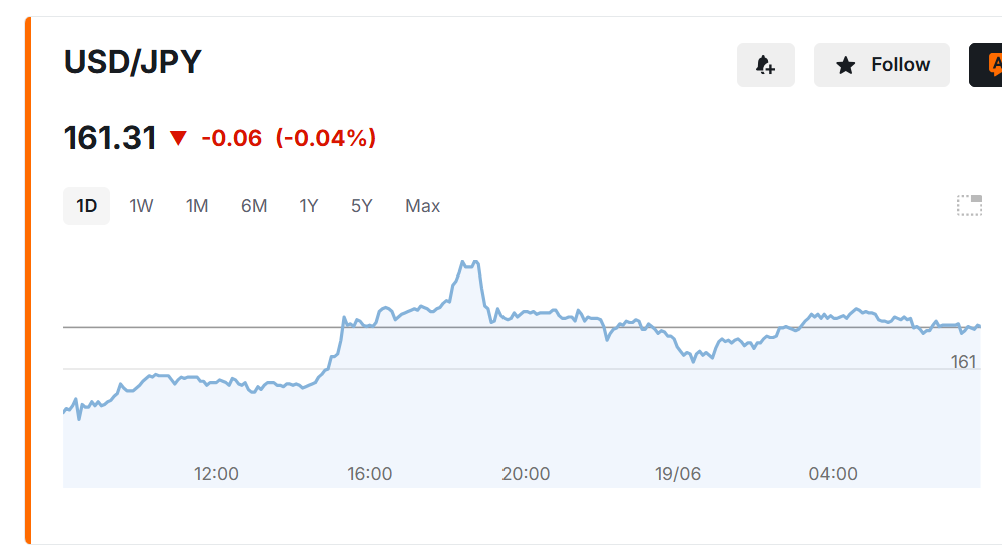
Despite the softer inflation data, the outlook remains uncertain.
The BOJ recently raised interest rates to 1%, the highest level since 1995, warning that rising producer prices and higher energy costs linked to the Middle East conflict could eventually feed through to consumers. Japan’s producer price inflation jumped 6.3% in May, signaling that businesses are facing mounting cost pressures that may later appear in retail prices.
For investors, the picture remains mixed:
- Core inflation stayed below the BOJ’s 2% target
- Government fuel subsidies continue to limit price growth
- Producer prices are rising sharply
- The BOJ has signaled it remains open to further rate hikes
While inflation has stayed relatively subdued so far, many economists expect it to accelerate later this year as higher energy and import costs gradually filter through the economy.
Disclosure: This article does not represent investment advice. The content and materials featured on this page are for educational purposes only.