
Financial literacy remains a critical challenge for American adults, with the average score on comprehensive financial knowledge tests hovering below 50% in 2026. This gap directly affects your ability to make informed investment decisions and build sustainable wealth. Understanding core financial principles empowers you to navigate complex markets, recognize behavioral traps, and leverage professional guidance effectively. This guide walks you through current literacy benchmarks, practical assessment tools, and actionable strategies combining AI resources with expert advice to elevate your financial decision-making and secure your financial future.
Table of Contents
- Current Financial Literacy Landscape And Its Impact On Investors
- Assessing And Improving Your Financial Literacy In 2026
- Navigating Challenges: Biases, Social Media Influence, And Professional Guidance
- Applying Financial Literacy To Smart Investing And Wealth Management
- Enhance Your Financial Literacy With Finblog Resources
Key takeaways
| Point | Details |
|---|---|
| Low literacy persists | Under half of U.S. adults scored above 50% on key financial literacy tests in 2026, indicating widespread knowledge gaps. |
| Younger investors lag | Adults aged 25-45 show lower investment rates and higher reliance on social media for financial advice, increasing risk exposure. |
| AI enhances decisions | AI-powered tools and professional advisors significantly improve portfolio management and reduce common behavioral biases. |
| Professional guidance doubles confidence | Working with wealth managers correlates with stronger retirement preparedness and more disciplined investment strategies. |
Current financial literacy landscape and its impact on investors
Understanding where you stand financially starts with recognizing how literacy is measured and what current data reveals. The P-Fin Index evaluates knowledge across eight functional areas including earning, consuming, saving, investing, borrowing, insuring, comprehending risk, and go-to information sources. Meanwhile, the National Financial Capability Study (NFCS) uses seven foundational questions covering interest rates, inflation, bond pricing, mortgages, and diversification. In 2026, U.S. adults average 49% correct on the P-Fin Index, with younger adults showing lower investment rates at 26% and reduced risk tolerance. The NFCS 2026 data shows 46% answer four or more questions correctly, with higher scores strongly correlating with emergency savings, retirement planning, and diversified portfolios.
For adults aged 25-45, the picture reveals specific challenges. This demographic shows declining participation in stock market investing compared to previous generations at the same age, despite having longer time horizons to benefit from compound growth. Many rely heavily on social media platforms for financial guidance, exposing themselves to unverified advice and gamified trading apps that encourage speculative behavior. Research consistently demonstrates that individuals with stronger financial literacy maintain emergency funds covering three to six months of expenses, contribute regularly to retirement accounts, and avoid high-interest debt cycles.
| Age Group | Average Literacy Score | Investment Rate | Emergency Savings |
|---|---|---|---|
| 25-34 | 45% | 22% | 38% |
| 35-44 | 51% | 31% | 47% |
| 45-54 | 53% | 39% | 52% |
Several factors influence these literacy scores and subsequent financial behaviors:
- Educational background and exposure to personal finance concepts during formative years
- Access to employer-sponsored financial wellness programs and retirement planning resources
- Cultural attitudes toward money management, investing, and seeking professional advice
- Economic circumstances including income stability, debt levels, and family financial obligations
- Media consumption patterns and susceptibility to marketing from financial products
“Financial literacy scores have remained essentially flat since 2017, suggesting that despite increased access to information, Americans are not meaningfully improving their foundational financial knowledge.”
This stagnation highlights the need for targeted interventions. Simply having access to information does not translate to comprehension or application. You must actively engage with structured learning, test your knowledge against established benchmarks, and recognize where gaps exist. The connection between literacy and behavior is clear: higher scores predict better outcomes across virtually every financial metric. Exploring personal finance trends 2026 provides additional context on how economic shifts affect individual financial strategies and literacy priorities.
Assessing and improving your financial literacy in 2026
Taking control of your financial education begins with honest self-assessment. Both the P-Fin Index and NFCS quizzes are available online, offering immediate feedback on your knowledge across critical domains. These assessments identify specific areas where you excel and where improvement is needed, allowing you to focus learning efforts efficiently. After completing an assessment, create a personalized learning plan targeting your weakest areas while maintaining strengths.
AI and machine learning tools now personalize financial education and investment support through robo-advisors that adapt recommendations based on your risk tolerance, time horizon, and financial goals. These platforms use algorithms to rebalance portfolios automatically, minimize tax impacts through loss harvesting, and provide educational content tailored to your knowledge gaps. Unlike human advisors who may introduce their own biases, AI systems follow consistent, data-driven logic, though they lack the nuanced understanding of personal circumstances that experienced professionals provide.
To systematically improve your financial literacy and apply that knowledge effectively:
- Complete a validated assessment like P-Fin or NFCS to establish your baseline knowledge level and identify specific learning priorities.
- Dedicate time weekly to structured financial education through reputable sources including government financial literacy sites, accredited online courses, and evidence-based personal finance books.
- Experiment with AI-powered tools such as budgeting apps, robo-advisors, and portfolio simulators to practice applying concepts in low-risk environments before committing real capital.
- Schedule quarterly reviews with a fee-only financial advisor to validate your strategy, address complex situations, and receive accountability for progress toward goals.
- Join peer learning communities focused on financial literacy to share experiences, challenge assumptions, and stay motivated through collective progress.
Pro Tip: Recognize that cognitive biases like overconfidence and recency bias affect everyone, regardless of intelligence or education. Always confirm information from multiple reputable sources before making significant financial decisions, and build automatic systems like payroll deductions for retirement savings to bypass emotional decision-making.
Social media presents particular risks for financial education. While platforms offer accessibility and community, they also amplify misinformation through influencers who lack credentials, promote high-risk strategies for engagement, and may receive undisclosed compensation for recommendations. Before acting on any social media financial advice, verify the source’s qualifications, check if recommendations align with your personal situation, and consult established resources. The financial literacy guide for beginners offers foundational concepts to help you distinguish sound advice from hype, while budgeting effectively provides practical frameworks for managing cash flow as the foundation of all financial success.

Navigating challenges: biases, social media influence, and professional guidance
Even financially literate individuals face behavioral challenges that undermine optimal decision-making. Overconfidence leads investors to trade too frequently, chase performance, and ignore diversification principles. Loss aversion causes people to hold losing investments too long while selling winners prematurely. Recency bias makes recent market movements feel more predictive than they actually are, driving poor timing decisions. Social media and gamified trading apps amplify these tendencies by celebrating risky bets, showcasing outlier success stories, and creating fear of missing out on trendy investments.
Young investors increasingly exhibit gambling-like behaviors, with concentrated positions in speculative assets, frequent trading driven by social media hype, and insufficient attention to fundamentals. The data shows that 61% of investors under 35 rely on social media influencers for investment ideas, yet these sources rarely provide the context needed for sound decision-making. This creates a dangerous cycle where excitement replaces analysis, and short-term thinking dominates long-term planning.
| Approach | Benefits | Drawbacks |
|---|---|---|
| Self-Directed Investing | Lower costs, complete control, learning experience | Time-intensive, emotional decisions, knowledge gaps |
| Professional Wealth Management | Expertise, behavioral coaching, comprehensive planning | Higher fees, potential conflicts, less direct control |
Research demonstrates that professional financial plans can double retirement confidence by providing structure, accountability, and expert perspective that counteracts common behavioral traps. Advisors help you establish realistic goals, maintain discipline during market volatility, and adjust strategies as life circumstances change. The value extends beyond investment selection to comprehensive planning including tax optimization, estate considerations, and risk management through appropriate insurance coverage.
Pro Tip: Schedule an annual investment strategy review where you deliberately question your assumptions, evaluate performance against benchmarks rather than absolute returns, and adjust allocations based on changing goals rather than market predictions. This systematic approach counters overconfidence and emotional trading patterns that erode long-term returns.
Best practices for discerning credible financial advice:
- Verify credentials through regulatory databases like FINRA BrokerCheck or the CFP Board for certified financial planners
- Prioritize fee-only advisors who eliminate conflicts of interest from commissions on product sales
- Demand transparency about how recommendations align with your specific situation rather than generic strategies
- Question advice that promises guaranteed returns, encourages concentration in single assets, or creates urgency to act immediately
- Seek second opinions on major financial decisions from independent professionals with no stake in the outcome
Higher financial literacy correlates with reduced biases and better decisions including diversified investments, manageable debt levels, and realistic retirement calculations. Education alone does not eliminate behavioral challenges, but it provides the framework to recognize when emotions are driving decisions and the knowledge to implement systematic approaches that bypass those pitfalls. Exploring financial wellness routines helps establish habits that make sound financial behavior automatic rather than requiring constant willpower.
Applying financial literacy to smart investing and wealth management
Translating knowledge into action requires a structured approach that balances education, technology, and professional guidance. Start by defining specific, measurable financial goals with clear timelines. Vague aspirations like “save more” or “invest better” lack the precision needed to drive consistent action. Instead, quantify targets such as accumulating a six-month emergency fund within 18 months, maximizing retirement contributions to capture full employer matching, or building a diversified taxable investment portfolio reaching $50,000 in five years.
| Strategy | Risk Level | Time Horizon | Expected Annual Return |
|---|---|---|---|
| High-Yield Savings | Very Low | Any | 4-5% |
| Bond Index Funds | Low to Moderate | 3-10 years | 4-6% |
| Balanced Stock/Bond Portfolio | Moderate | 10+ years | 6-8% |
| Growth Stock Portfolio | High | 15+ years | 8-10% |
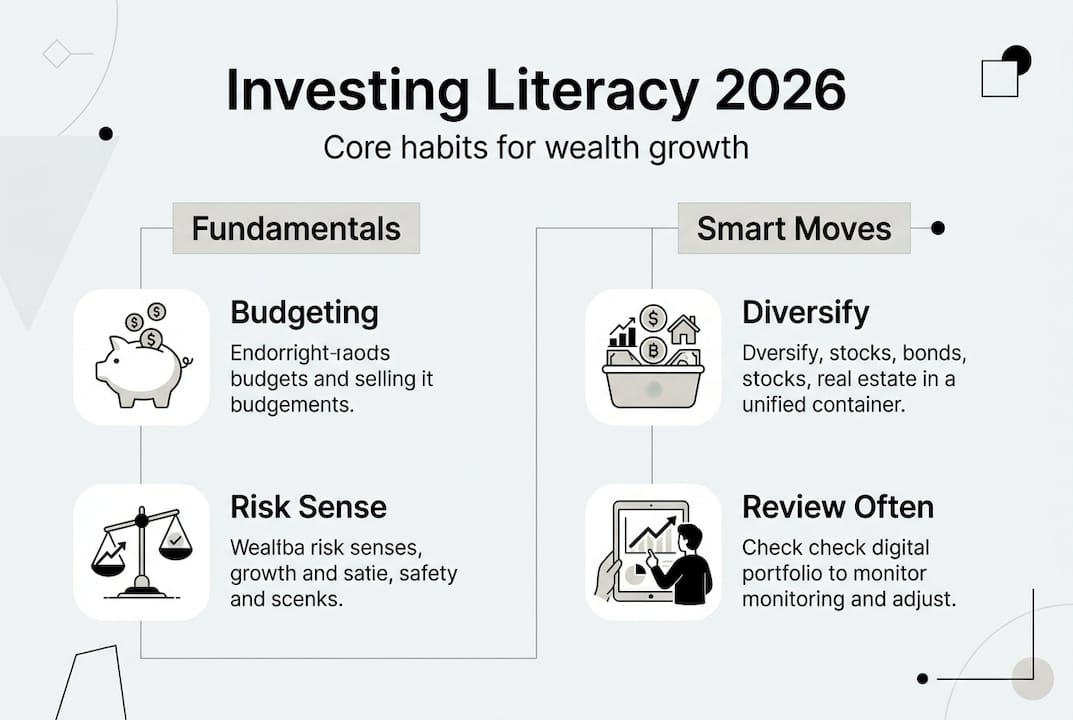
Diversification remains the most reliable method for managing investment risk while capturing market returns. Rather than attempting to pick winning stocks or time market movements, build portfolios spanning multiple asset classes including domestic stocks, international equities, bonds, and alternative investments appropriate for your risk tolerance. AI-enhanced guidance improves diversification by analyzing correlations between holdings, identifying concentration risks, and suggesting rebalancing actions, but human oversight ensures recommendations align with personal circumstances and values that algorithms cannot fully capture.
Practical wealth management actions to implement immediately:
- Define three to five specific financial goals with dollar amounts, timelines, and monthly savings requirements calculated to achieve them.
- Establish automated transfers from checking to savings and investment accounts on payday to remove willpower from the equation.
- Complete a risk tolerance assessment through a reputable source to understand your emotional capacity for market volatility and align investments accordingly.
- Schedule quarterly financial reviews where you track progress, celebrate wins, adjust for life changes, and identify new learning priorities.
- Interview at least three fee-only financial advisors to understand services available, compare approaches, and select a professional partner if appropriate for your situation.
Continuing education keeps your knowledge current as markets evolve, regulations change, and new financial products emerge. Tax laws shift, requiring updated strategies for retirement contributions, capital gains management, and estate planning. Economic conditions alter the relative attractiveness of different asset classes and geographic regions. Technological advances introduce new tools for portfolio management, tax optimization, and financial planning. Committing to ongoing learning through courses, books, podcasts, and professional consultations ensures your financial strategy remains optimized rather than becoming outdated. The setting smart financial goals framework provides a systematic approach to defining objectives that drive consistent progress and adapt to changing circumstances.
Enhance your financial literacy with Finblog resources
Finblog serves as your comprehensive platform for building financial knowledge and applying practical strategies that improve investment outcomes and wealth management success. Our regularly updated guides cover everything from foundational concepts for beginners to advanced portfolio optimization techniques for experienced investors. You will find detailed articles on budgeting systems, debt reduction strategies, retirement planning approaches, and tax-efficient investing methods, all written to translate complex concepts into actionable steps.
Explore our financial literacy guide for beginners to establish strong fundamentals before advancing to more sophisticated strategies. Learn systematic approaches through setting smart financial goals that create measurable progress toward your wealth objectives. Our expert insights complement AI tools and personal learning efforts by providing context, addressing common questions, and highlighting practical applications that theory alone cannot convey. Whether you are just starting your financial journey or seeking to refine an established strategy, Finblog offers the resources and community support to accelerate your progress and build lasting financial confidence.
FAQ
What is the P-Fin Index and why is it important?
The P-Fin Index measures financial knowledge across eight functional areas including earning, consuming, saving, investing, borrowing, insuring, comprehending risk, and identifying reliable information sources. It provides a comprehensive assessment that identifies both strengths and specific gaps in your financial understanding. By revealing where you need improvement, the index guides targeted learning efforts that translate to better financial decisions and outcomes. Taking the assessment annually tracks your progress and ensures continuous development of critical money management skills. Explore the financial literacy guide for beginners for foundational concepts that address common knowledge gaps identified by the index.
How can I avoid misinformation from financial influencers on social media?
Cross-check any investment advice or financial strategy against reputable sources including government financial literacy websites, academic research, and established financial institutions before taking action. Research shows 61% of young investors rely on social media influencers, yet these sources often lack credentials, promote high-risk strategies for engagement, and may receive undisclosed compensation. Consult fee-only financial advisors who have fiduciary obligations to act in your best interest before making significant investment decisions based on social media content. Question any advice promising guaranteed returns, creating artificial urgency, or encouraging concentration in single assets.
What role does AI play in improving financial literacy and investment decisions?
AI-powered robo-advisors and predictive tools personalize financial guidance by analyzing your specific situation, risk tolerance, and goals to recommend tailored strategies and educational content. These systems reduce human biases like overconfidence and emotional decision-making by following consistent, data-driven algorithms for portfolio management, rebalancing, and tax optimization. However, users should ensure AI tools provide transparency about data usage, disclose limitations in their recommendations, and understand that algorithms cannot fully capture personal circumstances requiring human judgment. Combining AI efficiency with professional advisor expertise creates the most comprehensive approach to financial decision-making.
Why should I consider working with a professional wealth manager?
Professional advisors offer specialized expertise in portfolio diversification, risk management, tax optimization, and estate planning that most individuals lack time or training to develop independently. Working with professionals doubles retirement confidence by providing accountability, behavioral coaching during market volatility, and comprehensive planning that addresses interconnected financial decisions. Fee-only advisors eliminate conflicts of interest from product commissions, ensuring recommendations serve your best interests rather than generating sales. The value extends beyond investment selection to include goal clarification, systematic progress tracking, and strategic adjustments as your life circumstances evolve over decades.