


Spotting scam warning signs can feel overwhelming for first-time investors everywhere. Fraudsters use clever tactics such as unsolicited emails, guaranteed returns, and demands for secrecy to gain your trust. With new opportunities and risks appearing on social media and trading apps, learning to recognize these red flags is vital. This guide highlights practical steps to defend your savings, verify advisor credentials, and confidently research investment options before making financial decisions.
Table of Contents
- Step 1: Identify Common Scam Warning Signs
- Step 2: Verify Investment Sources And Credentials
- Step 3: Research And Validate Investment Opportunities
- Step 4: Consult Trusted Financial Advisors
- Step 5: Report Suspicious Investment Offers
Quick Overview
| Main Insight | Explanation |
|---|---|
| 1. Recognize Scam Warning Signs | Be aware of indicators like guaranteed high returns and unregistered products to spot potential investment scams quickly. |
| 2. Verify Investment Professionals’ Credentials | Always check the licensing and registration of financial advisors through official regulatory resources to ensure their legitimacy. |
| 3. Conduct Thorough Research on Investments | Assess company financials, industry trends, and market conditions using reliable sources to make informed investment decisions. |
| 4. Consult Multiple Financial Advisors | Meeting with several advisors helps you compare their approaches, ensuring you select someone who understands your financial goals. |
| 5. Report Fraudulent Offers Promptly | Document suspicious investment communications and report them to regulatory agencies to help protect yourself and other investors from scams. |
Step 1: Identify common scam warning signs
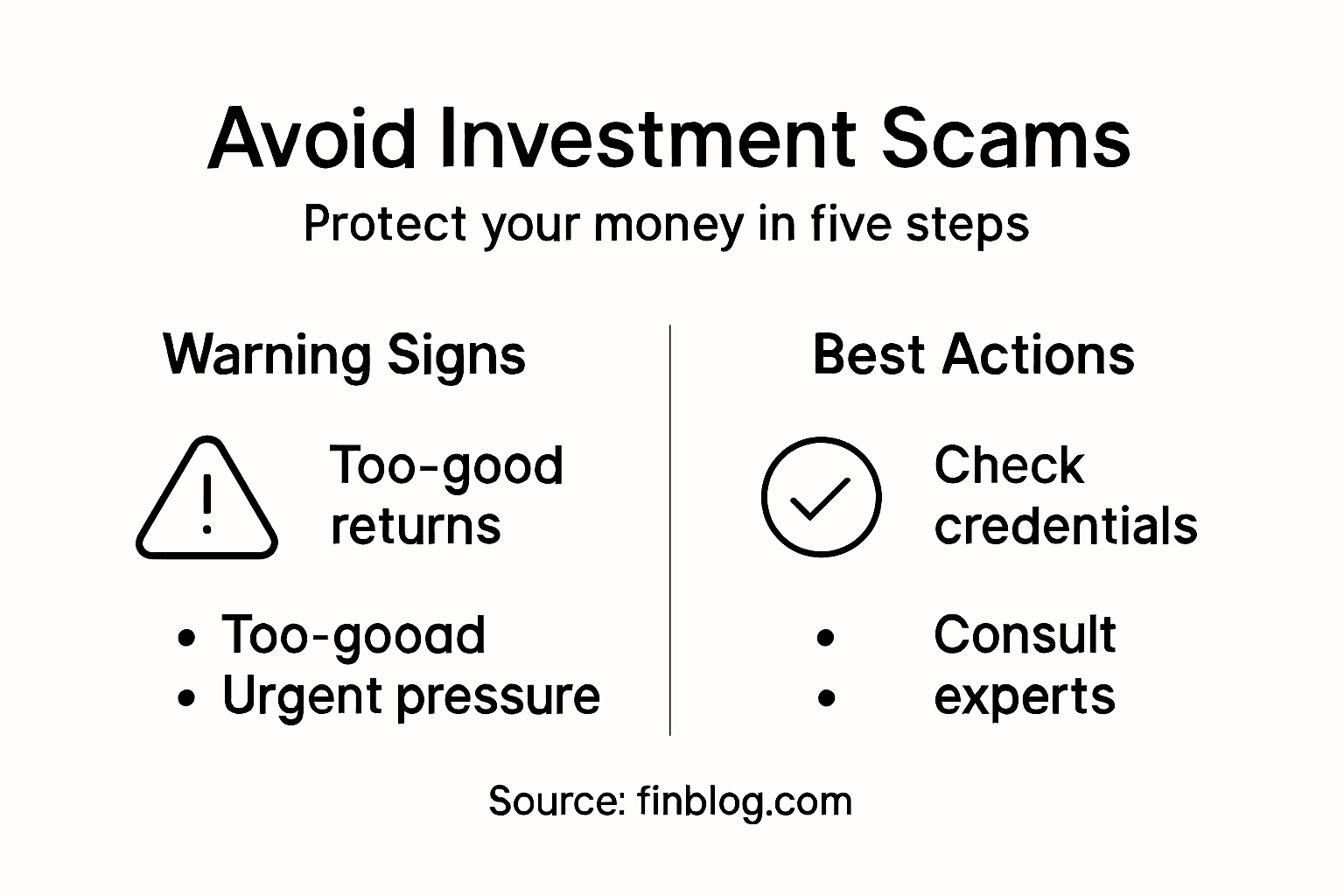
Understanding how to recognize investment scam warning signs is crucial for protecting your hard-earned money. By learning to spot red flags early, you can prevent falling victim to sophisticated financial fraud tactics that target unsuspecting investors.
Investment scammers use several persuasive techniques to lure potential victims. Warning signs of financial fraud often include several consistent patterns that should immediately trigger your suspicion:
- Guaranteed high returns with little to no risk
- Unsolicited investment offers via cold calls or emails
- High-pressure tactics demanding immediate investment decisions
- Requests for secrecy or confidentiality
- Unregistered investment products
- Complex strategies that are difficult to understand
- Consistently smooth returns regardless of market conditions
- Unlicensed or unverified sellers
Scammers frequently exploit emerging technologies like social media and mobile trading platforms to make their fraudulent schemes appear more legitimate. They craft messages designed to create emotional urgency, either by promising extraordinary wealth or threatening potential financial loss.

Here’s a quick comparison of legitimate vs. scam investment opportunities:
| Attribute | Legitimate Investment | Investment Scam |
|---|---|---|
| Returns Promised | Market-driven, realistic | Unusually high and guaranteed |
| Seller Verification | Registered professionals | Unlicensed, unverified |
| Communication Approach | Standard, documented | Unsolicited, urgent, secretive |
| Transparency | Complete disclosure | Withholds key information |
| Regulatory Oversight | SEC/state regulated | Lacks official oversight |
Recognize that if an investment opportunity sounds too good to be true, it probably is.
Pro tip: Always verify investment opportunities through multiple independent sources and consult with licensed financial professionals before committing your funds.
Step 2: Verify investment sources and credentials
Protecting your investments starts with thoroughly verifying the legitimacy of potential investment professionals and their associated platforms. Checking professional registration status is a critical first step in safeguarding your financial future against potential fraud.
Investors should follow a systematic approach to credential verification:
- Research the specific credentials of investment professionals
- Check registration with Securities and Exchange Commission (SEC)
- Verify licensing through state securities regulators
- Review relationship summaries outlining services and fees
- Investigate any past disciplinary history
- Use free online verification tools like Investor.gov
- Request and independently confirm professional references
- Cross-reference information from multiple authoritative sources
When investigating an investment professional, pay close attention to red flags such as reluctance to provide detailed credentials, pressure to make immediate decisions, or inability to clearly explain their professional background. Legitimate financial professionals will welcome your due diligence and provide transparent information about their qualifications.
A reputable investment professional will always be willing to substantiate their professional credentials.
Pro tip: Create a standardized checklist of verification steps and consistently apply it to every potential investment opportunity before committing any funds.
Step 3: Research and validate investment opportunities
Successfully navigating investment opportunities requires a strategic and thorough approach to gathering and analyzing critical financial information. Researching public company filings through reliable sources like the SEC’s EDGAR database can provide crucial insights into potential investment prospects.
Investors should employ a comprehensive research strategy that includes:
- Examining financial statements in detail
- Analyzing company annual reports (10-K)
- Reviewing quarterly financial reports (10-Q)
- Investigating current event reports (8-K)
- Assessing market trends and industry performance
- Comparing competitor financial health
- Evaluating management team track records
- Checking independent analyst recommendations
Beyond financial documentation, smart investors consider multiple dimensions of potential investments. This means looking beyond raw numbers to understand the broader context of market conditions, technological disruptions, regulatory environments, and potential growth trajectories that could impact investment performance.
Smart research transforms uncertain investments into calculated opportunities.
Pro tip: Develop a standardized research template that helps you consistently evaluate and compare different investment opportunities across various sectors and asset classes.
Step 4: Consult trusted financial advisors
Navigating complex investment landscapes requires expert guidance from professionals who understand the nuanced world of financial planning. Verifying financial advisor credentials is a critical first step in protecting your financial future and avoiding potential scams.
When seeking a financial advisor, investors should focus on these key considerations:
- Verify professional licensing and registration
- Check background through official regulatory databases
- Understand complete fee structures
- Request transparent disclosure of potential conflicts of interest
- Evaluate professional experience and track record
- Confirm specialized expertise relevant to your investment goals
- Assess communication style and personal compatibility
- Investigate disciplinary history or past legal issues
Qualified financial advisors provide more than just investment recommendations. They offer strategic insights tailored to your unique financial situation, helping you navigate market complexities, manage risk, and develop comprehensive wealth-building strategies that align with your long-term objectives.
Use this summary table to streamline your investment due diligence process:
| Due Diligence Step | Purpose | Verification Resource |
|---|---|---|
| Check professional license | Confirm legal authority to advise | FINRA, Investor.gov |
| Analyze financial records | Assess company and investment health | SEC EDGAR, company filings |
| Review disciplinary history | Identify past misconduct or fraud | State/Federal databases |
| Seek independent opinions | Gain unbiased analysis and recommendations | Analyst reports, reviews |
A truly trusted financial advisor acts as a strategic partner in your financial journey.
Pro tip: Always schedule initial consultations with multiple advisors to compare approaches, ensuring you find a professional who genuinely understands your financial aspirations and risk tolerance.
Step 5: Report suspicious investment offers
Protecting yourself and other potential investors requires taking proactive steps to report fraudulent investment schemes. Submitting official fraud reports helps law enforcement track and stop financial scammers before they harm more victims.
Investors should document and report suspicious offers through multiple official channels:
- Gather comprehensive documentation of suspicious communication
- Screenshot emails and messages
- Save contact information and communication records
- Collect details about investment offer specifics
- Report to federal regulatory agencies like SEC and FTC
- Document timeline of interactions
- Preserve all digital and physical evidence
- Provide specific details about potential fraud
Each report contributes to a broader effort of protecting the financial community. Regulatory agencies use these tips to investigate potential securities law violations, track emerging scam patterns, and develop strategies to prevent future fraudulent activities.
Your single report could prevent numerous other investors from falling victim to financial fraud.
Pro tip: Create a dedicated digital folder to securely store all evidence of suspicious investment communications before reporting, ensuring you have a comprehensive record for authorities.
Protect Your Investments with Expert Guidance From finblog.com
Investment scams prey on trusting individuals by promising guaranteed high returns and creating emotional urgency. If you want to avoid these pitfalls like unregistered offers or secretive solicitations, it is essential to verify credentials and research opportunities carefully. Key pain points such as identifying fraud red flags, researching investment professionals, and reporting suspicious offers highlight the challenge of navigating today’s complex financial landscape safely.
At finblog.com, we understand these concerns and provide tailored financial insights and trusted advice to empower your decisions. Our expert-driven content helps you recognize warning signs and guides you through essential verification steps so you can invest with confidence. Begin your journey towards financial security by visiting https://finblog.com and take advantage of our professional consultation forms designed with your security and clarity in mind.
Act now to safeguard your wealth. Explore our resources to uncover investment scams before they impact your finances at finblog.com. Your financial peace of mind is only a click away.
Frequently Asked Questions
How can I recognize investment scams early?
Recognize investment scams by looking for common red flags, such as guaranteed high returns with little to no risk and unsolicited investment offers. Monitor for high-pressure tactics that push you to make immediate decisions and requests for secrecy. Take time to assess offers and conduct thorough research before committing money.
What should I do to verify the credentials of an investment professional?
To verify an investment professional’s credentials, check their registration with regulatory bodies and look for professional licenses. Review any disciplinary history and request detailed credentials. Use multiple independent sources to confirm their qualifications before considering any investment opportunities.
How can I research and validate investment opportunities?
Research investment opportunities by examining financial statements, annual reports, and market trends to gain a comprehensive understanding of potential investments. Create a research template to consistently evaluate different opportunities and consider the broader context, including technological and regulatory factors, that could impact your investments.
What steps can I take if I receive a suspicious investment offer?
If you receive a suspicious investment offer, gather all related documentation, including emails and messages, and save contact details. Report your findings to relevant regulatory agencies, providing as much specific information as possible about the offer. This proactive step can help protect others from similar scams.
How can I find a trustworthy financial advisor?
To find a trustworthy financial advisor, verify their professional licenses and check their background for any past disciplinary history. Evaluate their communication style and ensure they clearly disclose fees and potential conflicts of interest. Schedule consultations with multiple advisors to compare their approaches and find one that aligns with your financial goals.
Recommended
- Common Financial Scams: Complete Guide for Investors – Finblog
- 7 Common Investment Mistakes and How to Avoid Them – Finblog
- 7 Major Financial Mistakes to Avoid for Smart Investing – Finblog
- Wealth Protection Strategies for Secure Financial Future – Finblog
- Beginner’s Guide to Starting Investments Effectively