

Indian markets received a short-term boost after the US–India trade deal, but global investors remain cautious, viewing the agreement as a sentiment lift rather than a fundamental turning point.
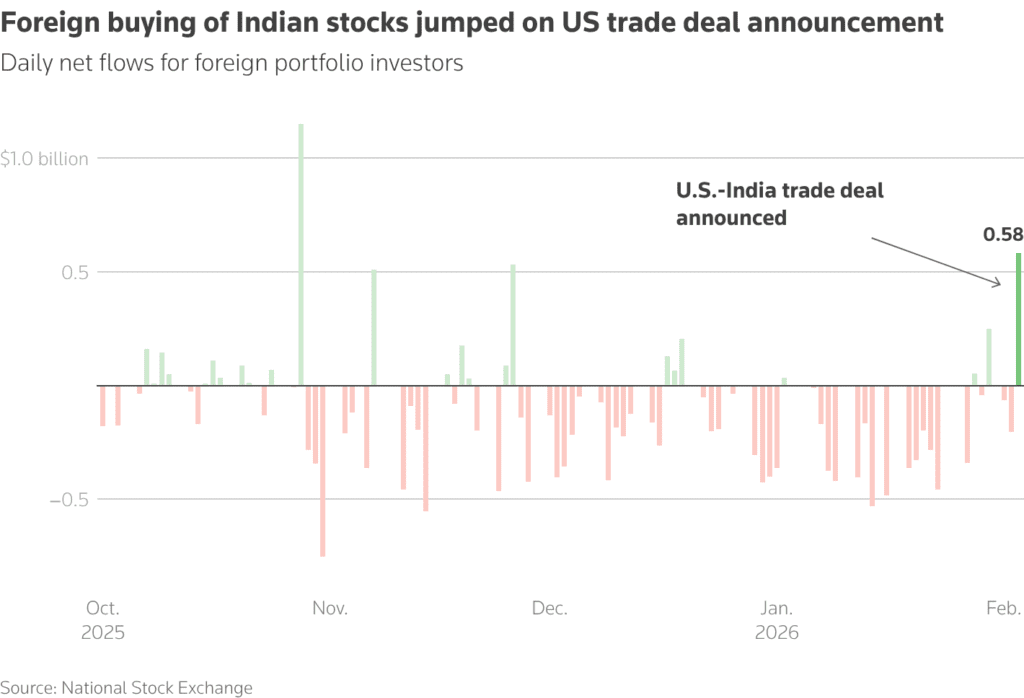
The deal triggered a sharp rally in Indian stocks and the rupee’s strongest one-day gain in seven years, easing pressure that had built up after months of tariff uncertainty. Foreign investors added about $580 million to Indian equities on the announcement day, temporarily interrupting a heavy selling trend.
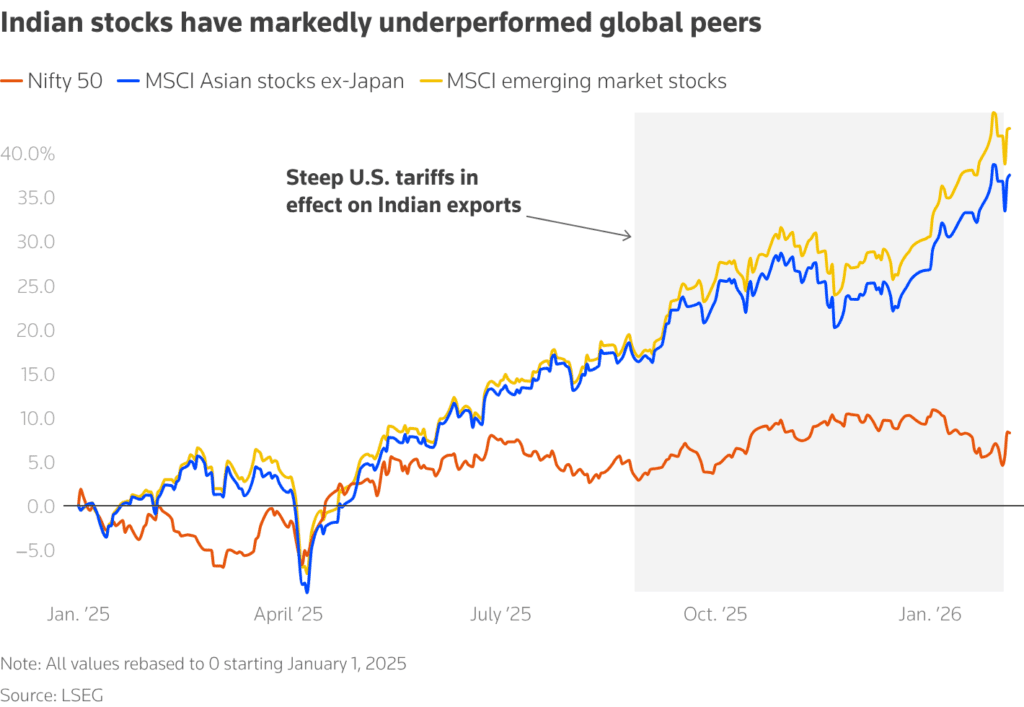
Still, confidence remains fragile. Foreign investors have pulled roughly $23 billion from Indian stocks since the start of 2025, cutting allocations to a two-decade low.
Sentiment improves, fundamentals still lag
Investors say the trade agreement helps valuation and visibility, but does little to change near-term earnings expectations.
- Corporate profit growth has stayed in high single digits for six straight quarters, well below the 15%–25% growth seen earlier in the decade.
- Indian equities continue to underperform peers, with the benchmark index up 10% over 12 months, compared with 118% for South Korea and 42% for Taiwan.
- Fund managers point to elevated valuations, slower earnings growth, and a lack of globally scalable AI beneficiaries as key constraints.
“Tariffs feed into sentiment, but they don’t automatically create an earnings surge,” said one emerging markets investor.
AI gap weighs on stocks
India’s absence of clear AI leaders is becoming a bigger concern. Technology stocks fell more than 6% after new AI workplace tools from Anthropic raised fears of disruption across IT services.
This has left Indian equities lagging other emerging markets that are more directly exposed to AI-driven growth.
Rupee gets breathing room
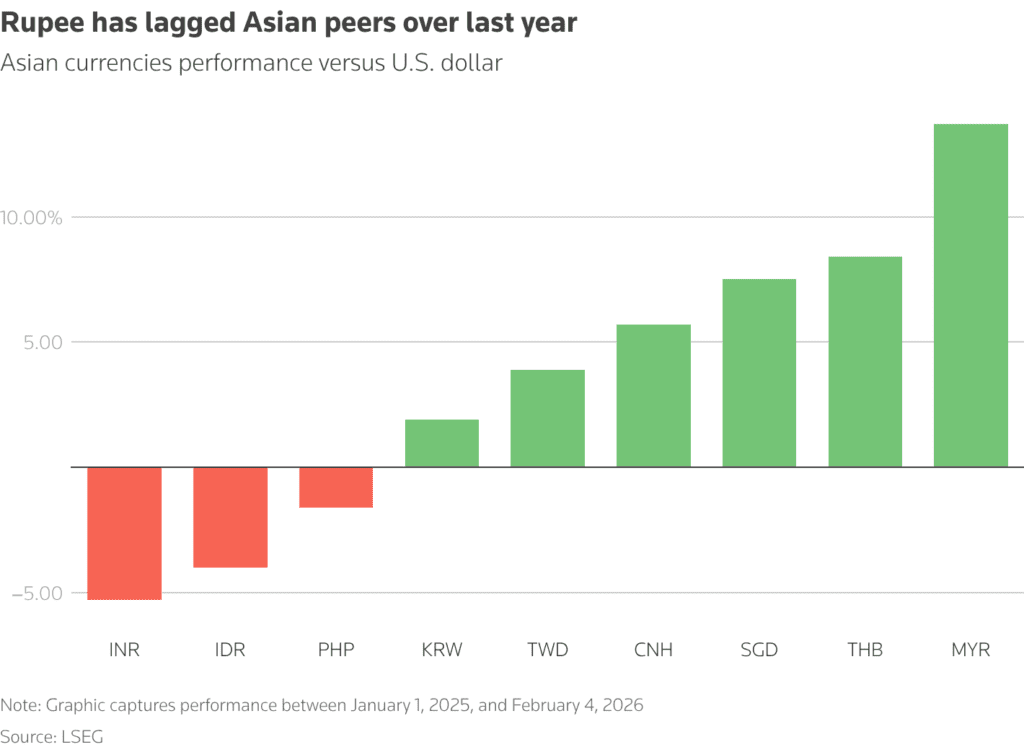
The trade deal has eased balance-of-payments concerns and helped stabilize the rupee, which had been the worst-performing Asian currency over the past year after sliding from around 88 per dollar to nearly 92.
Analysts expect pressure on the currency to moderate, though heavy hedging demand and central bank reserve management could limit any sustained rally.
What investors are waiting for
Many global funds say they may move from underweight to neutral on India, but a shift to overweight positions will require:
- Clearer earnings acceleration
- Stronger policy signals from the government
- Evidence that India can capture part of the global AI investment cycle
Goldman Sachs now expects 16% earnings growth for Indian companies this year and forecasts a 12% dollar return over the next 12 months. That still trails its 20% return outlook for China, underscoring why India’s tariff relief is seen as a pause in selling, not yet a full buy signal.
Disclosure: This article does not represent investment advice. The content and materials featured on this page are for educational purposes only.
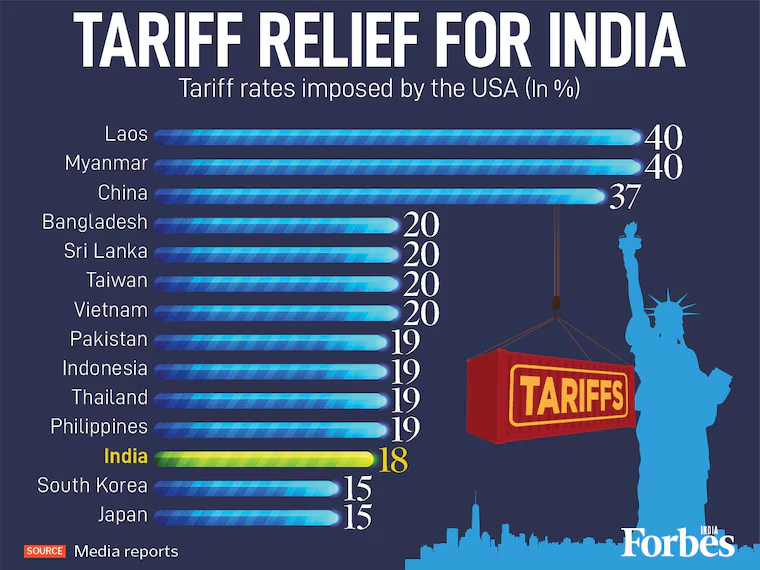
Related: Trump Announces Initial Trade Deal With India, Cuts Tariffs to 18%