
January’s Federal Open Market Committee meeting did more than keep interest rates unchanged. It quietly broke a historical pattern inside the FED.
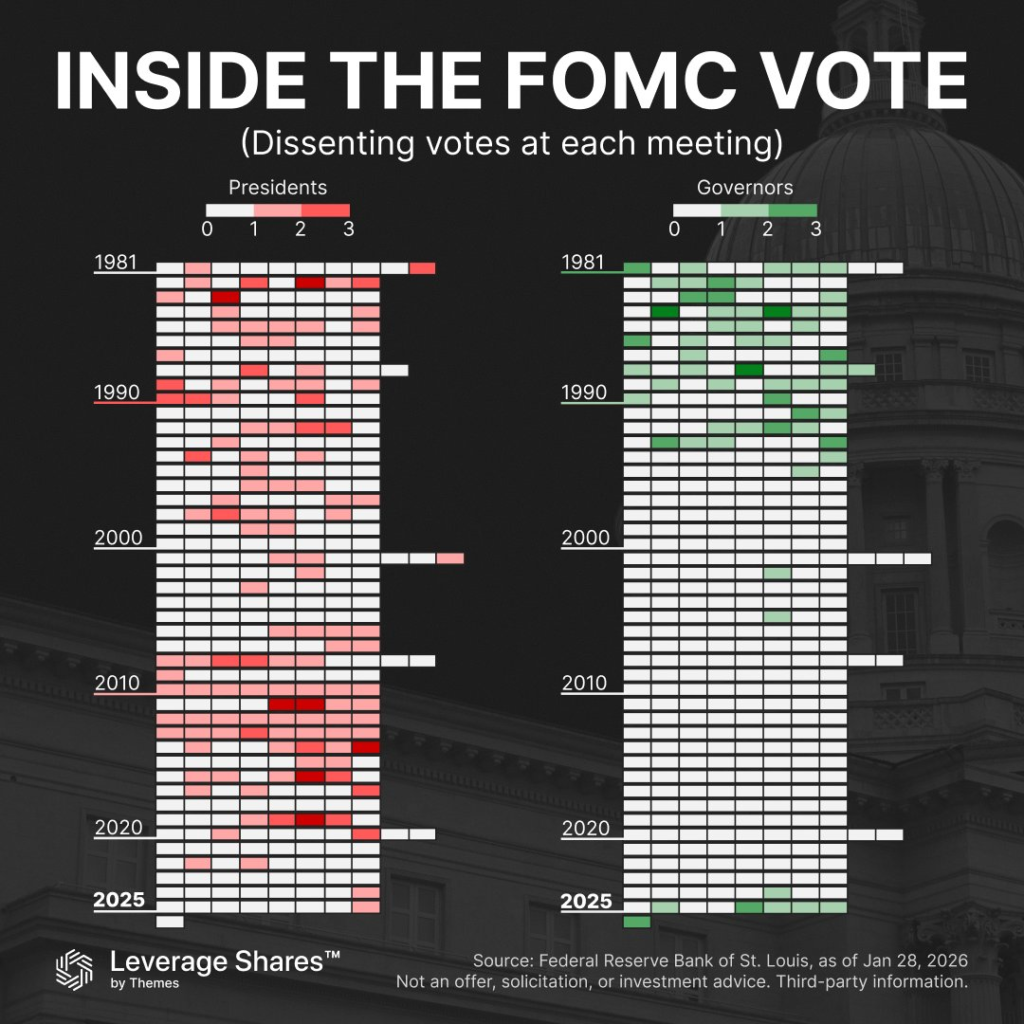
Since 2000, Fed Governors have rarely dissented at FOMC meetings. When disagreement surfaced, it typically came from regional Fed Presidents, not from Governors at the core of policy power in Washington. That makes January unusual: two Governors voted for rate cuts.
Why this matters
Governors are appointed, long-tenured, and usually act as consensus builders. When they dissent, it signals deeper disagreement about the direction of monetary policy, not just tactical debate.
The chart highlights this clearly. Across decades, dissenting votes overwhelmingly came from the Presidents. January 2026 stands out as an exception.
Markets noticed immediately
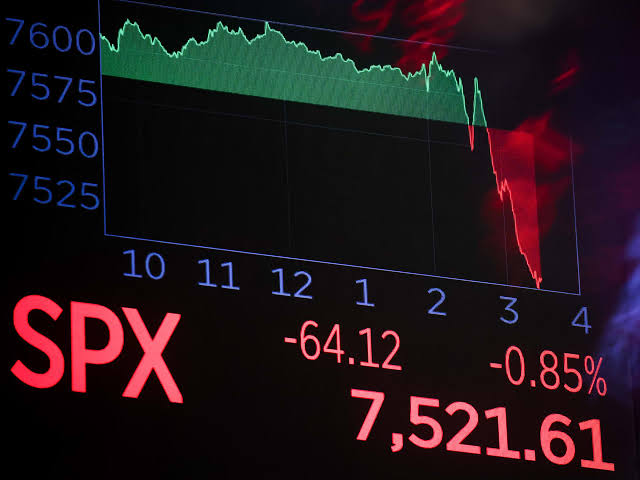
Since the meeting, volatility has picked up across asset classes:
- Stocks have swung sharply as rate-cut expectations reprice
- Gold and silver have seen violent moves after crowded positioning unwound
- Crypto volatility has returned as liquidity assumptions shift
This is not about one meeting. It is about fracturing consensus at the Fed.
The takeaway
When internal disagreement moves from the edges of the Fed to its centre, markets tend to react. The return of volatility across stocks, metals, and crypto suggests investors are adjusting to a world where policy direction is less predictable.
The Fed did not just hold rates in January. It signaled that unity at the top is no longer guaranteed.
Disclosure: This article does not represent investment advice. The content and materials featured on this page are for educational purposes only.
Related: Fed keeps interest rates, Trump insists on lower