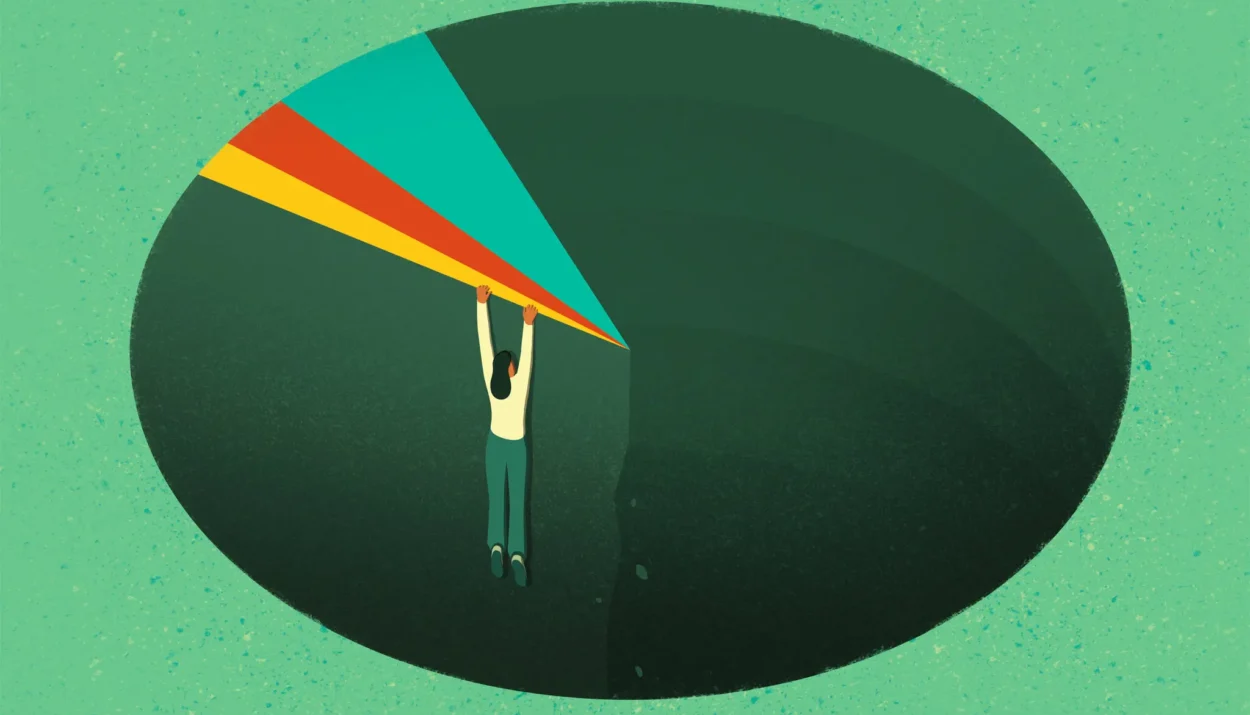

Many investors believe that owning broad US stock index funds means they are fully diversified. That assumption is now breaking down.
According to a new analysis, the US stock market has become so concentrated that even the biggest and most popular index funds no longer meet the legal definition of diversification.
What changed?
A small group of mega-cap tech companies is now dominating market performance.
Stocks like Nvidia, Microsoft, Apple, and Alphabet have grown so large that they make up an outsized share of major indexes.
By the end of 2025:
- Nvidia alone accounted for about 7.8% of the S&P 500
- Apple made up 6.9%
- Microsoft represented 6.2%
- Alphabet exceeded 5.6%
Together, just these four stocks made up more than 26% of the entire S&P 500.
Why this matters for index investors
Under US securities law, a fund is considered “nondiversified” if:
- More than 25% of its assets are concentrated in companies that each represent over 5% of the portfolio
That threshold has now been crossed, not because funds changed strategy, but because the market itself became top-heavy.
Major asset managers including Fidelity Investments, Vanguard, BlackRock, and State Street have updated disclosures warning investors about “nondiversification risk” in flagship index funds.
In plain terms: if a few mega-cap stocks stumble, the entire index can take a bigger hit than many investors expect.
This is bigger than the S&P 500
The concentration problem is not limited to large-cap indexes.
Total market funds tracking the entire US stock market are also affected. Whether the benchmark is the S&P 500, a total market index, or a growth index, the same issue appears: too much weight in too few stocks.
That means investors who believed they were spreading risk across thousands of companies may actually be far more exposed to the fortunes of a handful of tech giants.
Could the market fix itself?
Yes, but not painlessly.
The market would naturally become more diversified again if large stocks underperform smaller ones. However, that adjustment would likely happen through declines in mega-cap stock prices, which would hurt index fund holders in the process.
What investors can do
The takeaway is not to abandon index investing.
Low-cost, broad index funds remain powerful long-term tools. But relying on US stocks alone now carries more risk than it did for decades.
To reduce that risk, investors may need to:
- Hold international equities
- Balance stocks with bonds and cash
- Avoid assuming that “the whole market” automatically means safe diversification
The rise of big tech has created enormous wealth. But it has also quietly reshaped market risk.
Today’s US stock market is more concentrated than at any point in most investors’ lifetimes. Broad index funds still work, but they no longer provide the same level of protection on their own.
Diversification now requires going beyond the US market, not just buying more of it.
Disclosure: This article does not represent investment advice. The content and materials featured on this page are for educational purposes only.
Related: How Big Tech Created the 2025 AI Boom on Debt
What’s Ahead for Stocks and Gold in 2026? What Markets and Experts Are Watching
Stocks Look Bullish Entering 2026 — But What Could Go Wrong?
FOMO vs. Bubble Angst Signals More Stock Volatility in 2026
Gold Breaks $4,400 as Silver, Copper and Platinum Hit Record Highs: What Comes Next
Markets Enter Final Stretch of 2025 With Santa Rally Hopes: What to watch
Trade, Tariffs, and Treasuries: The Hidden Cost of Trump’s Protectionism
Want to Know Where the Market Is Going? Don’t Trust This, or Any, Forecast.