
Did Trump TACO on Greenland, or did Europe force his hand?
Wall Street has a new comfort food in 2026: a pattern traders think they can profit from.
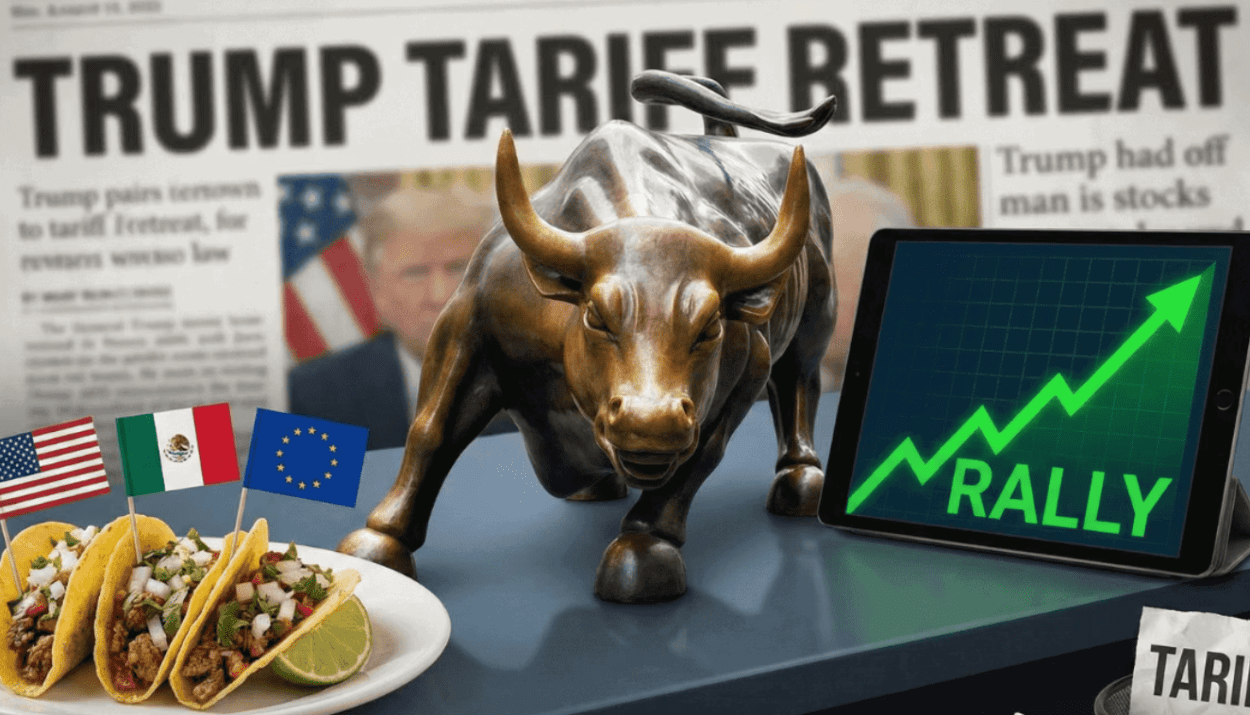
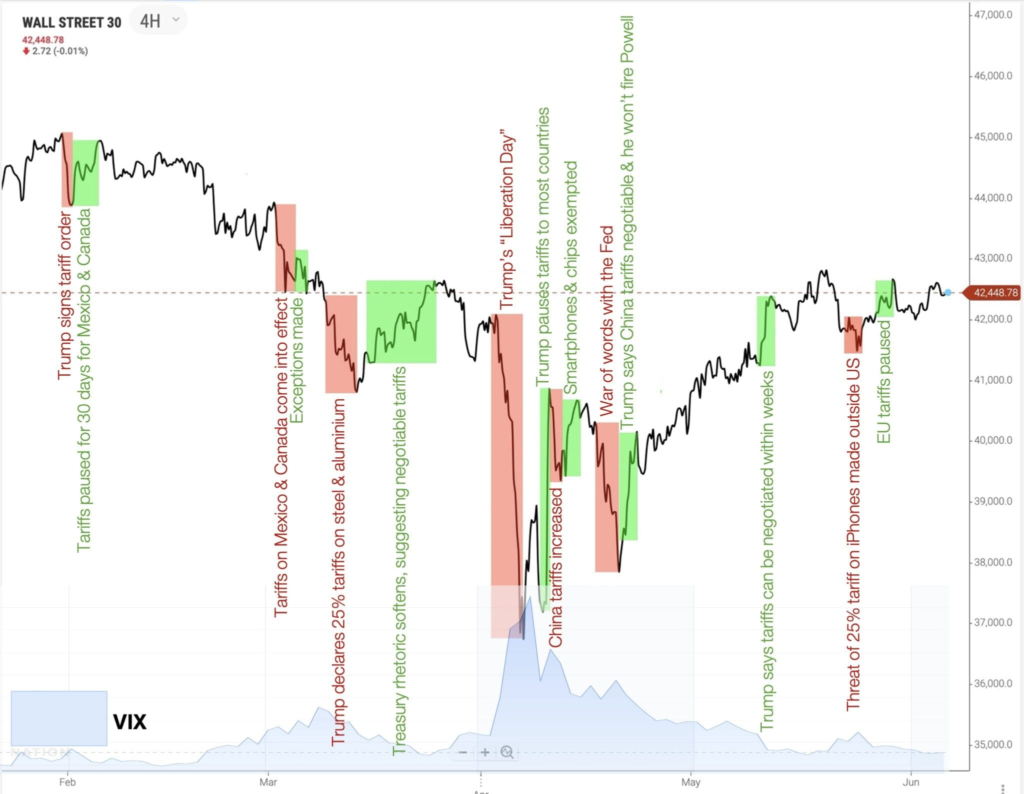
Early this week, markets watched a familiar script. Trump threatens tariffs. Markets wobble. Then Trump shifts. By Thursday, investors were openly calling it “Taco Thursday” again, with the TACO trade back on the menu.
The bigger question now is not whether markets bounced. It is what this episode teaches investors about pricing political risk in 2026.
The week in one simple storyline
It happened fast, and the sequence matters.
Step 1: Threat. Trump escalates pressure around Greenland and threatens new tariffs against European countries.
Step 2: Fear. Risk assets slide. The S&P 500 drops as much as 2.1% at the worst point, and the dollar falls about 1.2% from recent levels.
Step 3: Pushback. Europe signals a tougher stance than earlier rounds of tariff drama.
Step 4: Pivot. Trump drops the extra tariffs and points to a “framework” deal on Greenland.
Step 5: Relief rally. Stocks rebound and global markets stabilize.
That rebound revived the idea that political volatility can create tradable dips, especially when investors believe the White House will soften threats once pressure rises.
Why this episode was not the same as April
A key point in the debate is that this pullback did not resemble April’s tariff shock.
In April, the reversal looked like a direct response to market pain, creating a feedback loop where investors worry that a bigger fall may be required to force restraint.
This time, the selloff was smaller, and Trump’s pivot looked less like pure market capitulation and more like a response to broader political and diplomatic costs.
That distinction matters because it shapes expectations for the next crisis.
If Trump backs down mainly when markets crash, volatility can become more violent.
If Trump backs down when allies credibly threaten retaliation, the next standoff may escalate faster as both sides harden.
More about: Trump Backs Off Greenland Tariffs, Defusing Risk of US–EU Trade War
So did Trump TACO, or is the label too simple?
Investors are now split between two interpretations.
1) The classic TACO view: buy the dip
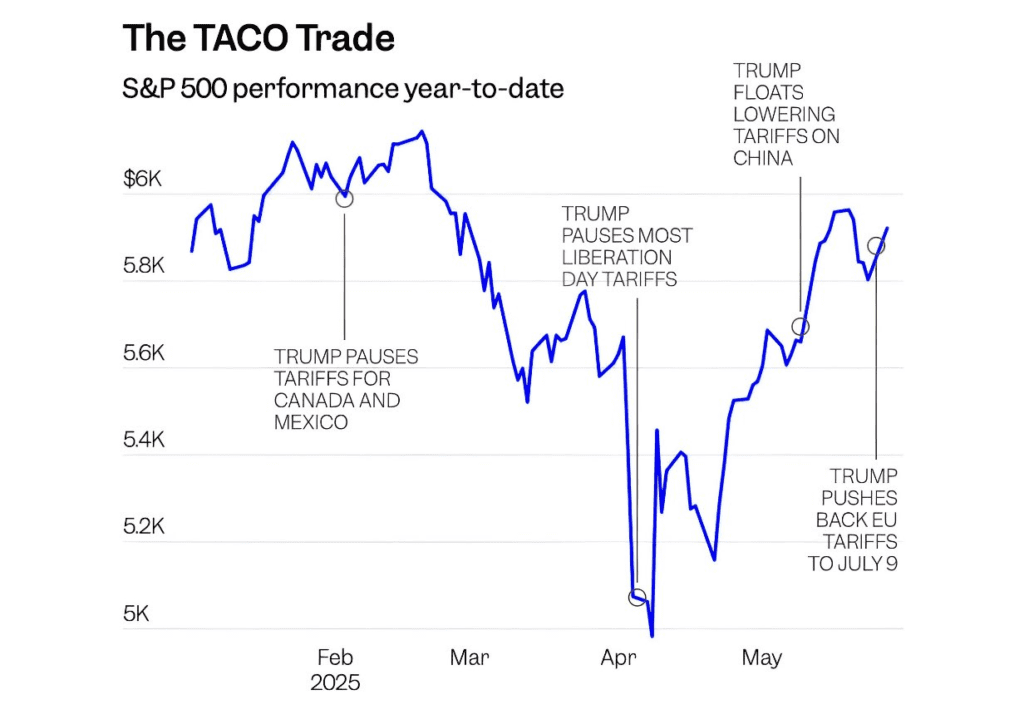
The TACO trade is shorthand for the belief that Trump often threatens extreme actions, then delays, softens, or cancels them after backlash.
That mindset helped drive strong dip buying in 2025 and is clearly influencing behaviour again in 2026. The market’s quick rebound after the Greenland pivot reinforced the idea that political shocks can become entry points rather than reasons to exit.
2) The skeptical view: this was leverage, not “chickening out”
A second camp argues the TACO label misses the real mechanic.
The argument is that Trump takes aggressive positions to gain leverage, but he tends to avoid breaking his larger strategic objectives. In the Greenland case, the biggest risk was not a one or two day equity drawdown. It was the possibility of triggering a deeper transatlantic trade fight that could undermine broader tariff deals and alliances.
If that interpretation is right, relying blindly on TACO logic could fail the day Trump decides the goal is worth the pain.
More about: Trump Tells Davos World Must Follow the US, Doubles Down on Greenland and Tariff Threats
What markets actually signaled
The price action offered three clear messages.
1) The bounce was real, but not everything reset
Stocks rallied, but the episode left behind currency signals. The euro remained stronger against the dollar than before the panic, while the broader dollar index stayed weaker.
That suggests some investors are pricing a slow shift: allies gradually seeking insulation from a volatile Washington.
2) European winners and losers flipped quickly
Markets also made fast judgments inside Europe.
Denmark’s Novo Nordisk rose as traders priced lower risk of a US Denmark clash. Germany’s Rheinmetall slid, a sign investors were not rushing to price a massive defense breakaway scenario based solely on Greenland tensions.
In plain terms, markets leaned toward “this calms down” rather than “this fractures permanently.”
3) Gold did not collapse
Even with relief in equities, safe haven demand did not vanish. That is a quiet message: investors may be more willing to buy dips, but they still want insurance.
The long run issue: trust and the risk premium
The most important takeaway is not Greenland’s size or its population.
It is the trust impact.
If allies conclude the White House is unpredictable, they may gradually reduce reliance on US systems over time. That can show up as:
- Less reliance on US military suppliers
- More diversification away from US assets
- Small but meaningful efforts to reduce dependence on the dollar
These are slow processes, but markets often begin pricing them early.
At the corporate level, uncertainty also changes behavior. When trade policy feels unpredictable, businesses shorten supply chains, avoid long overseas commitments, and choose resilience over efficiency. Over time, that kind of deglobalization usually raises costs.
The TACO trade is back in the conversation because the market got what it wanted: lower tariff risk, more “deal” language, and a relief rally.
But the smarter takeaway is that the trade works best when investors understand why the pivot happened.
If the pivot was driven by Europe’s tougher posture, the next round could be louder.
If it was driven by domestic politics, the next target may simply be someone else.
And if it was driven by unpredictability, markets will keep pricing a higher premium for living inside that uncertainty.
The next Trump headline will test whether this was truly another TACO moment, or the start of a different regime entirely.
Resources: WSJ: What Trump’s Greenland ‘TACO’ Means for Markets
Investopedia: After Trump’s Greenland Deal, Wall Street Is Talking Up the ‘TACO Trade’ Again. What’s Next?
Barrons: Did Trump TACO on Greenland? Don’t Bet on It.
CNBC: ‘TACO’ trade boosts markets amid ongoing geopolitical tensions around Greenland and Ukraine