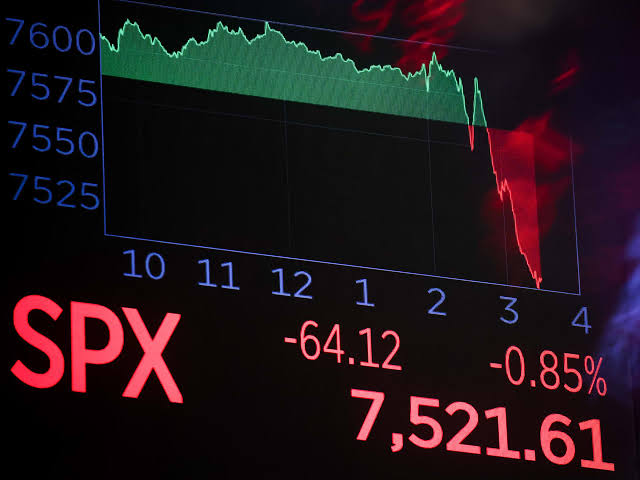

Most American investors believe they make decisions logically, yet studies show that emotional and cognitive biases affect over 90 percent of financial choices. The traditional view of rational markets falls short when you consider how psychological tendencies often lead to costly mistakes. Understanding the core ideas of behavioral finance reveals why so many Americans struggle to stay objective, offering a clearer path for anyone aiming to make smarter, more disciplined investment decisions.
Table of Contents
- Defining Behavioral Finance And Its Core Principles
- Major Types Of Cognitive And Emotional Biases
- How Behavioral Biases Affect Investment Choices
- Real-Life Examples In Financial Markets
- Reducing Behavioral Mistakes In Investing
Key Takeaways
| Point | Details |
|---|---|
| Understanding Behavioral Finance | Behavioral finance combines psychology and economics to explain how cognitive biases affect investment decisions, challenging traditional rational models. |
| Recognizing Cognitive and Emotional Biases | Essential biases like loss aversion and overconfidence can distort rational investment choices, leading to market inefficiencies. |
| Implementing Structured Decision-Making | Creating predefined rules and checklists can help investors minimize impulsive decisions driven by emotional responses. |
| Utilizing External Guidance | Seeking professional advice and using technology tools can provide objective perspectives that counteract individual biases. |
Defining Behavioral Finance And Its Core Principles
Behavioral finance represents a groundbreaking approach that bridges psychology and economics, challenging traditional financial theories by examining how human emotions and cognitive processes influence investment decisions. Unlike classical economic models that assume investors make entirely rational choices, behavioral finance recognizes that psychological factors play a significant role in financial decision making.
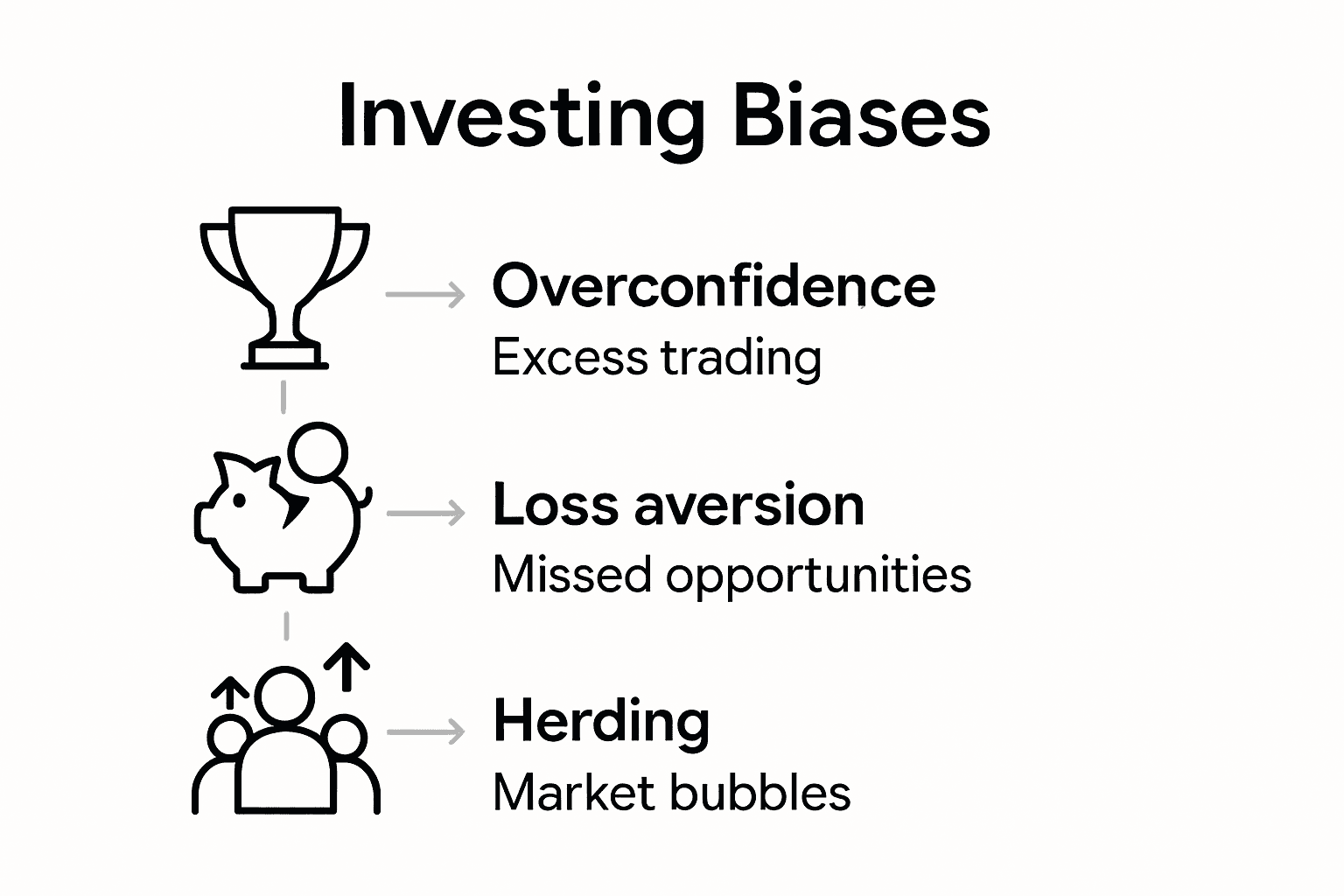
At its core, behavioral finance explores how cognitive and emotional biases systematically impact investor behavior. Psychological elements fundamentally shape investment choices, leading to market inefficiencies that traditional financial theories struggle to explain. Researchers have identified several key cognitive biases that consistently distort financial reasoning, including loss aversion, overconfidence, and herd mentality.
The discipline emerged as a critical response to the efficient market hypothesis, which traditionally assumed that investors always act rationally and markets always reflect perfect information. By integrating psychological insights, behavioral finance provides a more nuanced understanding of financial decision-making processes. Doctoral research has demonstrated how cognitive and emotional biases fundamentally challenge investor rationality, revealing the complex psychological mechanisms underlying investment behaviors.
Pro Tip: Self-Awareness Strategy: Regularly audit your own investment decisions by keeping a detailed journal that tracks not just financial outcomes, but the emotional and psychological reasoning behind each choice. This practice helps identify personal biases and promotes more objective financial planning.
Major Types Of Cognitive And Emotional Biases
Cognitive and emotional biases represent complex psychological mechanisms that systematically distort rational decision-making in financial contexts. Research reveals multiple categories of biases that significantly impact investment choices, creating predictable patterns of irrational behavior that challenge traditional economic assumptions.
In the realm of cognitive biases, investors frequently encounter several recurring psychological traps. These include anchoring bias, where individuals rely too heavily on initial information when making decisions, and confirmation bias, which causes people to seek out information that supports their preexisting beliefs while dismissing contradictory evidence. Availability heuristic represents another critical cognitive bias, where investors make decisions based on recent or easily remembered information rather than comprehensive analysis.
Psychological research demonstrates that emotional biases can be equally powerful in shaping financial decisions. Loss aversion emerges as a particularly compelling emotional bias, where investors feel the pain of financial losses more intensely than the pleasure of equivalent gains. This phenomenon leads many individuals to make suboptimal choices, such as holding onto losing investments too long or avoiding necessary risk. Other significant emotional biases include herd mentality, where investors follow crowd behavior, and regret aversion, which causes people to make conservative choices to avoid potential future disappointment.
These biases interact in complex ways, creating intricate psychological landscapes that can derail rational investment strategies. Understanding these patterns allows investors to develop more self-aware and disciplined approaches to financial decision-making.
Pro Tip: Bias Detection Method: Develop a personal decision checklist that systematically challenges your initial investment impulses by asking critical questions about your motivations, seeking alternative perspectives, and documenting your reasoning process.
Here’s a quick comparison of major cognitive and emotional biases in investing:
| Bias Type | Description | Typical Investor Behavior |
|---|---|---|
| Anchoring Bias | Overreliance on initial information | Fixates on past prices |
| Confirmation Bias | Seeks supporting evidence for beliefs | Ignores contradicting research |
| Loss Aversion | Fears losses more than values gains | Holds losing investments too long |
| Herd Mentality | Follows crowd decisions | Buys when others buy |
| Regret Aversion | Avoids actions that may lead to regret | Misses opportunities by overcaution |
How Behavioral Biases Affect Investment Choices
Investment decisions are rarely purely rational processes, as behavioral biases fundamentally reshape how individuals approach financial choices. Research demonstrates that individual equity investors consistently experience significant decision-making distortions, creating patterns of behavior that systematically deviate from optimal financial strategies.
Cognitive biases create particularly powerful disruptions in investment reasoning. Overconfidence bias emerges as a critical psychological mechanism, causing investors to overestimate their predictive abilities and underestimate potential risks. This bias frequently leads individuals to trade more aggressively, ignore contradictory information, and maintain unrealistic expectations about potential investment returns. Similarly, anchoring bias traps investors by causing them to fixate on initial price points or past performance, preventing them from objectively evaluating current market conditions.

Empirical studies highlight how emotional biases dramatically influence asset allocation decisions, creating complex psychological landscapes that undermine rational investment approaches. Loss aversion represents a particularly powerful emotional bias, where investors feel the psychological pain of potential losses more intensely than the potential pleasure of equivalent gains. This phenomenon often leads to counterproductive behaviors such as holding onto losing investments too long or avoiding necessary portfolio risks, ultimately compromising long-term financial performance.
Understanding these biases provides investors with a critical framework for developing more disciplined and self-aware investment strategies. By recognizing the psychological mechanisms that unconsciously drive financial decisions, individuals can implement more rational, objective approaches to managing their investments.
Pro Tip: Psychological Defense Strategy: Create a structured investment decision checklist that explicitly challenges your initial impulses, requiring written justification for each investment choice and mandatory consideration of alternative perspectives before executing any financial transaction.
Real-Life Examples In Financial Markets
Financial markets provide compelling evidence of how behavioral biases systematically influence investment decisions and create predictable patterns of market inefficiency. Research demonstrates that cognitive biases fundamentally alter aggregate market dynamics through complex psychological mechanisms, revealing how individual investor psychology can drive entire market trends.
One prominent example of behavioral bias in action is the dot-com bubble of the late 1990s, where overconfidence and herd mentality drove investors to irrationally invest in internet-related companies with little regard for fundamental financial metrics. Investors exhibited classic signs of confirmation bias, selectively interpreting information to support their optimistic beliefs about technology stocks, ultimately leading to a massive market crash that wiped out trillions in market value. This phenomenon perfectly illustrates how psychological factors can override rational economic decision-making.
Stock market anomalies consistently demonstrate the powerful impact of investor psychology on financial markets, with patterns like the January effect providing clear evidence of systematic behavioral influences. This recurring market pattern, where stock prices tend to rise in January, stems from emotional and cognitive biases such as tax-loss harvesting, year-end portfolio rebalancing, and investors’ psychological tendency to view the new year as a fresh financial start. These predictable market behaviors reveal how deeply psychological factors are embedded in seemingly rational financial systems.
The 2008 financial crisis represents another stark illustration of behavioral biases in action. Financial institutions and individual investors alike displayed overconfidence bias and herding behavior, creating a massive speculative bubble in the housing and mortgage markets that ultimately led to a global economic meltdown. Investors and financial professionals repeatedly ignored warning signs, reinforcing each other’s misguided optimism through collective psychological mechanisms.
Pro Tip: Bias Awareness Strategy: Maintain a personal investment journal documenting your decision-making process, explicitly recording the emotional and cognitive factors influencing each investment choice to help identify and mitigate your own psychological blind spots.
Reducing Behavioral Mistakes In Investing
Mitigating behavioral biases requires a systematic and self-aware approach to financial decision-making. Research emphasizes the critical importance of developing targeted strategies to raise awareness about cognitive and emotional investment traps, enabling investors to recognize and counteract their psychological tendencies.
One of the most effective strategies for reducing behavioral mistakes involves implementing structured decision-making processes that create psychological distance from emotional impulses. This might include establishing predefined investment rules, such as setting clear entry and exit points, using dollar-cost averaging techniques, and creating automated investment protocols that limit emotional interference. Systematic investment approaches help neutralize impulse-driven decisions by removing the immediate emotional reaction to market fluctuations.
Investment advisors recommend a nuanced approach to managing behavioral biases, which involves both acknowledging psychological limitations and developing robust mitigation techniques. This includes creating personal checklists that explicitly challenge investment assumptions, seeking diverse perspectives, and maintaining a disciplined approach to portfolio management. Critically, investors should cultivate a practice of self-reflection, regularly documenting their decision-making processes and analyzing the emotional and cognitive factors that drive their financial choices.
Technology and professional guidance can also play crucial roles in reducing behavioral mistakes. Investment tracking tools, robo-advisors, and financial counseling services offer external perspectives that can help counteract individual cognitive blind spots. These resources provide systematic approaches to investment that minimize the impact of emotional and cognitive biases, introducing objective criteria and data-driven decision-making frameworks.
Pro Tip: Bias Neutralization Method: Develop a personal investment decision matrix that requires written justification for each financial choice, forcing you to articulate rational reasoning and challenge your initial emotional impulses before executing any investment transaction.
This table summarizes key strategies and their effects for reducing behavioral mistakes:
| Strategy | Core Action | Potential Benefit |
|---|---|---|
| Structured Rules | Predetermined entry/exit points | Minimizes impulsive reactions |
| Investment Checklists | Written evaluation of decisions | Exposes and challenges biases |
| Automated Protocols | Use of systematic investing tools | Reduces emotional interference |
| Professional Guidance | Financial advisors or robo-tools | Adds objective external perspective |
Overcome Behavioral Biases to Invest with Confidence
The article highlights how powerful cognitive and emotional biases can disrupt your investment decisions by creating blind spots and impulsive reactions. You may find yourself struggling with issues like loss aversion, overconfidence, or herd mentality that lead to missed opportunities and emotional stress. Understanding these biases is the first step toward mastering your investment psychology and achieving greater financial discipline.
At finblog.com, we specialize in guiding investors like you to recognize and neutralize these hidden psychological traps. By using structured decision checklists, self-awareness techniques, and professional insights, you can build a clear, objective strategy that minimizes costly mistakes. Don’t let behavioral biases control your financial future. Visit finblog.com now to start developing a smarter investing approach and take charge of your wealth with confidence.
Frequently Asked Questions
What is behavioral finance?
Behavioral finance is an interdisciplinary field that combines psychology and economics to understand how cognitive and emotional biases impact investment decisions, challenging traditional economic theories that assume rational behavior.
How do cognitive biases affect investment choices?
Cognitive biases, such as anchoring and confirmation bias, systematically distort rational decision-making by causing investors to rely too heavily on initial information or seek supporting evidence for their beliefs, leading to suboptimal investment strategies.
What is loss aversion, and how does it influence investors?
Loss aversion is the tendency for investors to feel the pain of financial losses more acutely than the pleasure of equivalent gains, often leading them to hold onto losing investments too long or avoid necessary risks, which can undermine their financial performance.
What strategies can help mitigate behavioral biases in investing?
Investors can reduce behavioral biases by implementing structured decision-making processes, using predefined investment rules, keeping investment checklists, and considering automated investing tools or professional guidance to introduce objective criteria into their financial decisions.
Recommended
- Psychology of Investing: Complete Guide for Investors – Finblog
- Understanding Investing in Bear Markets: A Clear Guide – Finblog
- 7 Common Investment Mistakes and How to Avoid Them – Finblog
- Understanding the Ethical Investing Guide for Investors – Finblog
- Betting Trend Insights: How They Influence Wagering Decisions