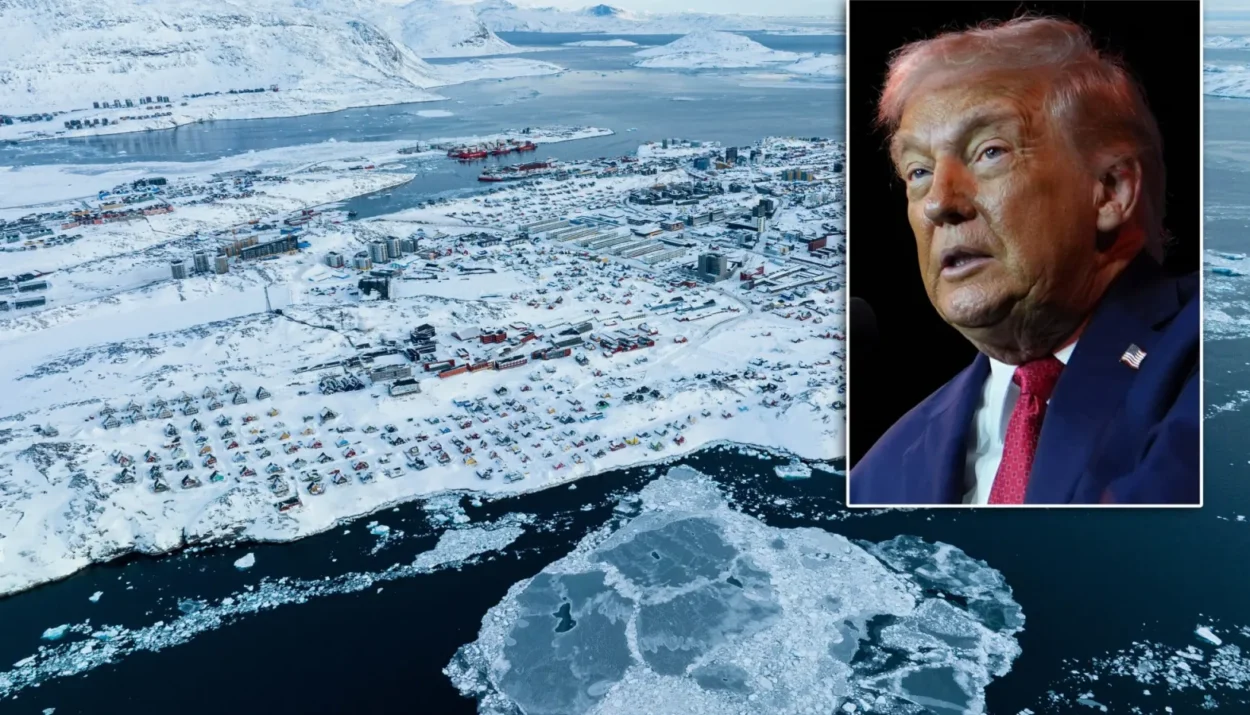

Greenland has once again moved to the center of global geopolitics after Donald Trump openly said the US “needs Greenland” for national security reasons, reigniting tensions with Denmark and allies across NATO.
Speaking to reporters aboard Air Force One, Trump argued that the Arctic island has become increasingly strategic as Russian and Chinese military and commercial activity expands in the region. The White House later confirmed that the administration is considering a wide range of options to bring Greenland under US control, including military force.

A strategic Arctic location
Greenland sits between the US and Russia and plays a critical role in Arctic defense. The island lies along the GIUK Gap, a naval choke point connecting the Arctic Ocean to the Atlantic, long used to track Russian submarines.
The US already operates Pituffik Space Base in northwest Greenland, a key early warning site for missile launches. Defense experts say the shortest route for Russian ballistic missiles to reach the US runs over Greenland and the North Pole, making the territory central to missile detection and interception.
As Arctic ice continues to melt, Greenland is also positioned near emerging shipping routes such as the Northwest Passage and the Transpolar Sea Route. These routes could dramatically shorten travel time between Asia and Europe, increasing both commercial value and military interest.
Critical minerals and energy potential
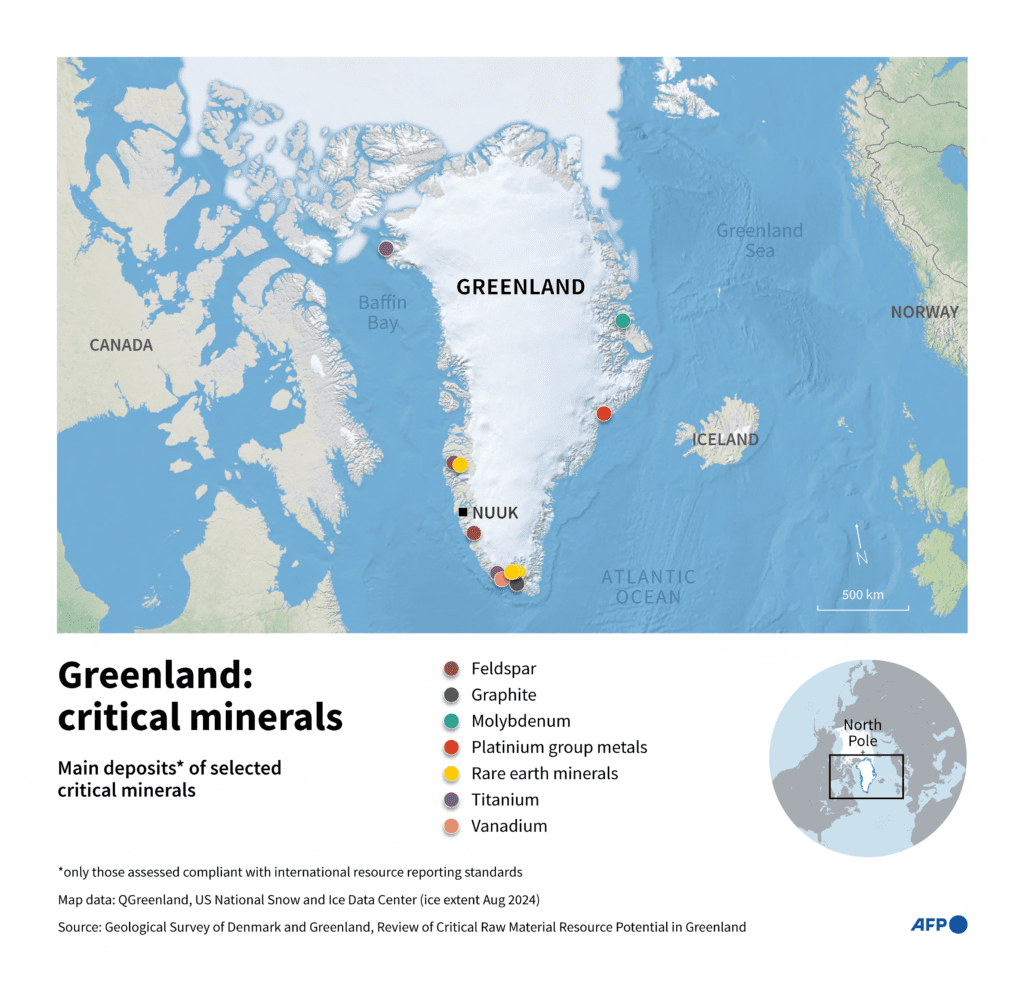
Beyond geography, Greenland holds large untapped reserves of oil, gas, rare earth elements, and critical minerals. These materials are essential for electric vehicles, renewable energy systems, advanced weapons, and defense technology.
China’s dominance over global rare earth supply has already raised alarms in Washington. Analysts say gaining access to Greenland’s mineral wealth could help the US reduce dependence on China in key supply chains.
“Greenland is some of the most valuable real estate in the world for economic and defense reasons over the next several decades,” said Clayton Allen of Eurasia Group.
The “Golden Dome” defense plan
Greenland also fits into Trump’s push for a “Golden Dome” missile defense system, a large scale shield designed to intercept incoming missile threats. Defense analysts argue that deploying sensors and interceptors closer to Russia would be far more effective, and Greenland offers that proximity.
According to security experts, expanding missile defense infrastructure in Greenland could become a cornerstone of US Arctic strategy as next generation weapons emerge.
Pushback from Europe and Greenland
Trump’s comments have triggered sharp reactions in Europe. Danish officials warned that any attempt to annex Greenland would undermine the transatlantic alliance. Opinion polls show most Greenlanders oppose US control, though many support long term independence from Denmark.
Critics also question why the US would need full sovereignty over Greenland when it already has military access under existing defense agreements with Denmark.
Security analysts note that during the Cold War, the US stationed thousands of troops on the island without challenging Danish sovereignty, suggesting Washington could expand its presence again if needed.
For the White House, Greenland represents military security, Arctic dominance, critical minerals, and future trade routes all in one place. For Europe, Trump’s rhetoric raises concerns about sovereignty, alliance unity, and the future of NATO.
As Arctic competition intensifies, Greenland’s strategic value is only growing, making it one of the most sensitive geopolitical flashpoints heading into 2026.
Disclosure: This article does not represent investment advice. The content and materials featured on this page are for educational purposes only.
Related: How Big Tech Created the 2025 AI Boom on Debt
Europe’s Gas Prices Fall, but Industrial Recovery Remains Limited