
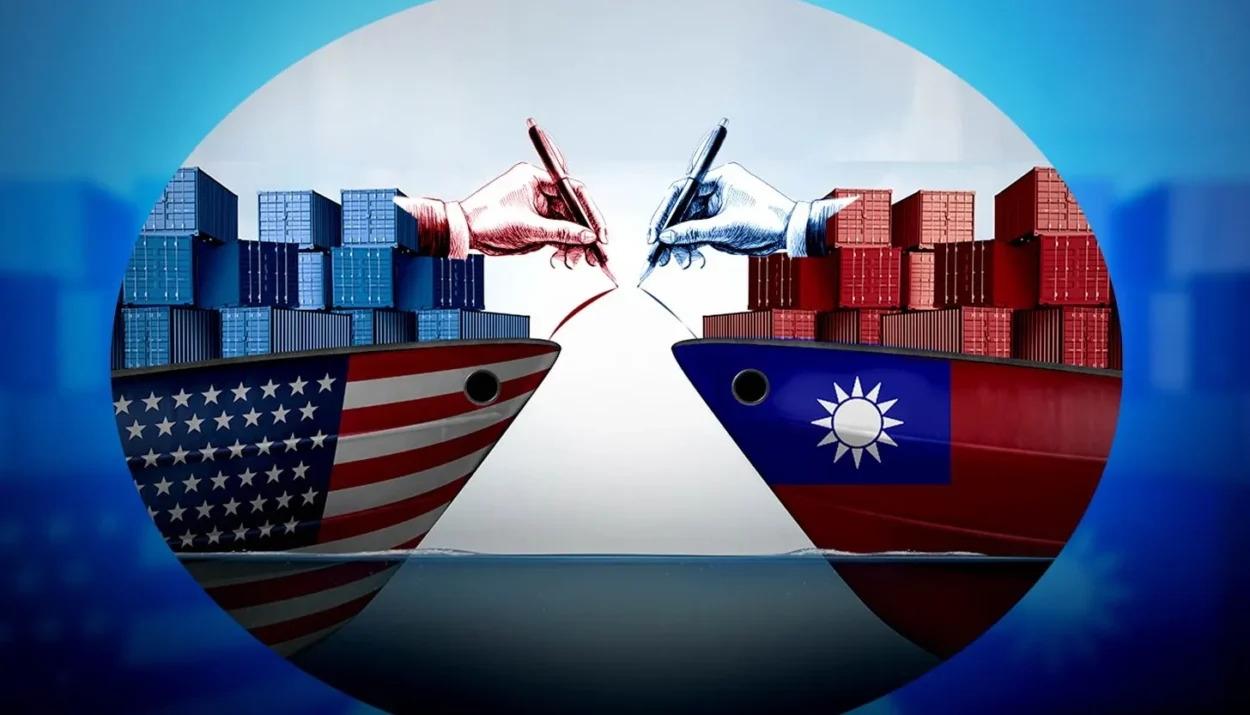

The US said it has reached a trade agreement with Taiwan to lower tariffs on Taiwanese goods while securing major new investment commitments from chip and technology companies.
Under the deal, Washington will reduce tariffs on Taiwanese imports to 15%, down from a 20% reciprocal rate. Sector-specific duties on auto parts, timber, lumber, and wood products will also be capped at 15%, according to the US Commerce Department.
In return, Taiwanese semiconductor and tech firms will pledge at least $250bn in new direct investments in US operations, focused on advanced semiconductors and artificial intelligence. Taiwan will also provide $250bn in credit guarantees to support further investment across the American semiconductor supply chain.
US officials said the agreement aims to accelerate reshoring of chip production and strengthen domestic capacity. Commerce Secretary Howard Lutnick said Taiwanese firms are already expanding plans in the US, including potential growth by TSMC in Arizona.
Taiwan’s vice premier Cheng Li-chiun, who led negotiations, called the deal a win-win that promotes two-way high-tech investment and deeper cooperation in AI. She said the investments would be company-led and would not come at the expense of domestic spending in Taiwan.
The agreement follows months of talks as Taipei sought to ease US duties and protect its chip exports amid pressure from President Donald Trump to bring more critical technology manufacturing to American soil.
Taiwan is a global powerhouse in semiconductors, which make up more than half of its exports to the US. The island posted a $74bn goods trade surplus with the US in 2024.
Disclosure: This article does not represent investment advice. The content and materials featured on this page are for educational purposes only.
Related: Greenland: Trump signals tariffs on nations that oppose goal