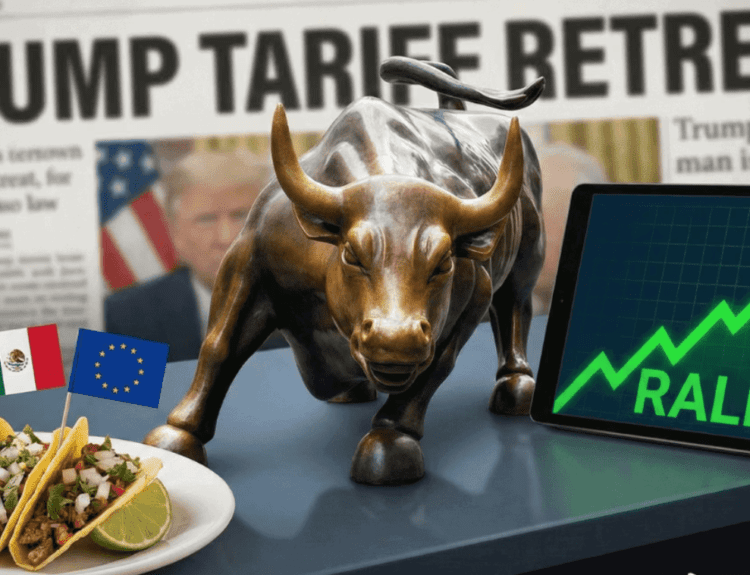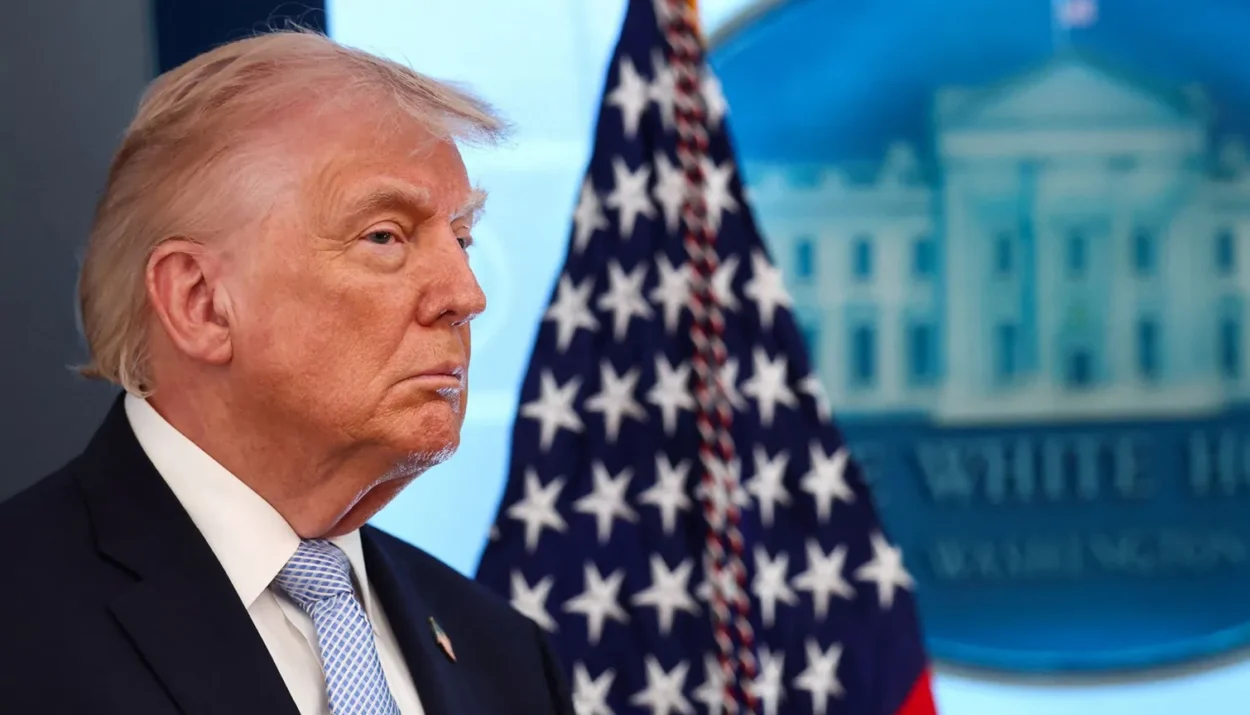

A last-minute ceasefire has paused a dangerous escalation between the US and Iran, calming global markets — but raising deeper questions about credibility, power, and the future of US foreign policy.
President Donald Trump’s sudden announcement of a two-week ceasefire with Iran has offered the world a temporary sense of relief after weeks of escalating conflict. The agreement, tied directly to Iran reopening the Strait of Hormuz, immediately shifted both geopolitical tension and financial markets.
Oil prices plunged, stock futures surged, and for a moment, it looked like the worst-case scenario had been avoided. But beneath that relief lies a far more complex reality.
A Deal Born at the Edge of Escalation
The ceasefire came just hours before a critical deadline, after Trump warned that failure to reach a deal could lead to catastrophic consequences. Earlier that same day, US forces had launched new strikes on Kharg Island, a key Iranian oil export hub, while Israel reportedly hit infrastructure targets.
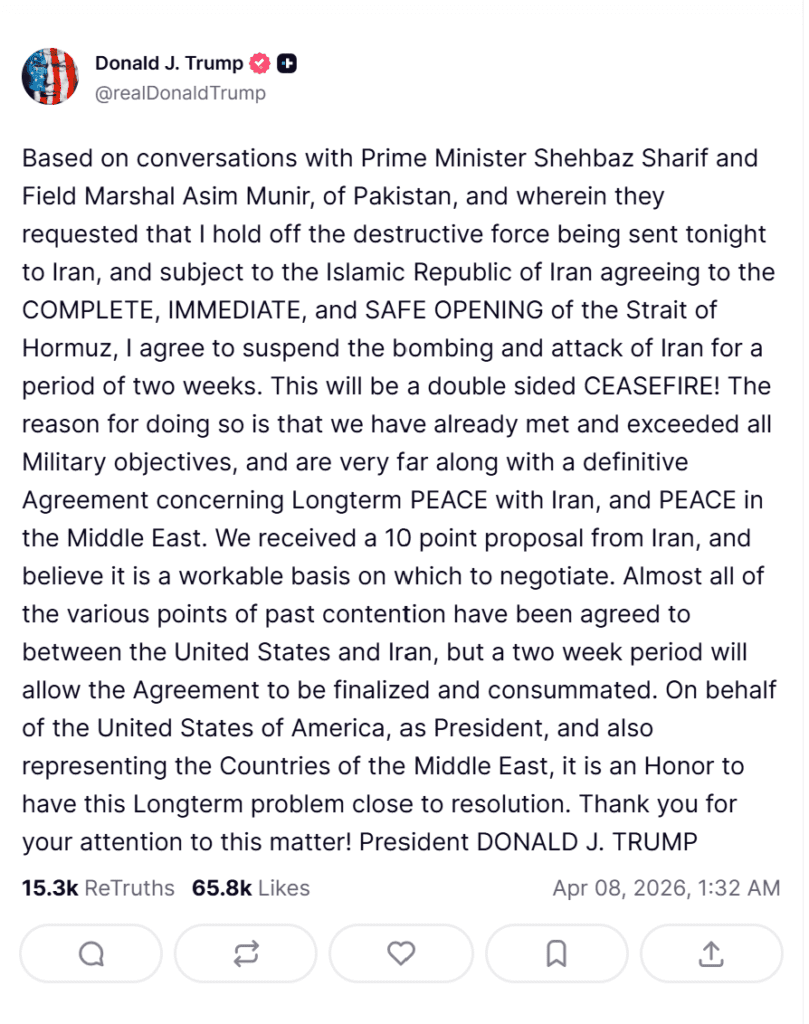
Then, in a dramatic reversal, Trump announced a “double sided CEASEFIRE,” claiming US military objectives had already been achieved.
Iran quickly responded. Foreign Minister Abbas Araghchi signaled acceptance, stating that Iran would halt its operations if US attacks stopped, and would allow safe passage through the Strait of Hormuz during the two-week window.
Why the Strait of Hormuz Changes Everything
At the heart of this deal is one critical factor: oil flow.
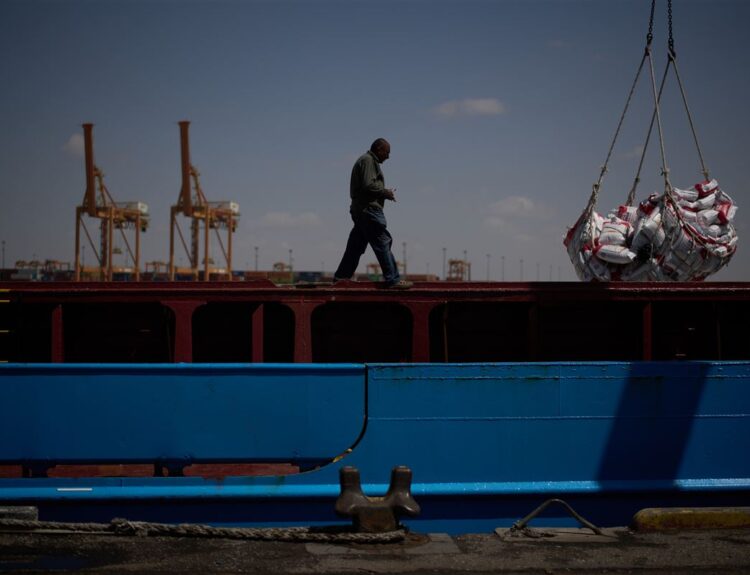
The Strait of Hormuz is one of the most important chokepoints in the global economy. Roughly a fifth of the world’s oil supply passes through this narrow waterway. For weeks, Iran had effectively restricted access, pushing oil prices higher and fueling global inflation fears.
Now, with reopening on the table:
- Crude oil dropped sharply, falling below $100 per barrel
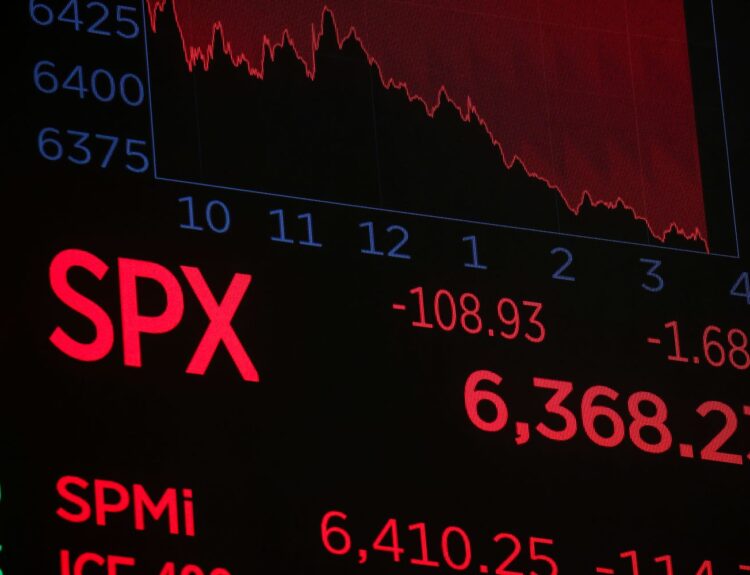
- Stock futures jumped, reflecting reduced geopolitical risk
- Energy markets signaled optimism that supply disruptions may ease
This immediate market reaction shows just how tightly geopolitics and financial markets are connected.
A Strategic Exit… or a Temporary Pause?
For Trump, the ceasefire offers something critical: an off-ramp from war.
He framed the agreement as a success, saying the US had “met and exceeded” its military goals and was now “very far along” toward a broader peace deal.
But the reality is less clear.
The ceasefire is not a peace agreement. It is a two-week window for negotiations, and major issues remain unresolved:
- Iran’s nuclear program and enriched uranium status
- The future of US sanctions
- Iran’s influence across the Middle East
- Control and conditions over the Strait of Hormuz
Even Iran’s broader demands, including sanctions relief and compensation, highlight how far apart the two sides still are.
The Political and Global Cost
While Trump may have avoided immediate escalation, the cost of his approach is already visible.
His earlier threats, including warnings that “a whole civilization will die”, triggered backlash not only from Democrats but also from members of his own party. Critics argued such rhetoric risks damaging US credibility and destabilizing global order.
This moment may reshape how the world views the US:
- From a stabilizing force → to a more unpredictable actor
- From structured diplomacy → to high-pressure brinkmanship
- From alliances → to unilateral decision-making
Even if the ceasefire holds, trust may be harder to rebuild than markets.
Markets Celebrate, But Risks Remain
Financial markets reacted quickly and positively. Lower oil prices ease inflation pressure, while reduced war risk supports equities.
But investors know this is fragile. The next two weeks will determine whether:
- A long-term peace framework emerges
- Or tensions return just as quickly as they cooled
In many ways, this is not the end of the story. It is just a pause.
Trump’s ceasefire has delivered short-term stability at a critical moment. It has calmed markets, avoided immediate escalation, and created space for diplomacy. But it has also exposed deeper risks:
A negotiation built on pressure.
A conflict paused, not resolved.
And a global order still adjusting to a more unpredictable US strategy.
The world may have stepped back from the brink, but it is not yet in safe territory.
Related: Trump Says US Is ‘Independent’ From Middle East, Markets Say Otherwise