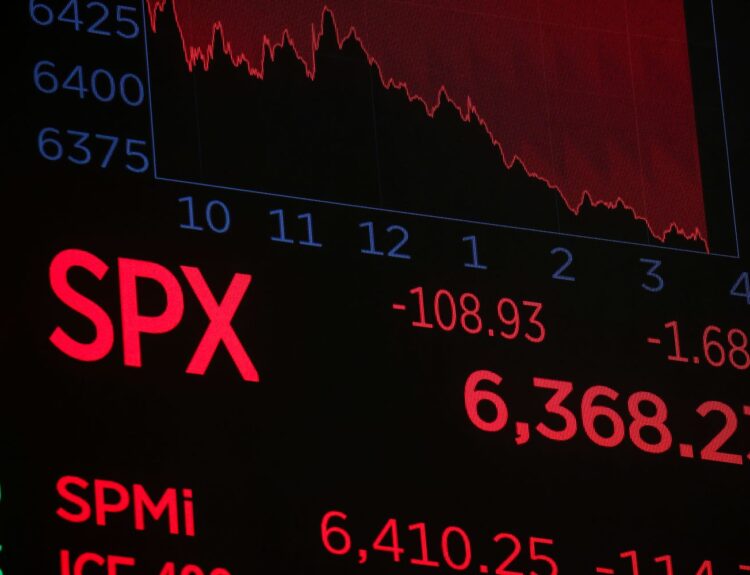


US stocks fell sharply on Friday after January’s producer price index (PPI) came in hotter than forecasts, adding fresh uncertainty for investors already concerned about AI disruption and private credit stress.
The Dow Jones Industrial Average dropped more than 600 points, falling around 1.4 percent, while the Nasdaq slid 1.3 percent and the S&P 500 declined nearly 0.8 percent.
All three major indexes are now on track to finish February in the red, with the Dow poised to snap its eight-month winning streak.
Inflation Surprise Hits Sentiment
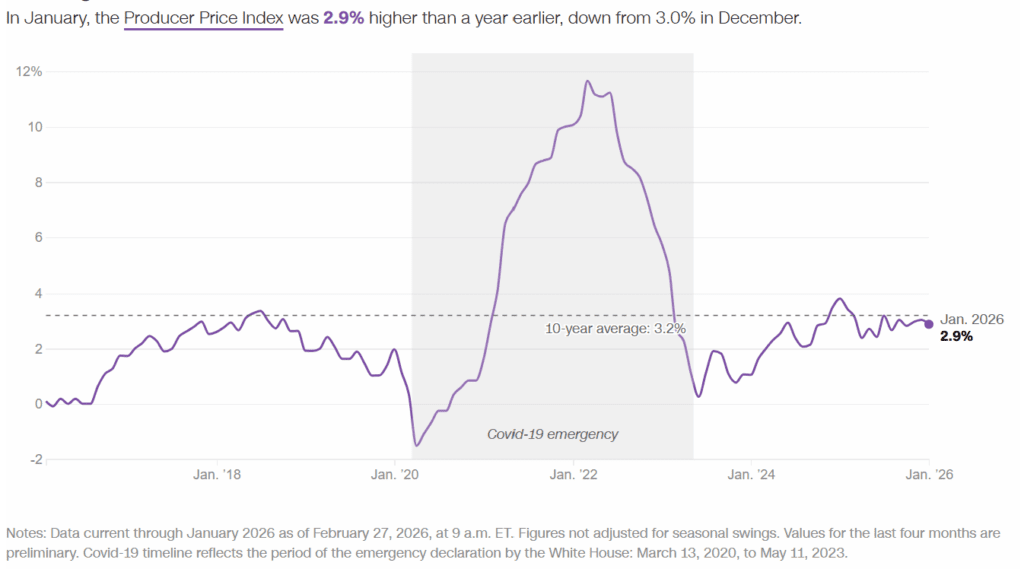
The latest data showed wholesale prices rising 0.5 percent month over month, exceeding expectations of 0.3 percent.
Even more concerning for markets:
• Core PPI surged 0.8 percent, far above forecasts
• Annual inflation pressures remain elevated
• Tariff driven costs are increasingly moving through supply chains
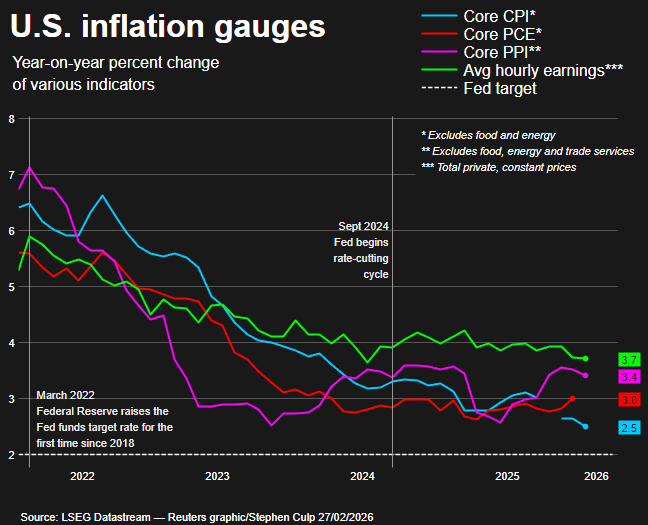
Economists warn this could mean higher prices for consumers ahead and a more complicated path for the Federal Reserve.
“Inflation isn’t solved yet,” said Stephen Kolano of Integrated Partners, noting the report raises questions about whether the Fed can safely cut rates this year.
AI and Credit Risks Add Pressure
Beyond inflation, markets were rattled by growing anxiety around AI driven disruption.
Block’s announcement that it plans to cut nearly half its workforce due to AI productivity gains intensified fears that automation could reshape entire industries.
At the same time: Private credit concerns resurfaced, Financial firms tied to lending pulled back sharply, Layoff trends are beginning to climb again
Tech Weakness Deepens
Technology stocks also struggled:
• Nvidia extended its post earnings decline
• Salesforce and Microsoft slipped
• Zscaler plunged after missing key metrics
The broader software sector is now closing out one of its worst months in recent memory.
Policy Path Uncertain
The hotter inflation reading complicates the outlook for monetary policy.
Rising input costs suggest tariffs may still be feeding into the economy, forcing companies to either raise prices or absorb margin pressure.
That leaves the Fed facing a difficult balancing act between:
• Supporting growth
• Fighting inflation
• Managing labor market risks
With February shaping up as a losing month for major indexes, investors now face a more volatile environment heading into spring.
Disclosure: This article does not represent investment advice. The content and materials featured on this page are for educational purposes only.
Related: US Economy Slows Late in 2025 as Growth Cools and Inflation Edges Higher