


Global markets fell sharply again, with US stocks posting a fifth straight weekly decline as rising oil prices and ongoing Iran tensions fuel inflation fears and weaken investor confidence.
Wall Street closed lower across the board:
- Dow Jones fell 1.73%
- S&P 500 dropped 1.67%
- Nasdaq declined 2.15%
The continued selloff reflects a market increasingly dominated by geopolitical risk, as investors struggle to find clarity on how the Iran conflict will evolve.
Oil Shock Drives Inflation Fears
Energy markets remain at the center of the turmoil.
- Brent crude jumped to $112.57
- WTI surged to $99.64
The rally comes as Iran continues to threaten disruption in the Strait of Hormuz, a critical route for roughly one-fifth of global oil and gas supply. Analysts warn that the longer the disruption lasts, the broader the economic impact becomes.
Rising energy costs are already feeding into:
- Higher transportation and food prices
- Rising inflation expectations
- Falling consumer confidence
US consumer sentiment has dropped to a three-month low, highlighting growing pressure on households.
Markets Lose Faith in Diplomatic Signals
Investors appear increasingly skeptical about progress toward de-escalation. President Donald Trump extended a pause on strikes targeting Iranian energy infrastructure, but markets showed little reaction.
“Words alone aren’t cutting it right now… tangible evidence of progress is what’s needed,” said one market analyst.
Iran has given no clear signal it is ready to negotiate and has reiterated its stance on disrupting shipping routes, keeping uncertainty elevated.
Correction Spreads Across Markets
The downturn is now broadening across major indices.
- The Dow has officially entered correction territory, down more than 10% from its peak
- The Nasdaq had already crossed that threshold earlier
- The Russell 2000 was the first to confirm a correction
Since the conflict began:
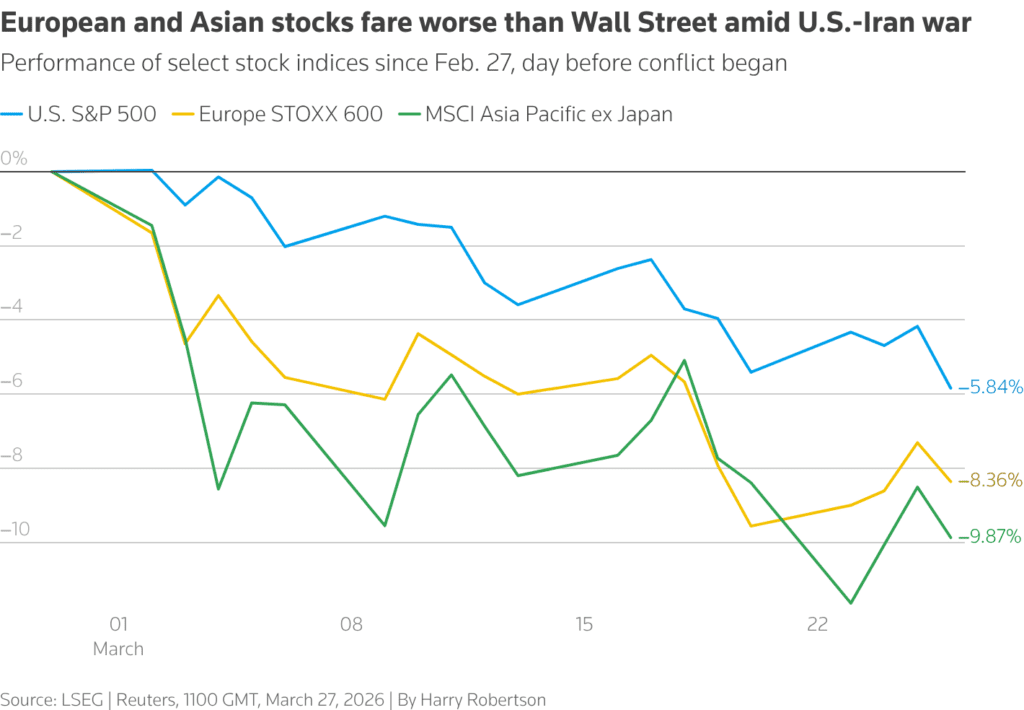
- European and Asian stocks are down more than 8%
- US stocks have fallen around 6%
This reflects a global shift toward caution as risks build.
Bond Yields Rise as Rate Expectations Shift
The bond market is reinforcing the same message.
- US 10-year Treasury yield rose to 4.43%
- Markets now see around a 60% chance of a Fed rate hike this year
That marks a sharp reversal from earlier expectations of rate cuts, as investors adjust to the possibility of persistent inflation driven by energy prices.
Currencies and Safe Havens React
The US dollar strengthened against major currencies, reaching its highest level against the yen since mid-2024. Meanwhile, gold moved higher as investors sought safety amid rising volatility.
Markets are now facing a difficult mix: Rising oil prices, Persistent geopolitical risk, Shifting central bank expectations
What began as a geopolitical shock is now spreading across: stocks, bonds, currencies, and consumer sentiment.
Until there is clear progress on the conflict or stabilization in energy markets, investors are likely to remain cautious. For now, uncertainty continues to drive the market narrative.
Disclosure: This article does not represent investment advice. The content and materials featured on this page are for educational purposes only.
Related: Nasdaq Falls Into Correction as War and Tech Drag Markets