

Over sixty percent of American investors face a critical decision when choosing between short term and long term strategies. The stakes are high, with financial security and future goals depending on this foundational choice. Understanding the real differences between these two approaches can help you minimize risk and make the most of every dollar, setting you up for smarter decisions that match your personal financial timeline.
Table of Contents
- Defining Long Term and Short Term Investing
- Comparing Strategies and Time Horizons
- Risk, Volatility, and Return Profiles
- Tax Implications and Cost Considerations
- Choosing an Approach for Your Goals
Key Takeaways
| Point | Details |
|---|---|
| Investment Horizon Matters | Short-term investing focuses on rapid returns and capital preservation, while long-term investing prioritizes sustained growth and wealth accumulation. |
| Risk and Volatility | Short-term strategies are more volatile and require active management, while long-term approaches embrace market fluctuations and focus on diversification. |
| Tax Implications | Short-term investments are taxed at higher ordinary income rates, making long-term investments more tax-efficient with lower capital gains rates. |
| Personalization of Strategy | Investment strategies should align with individual financial goals, risk tolerance, and time horizons for optimal effectiveness. |
Defining Long Term and Short Term Investing
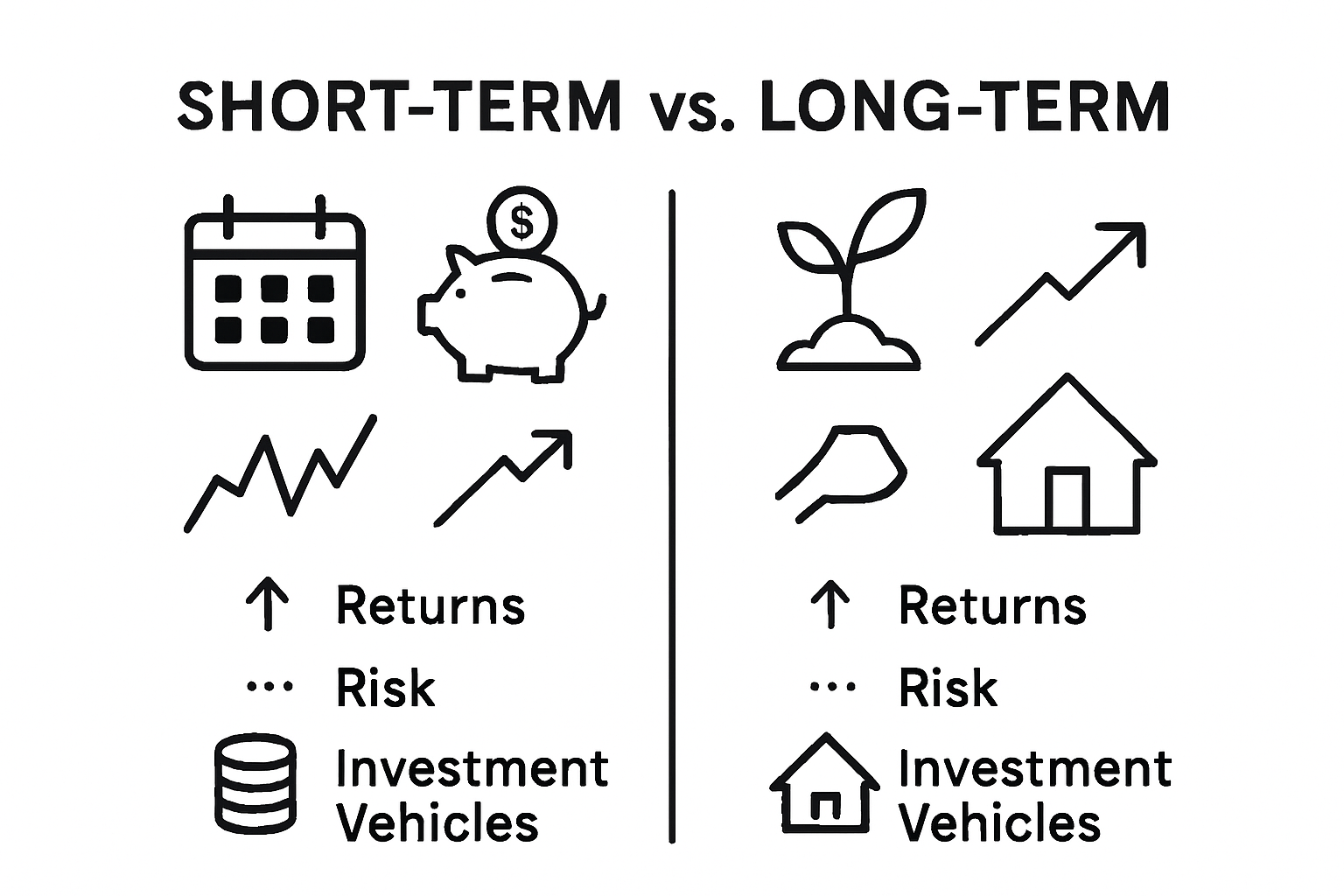
Investing strategies fundamentally diverge based on time horizons, creating two primary approaches: long term and short term investing. These investment methods differ dramatically in their objectives, risk profiles, and potential returns. Short-term investment options typically involve financial instruments designed for rapid cash conversion and minimal market exposure.
Short term investments generally span periods under five years, focusing on preserving capital and generating modest returns. These strategies often include instruments like certificates of deposit (CDs), money market accounts, government bonds, and high-yield savings accounts. Investors seeking quick liquidity and lower risk find these vehicles attractive. Understanding investment timelines helps determine which approach matches individual financial goals.
In contrast, long term investments target sustained growth over extended periods, typically spanning more than five years. These strategies emphasize wealth accumulation through vehicles like stocks, mutual funds, retirement accounts, and real estate. Long term investors embrace higher potential volatility, understanding that market fluctuations tend to smooth out over decades. Their primary objective involves building substantial wealth through compound growth, strategic diversification, and patience.
Key differences between short and long term investing include:
- Risk tolerance
- Investment objectives
- Expected returns
- Time commitment
- Portfolio composition
Successful investors often blend both approaches, creating balanced portfolios that address immediate financial needs while simultaneously building long term wealth.
Comparing Strategies and Time Horizons
Investment strategies fundamentally differ based on time horizons, with each approach presenting unique characteristics and potential outcomes. Long-term versus short-term investment contingencies reveal complex dynamics that impact portfolio performance and risk management. Short-term strategies typically focus on immediate market opportunities, while long-term approaches prioritize sustained growth and economic expansion.

Short-term investment tactics involve rapid market movements and momentum-driven decisions. These strategies often capitalize on temporary market inefficiencies, requiring active management and frequent portfolio adjustments. Investors employing short-term approaches must remain vigilant, analyzing market trends, economic indicators, and potential quick-profit opportunities. Investment horizons fundamentally shape economic growth strategies, with each method presenting distinct advantages and challenges.
Long-term investment strategies, conversely, emphasize fundamental economic principles and sustained wealth accumulation. These approaches embrace market volatility, understanding that economic cycles naturally fluctuate over extended periods. Patient investors prioritize comprehensive research, diversification, and strategic asset allocation. They recognize that momentary market disruptions often resolve themselves when viewed through a broader perspective.
Key comparative elements between short-term and long-term investment strategies include:
- Risk tolerance levels
- Portfolio turnover frequency
- Capital preservation objectives
- Performance measurement timelines
- Strategic flexibility
Successful investors recognize that neither approach is universally superior. Instead, intelligent portfolio construction involves strategic integration of both short-term tactical maneuvers and long-term sustainable growth principles.
Risk, Volatility, and Return Profiles
Investment strategies inherently wrestle with balancing risk, volatility, and potential returns across different time horizons. Consequences of short-termism reveal significant challenges in maintaining sustainable investment performance. Short-term investment approaches typically demonstrate higher volatility and more pronounced risk profiles, demanding constant market surveillance and rapid decision-making.
Short-term investment strategies expose investors to increased market fluctuations and potential rapid value changes. These approaches require sophisticated risk management techniques, with investors constantly monitoring economic indicators, market sentiment, and potential quick-profit opportunities. Traders utilizing these methods must possess exceptional analytical skills and emotional discipline to navigate unpredictable market conditions. Traits of short-term oriented investment strategies often involve more aggressive risk tolerance and willingness to accept potential substantial losses for potential higher returns.
Long-term investment strategies contrast sharply, emphasizing risk mitigation through strategic diversification and patient capital allocation. These approaches embrace market volatility as a natural economic phenomenon, understanding that momentary fluctuations typically smooth out over extended periods. Investors adopting long-term perspectives prioritize fundamental analysis, comprehensive research, and sustainable growth principles. They recognize that temporary market disruptions rarely impact well-structured, diversified portfolios with robust underlying economic fundamentals.
Key risk and return characteristics include:
- Volatility tolerance levels
- Potential return ranges
- Capital preservation priorities
- Portfolio rebalancing frequency
- Recovery potential during market downturns
Intelligent investors recognize that effective portfolio construction requires nuanced understanding of individual risk tolerance, financial objectives, and strategic flexibility across different investment horizons.
Tax Implications and Cost Considerations
Tax strategies play a critical role in investment decision-making, with substantial differences emerging between short-term and long-term investment approaches. Capital gains taxation varies significantly based on investment holding periods, creating complex financial implications for investors seeking optimal returns.
Short-term investments typically trigger ordinary income tax rates, which can substantially erode potential profits. Investments held for less than one year are taxed at the investor’s marginal income tax bracket, often resulting in higher tax burdens. This taxation structure creates a significant financial incentive for investors to consider longer investment horizons. Long-term investment cost structures offer more favorable tax treatment, with capital gains taxed at reduced rates when assets are held for extended periods.
Long-term investment strategies provide multiple cost advantages beyond taxation. These approaches minimize transaction expenses through reduced portfolio turnover, lower brokerage fees, and decreased administrative costs. Investors adopting patient, strategic investment models can potentially reduce overall portfolio expenses while simultaneously benefiting from compound growth and more favorable tax treatment. The cumulative impact of these factors can significantly enhance net investment returns over time.
Key financial considerations include:
- Marginal tax bracket implications
- Long-term vs short-term capital gains rates
- Transaction cost minimization
- Portfolio rebalancing expenses
- Tax-efficient investment vehicle selection
Successful investors recognize that intelligent tax management represents a critical component of comprehensive investment strategy, requiring ongoing education and strategic planning.
Choosing an Approach for Your Goals
Investment strategies are not one-size-fits-all solutions but personalized pathways aligned with individual financial objectives. Personal financial goals fundamentally shape investment approaches and determine the most appropriate investment strategy for each unique situation.
Short-term investment approaches work best for individuals with immediate financial needs or limited time horizons. These strategies suit goals like saving for a down payment, building an emergency fund, or preparing for near-future expenses. Investors with shorter time frames must prioritize capital preservation, liquidity, and minimal risk exposure. Potential short-term investment vehicles include high-yield savings accounts, certificates of deposit, money market funds, and short-duration government bonds.
Strategic long-term investment principles emphasize patience, comprehensive planning, and alignment with broader financial objectives. Long-term approaches are ideal for significant life goals such as retirement planning, children’s education funding, and wealth accumulation. These strategies leverage compound growth, strategic diversification, and the potential to ride out market volatility. Successful long-term investors understand that consistent contributions and disciplined investment approaches matter more than attempting to time market movements.
Key considerations when selecting an investment approach include:
- Current financial situation
- Personal risk tolerance
- Specific financial goals
- Time horizon for investment
- Liquidity requirements
- Age and career stage
Intelligent investors recognize that flexibility matters. Periodic portfolio reassessment ensures your investment strategy continues meeting evolving personal and financial objectives.
Make Smart Investment Decisions With Expert Guidance
Choosing between long term and short term investing is a crucial decision that directly impacts your financial future. If you feel overwhelmed by balancing risk tolerance, time horizons, and tax implications, you are not alone. Many investors struggle to align their goals with strategies that match their unique situations. This article highlights the importance of understanding investment timelines and risk profiles to create a plan that safeguards your interests while maximizing growth.
Take control of your investment journey today by exploring personalized advice at finblog.com. Our site offers clear insights on topics like understanding short-term and long-term investments and developing a strategy tailored to your financial goals. Don’t wait for market uncertainty to cost you more. Visit finblog.com now and get started with expert tools and resources to build a confident, well-balanced portfolio that grows with you.
Frequently Asked Questions
What is the primary difference between long term and short term investing?
Long term investing focuses on wealth accumulation over extended periods, typically over five years, while short term investing aims for quick returns within a shorter time frame, generally under five years.
What are the main risks associated with short term investing?
Short term investing generally involves higher volatility and the need for constant market monitoring, making it riskier as investors may face rapid value changes and must react quickly to market fluctuations.
What investment vehicles are commonly used for long term investing?
Long term investments typically include stocks, mutual funds, retirement accounts, and real estate, emphasizing sustained growth and compound returns over time.
How do tax implications differ between short term and long term investments?
Short term investments are taxed at ordinary income rates, which can be higher, while long term investments benefit from reduced capital gains tax rates after holding the assets for more than a year.
Recommended
- Growth Stocks vs Value Stocks: Complete Guide – Finblog
- Understanding Short Term Investment Options for You – Finblog
- Master Building an Investment Portfolio for Profits – Finblog
- Growth Investing: Everything You Need to Know – Finblog
- What Is Better for Your Business: “Snackable” Content or Longer, In-depth Video? – Kicker Video