

Over 60% of American adults say they feel anxious about money, highlighting just how tough it is to gain control of personal finances. From juggling expenses to making sense of investment choices, many find the path to lasting wealth confusing. This straightforward guide breaks down practical steps every American can use for sustainable financial growth, starting with a clear look at your own money situation and ending with strategies that actually adapt as your goals change.
Table of Contents
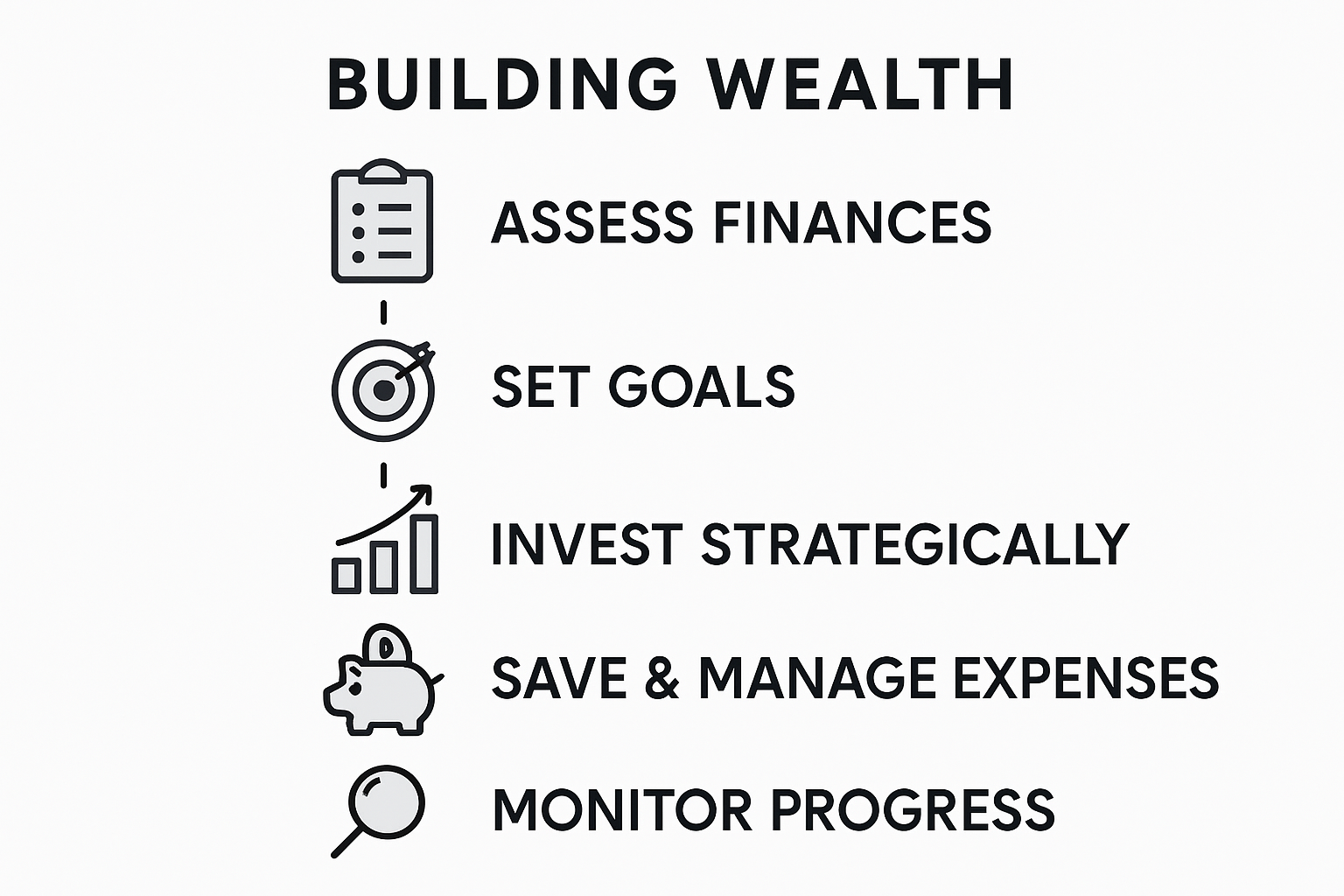
- Step 1: Assess Your Current Financial Situation
- Step 2: Set Clear and Achievable Wealth Goals
- Step 3: Develop a Strategic Investment Plan
- Step 4: Optimize Savings and Manage Expenses
- Step 5: Monitor Progress and Adjust Strategies
Quick Summary
| Key Insight | Explanation |
|---|---|
| 1. Assess Your Financial Situation | Gather documents to calculate net worth and track income and expenses accurately. |
| 2. Set Clear Wealth Goals | Define realistic and specific financial objectives to guide your financial journey. |
| 3. Develop an Investment Plan | Create a personalized investment strategy that balances risk and aligns with goals. |
| 4. Optimize Savings and Spending | Track expenditures closely and apply budgeting strategies to enhance savings. |
| 5. Monitor and Adjust Regularly | Conduct regular financial reviews to adjust strategies and stay on track with goals. |
Step 1: Assess Your Current Financial Situation
Understanding your financial landscape starts with a comprehensive personal financial assessment. This critical first step will help you map out your current resources, debts, income streams, and potential growth opportunities by creating a clear snapshot of where you stand financially.
Begin by gathering all your financial documents including bank statements, investment accounts, retirement plan records, loan documents, and credit card statements. Calculate your net worth by listing your total assets (everything you own with monetary value) and subtracting your total liabilities (all outstanding debts). The Federal Reserve Bank of Dallas recommends tracking income and expenses as a foundational step in building personal wealth. Create a comprehensive spreadsheet or use a digital tool to categorize your monthly income sources and track every expense.
A crucial warning: be brutally honest during this assessment. Many people unconsciously minimize expenses or overestimate income. Break down your spending into essential categories like housing, transportation, food, utilities, and discretionary spending. This granular approach will reveal spending patterns and potential areas for optimization. Your next step will be developing a strategic budget based on these insights.
Step 2: Set Clear and Achievable Wealth Goals
Building lasting financial success requires more than wishful thinking. Setting strategic and well defined wealth goals provides the roadmap that transforms your financial dreams into actionable plans. Setting smart financial goals becomes the compass guiding your economic journey.
The Federal Reserve Bank of Dallas recommends developing goals that are specific, realistic, and time-bound. Create financial objectives that break down your broader wealth ambitions into measurable milestones. For instance, instead of vaguely wanting to be wealthy, specify concrete targets like saving 20% of your income annually, paying off student loans within three years, or accumulating $100,000 in retirement funds by age 35. These precise objectives transform abstract aspirations into trackable progress.
A crucial tip when goal setting: build flexibility into your plan. Economic conditions change, personal circumstances shift, and your wealth strategy should adapt accordingly. Start with ambitious yet attainable goals, regularly review your progress, and be prepared to recalibrate your approach. Your next step involves creating a detailed budget that aligns with these carefully crafted financial objectives.
Step 3: Develop a Strategic Investment Plan
Creating a robust investment strategy transforms your financial potential from theoretical to tangible. Developing an investment strategy requires a systematic approach that balances risk, potential returns, and your unique financial objectives. Think of your investment plan as a personalized roadmap that navigates the complex terrain of financial markets.

The International Monetary Fund recommends comprehensive analysis when creating an investment plan that considers multiple financial dimensions. Begin by assessing your risk tolerance realistic investment horizons. Diversify your portfolio across different asset classes like stocks, bonds, real estate, and potentially alternative investments. Consider allocating percentages based on your age and financial goals a standard approach might involve 70% stocks for younger investors and gradually shifting toward more conservative options as you approach retirement.
A critical warning: never invest money you cannot afford to lose. Always maintain an emergency fund separate from your investment portfolio. Regularly review and rebalance your investments annually to ensure they align with your evolving financial landscape. Your next step involves researching specific investment vehicles that match your strategic plan and risk profile.
Step 4: Optimize Savings and Manage Expenses
Transforming your financial potential requires a strategic approach to saving and spending. Managing expenses effectively means understanding where every dollar goes and creating a system that maximizes your financial resources while minimizing unnecessary spending.
The Federal Reserve Bank of Dallas recommends meticulous tracking of income and expenses as a foundational strategy for building wealth. Start by documenting every single financial transaction using spreadsheets or budgeting apps. Identify common budgeting mistakes that drain your resources such as impulse purchases, subscription services you rarely use, and recurring expenses that can be negotiated or eliminated. Implement the 50/30/20 rule as a baseline strategy allocate 50% of your income to necessities, 30% to discretionary spending, and 20% directly into savings and investments.
A critical warning: small expenses compound rapidly. That daily coffee purchase or streaming subscription might seem insignificant but can drain hundreds of dollars annually. Regularly audit your spending patterns, look for areas of potential reduction, and redirect those funds toward your wealth building objectives. Your next step involves creating a realistic budget that aligns with your financial goals and lifestyle.
Step 5: Monitor Progress and Adjust Strategies
Successful wealth building is not a one time event but an ongoing process of tracking, analyzing, and adapting your financial strategies. Building an investment portfolio requires consistent monitoring and strategic refinement to ensure you remain aligned with your long term financial objectives.
The New York State Comptroller’s financial analysis guidelines emphasize the importance of regular fiscal reviews. Implement a quarterly assessment of your financial performance by comparing your actual results against your initial goals. Track key metrics like investment returns, savings rates, debt reduction progress, and overall net worth. The Federal Reserve Bank of Dallas recommends creating a structured review process that allows for timely corrective actions when your financial trajectory deviates from your planned path.
A critical warning: financial markets and personal circumstances change rapidly. What worked last year might not be optimal today. Stay flexible and be prepared to rebalance your investment portfolio, adjust your savings strategies, and pivot your financial approach based on changing economic conditions and personal life events. Your commitment to ongoing financial education and adaptability will be the cornerstone of your long term wealth building success.
Take Control of Your Financial Future Today
Building lasting wealth starts with clear goals, strategic investments, and disciplined budgeting. This article highlights common challenges like accurately assessing personal finances, setting realistic wealth targets, and adapting your strategy over time. Many readers struggle to turn these proven steps into actionable daily habits that truly move their net worth forward. That is where expert guidance and tailored financial plans become essential.
At finblog.com, we specialize in helping professionals overcome these hurdles through personalized consulting and educational resources. Whether you want to develop an investment strategy, optimize your savings, or learn how to set smart financial goals, our secure and user-friendly platform connects you directly with proven solutions. Don’t let uncertainty stall your progress. Visit us now to unlock your wealth building potential with expert insights and actionable advice.
Frequently Asked Questions
How can I assess my current financial situation effectively?
Start by gathering all financial documents including bank statements, investment accounts, and loan information. Create a comprehensive spreadsheet to calculate your net worth by listing your total assets and subtracting your liabilities.
What are some specific wealth goals I should set?
Set clear and achievable goals tailored to your needs, such as saving 20% of your income annually or paying off debts within a specific timeframe. Break these broader ambitions into measurable milestones to track your progress effectively.
How do I develop a strong investment plan?
Begin by assessing your risk tolerance and investment horizon. Diversify your portfolio by allocating different percentages to asset classes like stocks and bonds based on your age and financial goals to balance risk and return.
What are effective strategies to optimize my savings and manage expenses?
Implement a budgeting system that tracks every transaction, using tools like spreadsheets or apps. Consider applying the 50/30/20 rule to allocate your income: 50% to necessities, 30% to discretionary spending, and 20% to savings and investments.
How can I monitor my financial progress and adjust my strategies?
Conduct quarterly assessments of your financial performance by comparing actual results to your goals. Regularly reviewing key metrics allows you to make timely adjustments and ensure alignment with your long-term financial objectives.