

Nearly 40% of American workers now say they dream of reaching financial independence years before the typical retirement age. For many, the idea of retiring early feels both inspiring and out of reach, especially as costs keep rising and traditional savings methods seem slow. Understanding how to set clear FIRE goals, calculate your numbers, and make strategic choices can help you break through the uncertainty and take real control over your money.
Table of Contents
- Step 1: Define Your Financial Independence Retire Early Goals
- Step 2: Calculate Your Target Retirement Number
- Step 3: Optimize Your Income and Reduce Expenses
- Step 4: Invest Strategically for Accelerated Growth
- Step 5: Track Progress and Adjust Your Strategy
Quick Summary
| Key Insight | Explanation |
|---|---|
| 1. Define Your FIRE Goals | Assess your finances, set a target retirement age, and identify necessary living expenses to create effective FIRE goals. |
| 2. Calculate Retirement Number | Determine how much you need by multiplying your annual expenses by 25 to 30 times for a comprehensive savings target. |
| 3. Optimize Income and Reduce Expenses | Audit monthly spending, eliminate unnecessary costs, and seek additional income sources to accelerate savings. |
| 4. Invest Strategically | Build a diversified portfolio with low-cost index funds and consider alternative assets to enhance wealth generation. |
| 5. Track Progress Regularly | Monitor key financial metrics and adjust strategies quarterly to stay on track for your financial independence goals. |
Step 1: Define Your Financial Independence Retire Early Goals
Defining your Financial Independence Retire Early (FIRE) goals marks the critical first step in transforming your financial future. This foundational phase sets the strategic roadmap for your journey toward economic autonomy and early retirement.
Start by conducting a comprehensive personal assessment of your current financial landscape. Calculate your annual living expenses and determine the total net worth required to sustain your desired lifestyle. The FIRE movement emphasizes saving a substantial portion of income, often targeting 50% or more of your earnings to accelerate financial freedom. This means critically examining your spending habits and identifying opportunities for significant cost reduction.
To craft meaningful FIRE goals, consider three key dimensions: your target retirement age, anticipated annual expenses, and required investment portfolio. Most FIRE practitioners aim to accumulate 25 times their annual expenses, creating a sustainable withdrawal strategy that allows financial independence well before traditional retirement age. Develop a realistic timeline by breaking down your objective into measurable milestones tracking savings rate, investment growth, and expense management. Remember that FIRE is not about deprivation but strategic financial optimization designed to maximize your personal economic potential.
Warning: Avoid setting unrealistic expectations. Your FIRE goals should challenge you while remaining achievable through disciplined planning and consistent execution.
Step 2: Calculate Your Target Retirement Number
Calculating your target retirement number represents a pivotal milestone in your Financial Independence Retire Early (FIRE) strategy. This critical calculation will determine how much money you need to accumulate to sustain your desired lifestyle throughout retirement.
Estimating your retirement savings goal requires assessing current savings, projected growth, and desired retirement age. Begin by understanding your annual living expenses and multiplying that figure by 25 to 30 times to establish a comprehensive retirement savings target. This standard calculation provides a robust framework for determining the total nest egg needed to generate sustainable income during retirement. Consider factors such as anticipated lifestyle costs, potential healthcare expenses, inflation adjustments, and your expected years of retirement.
Break down your retirement number into specific savings milestones by analyzing your current age, expected retirement age, and annual income. Use retirement calculators to project potential investment growth, accounting for compound interest and anticipated market returns. Factor in additional income streams like social security, potential part time work, or passive income sources that could supplement your retirement funds. A strategic approach involves consistently tracking your progress and adjusting your savings rate to ensure you remain on track toward your financial independence goals.
Warning: Be realistic but ambitious. Your target retirement number should challenge you while remaining achievable through disciplined saving and intelligent investment strategies.
Step 3: Optimize Your Income and Reduce Expenses
Optimizing your income and reducing expenses form the core engine of your Financial Independence Retire Early (FIRE) strategy. By strategically increasing your earnings while simultaneously minimizing unnecessary spending, you can accelerate your path to financial freedom.

The FIRE strategy involves drastically reducing expenses and increasing income to achieve financial independence. Start by conducting a comprehensive audit of your monthly expenditures, categorizing each expense as essential or discretionary. Identify opportunities for cost reduction in major spending areas such as housing, transportation, food, and entertainment. Negotiate better rates for recurring bills like insurance, internet, and mobile services. Consider downsizing your living arrangements or embracing more cost effective lifestyle choices that align with your long term financial goals.
Simultaneously focus on income optimization through multiple strategies. Explore opportunities for career advancement, seek additional certifications, or develop high demand skills that can increase your earning potential. Consider supplemental income streams like freelancing, consulting, or creating passive income sources such as rental properties or online businesses. Implement a rigorous savings strategy by automatically diverting a significant portion of your income into investment accounts before discretionary spending occurs. Aim to save and invest at least 50% of your total income to rapidly build wealth and shorten your timeline to financial independence.
Warning: Sustainable optimization requires balance. Avoid extreme cost cutting that compromises your quality of life or pursuing income strategies that lead to burnout.
Step 4: Invest Strategically for Accelerated Growth
Investing strategically represents the rocket fuel for your Financial Independence Retire Early (FIRE) journey. This step transforms your savings from passive accumulation to active wealth generation, leveraging intelligent investment strategies to accelerate your financial growth.
Master Building an Investment Portfolio for Profits requires a multifaceted approach centered on diversification and consistent investment. Begin by establishing a core portfolio allocation combining low cost index funds that track broad market indices like the S&P 500. Allocate approximately 70% of your investment capital to broad market funds, ensuring exposure to reliable long term growth. Supplement this foundation with targeted investments in sectors demonstrating strong potential such as technology, healthcare, and renewable energy. Implement a dollar cost averaging strategy by consistently investing a fixed amount monthly, which helps mitigate market volatility and reduces the risk of making emotional investment decisions.
Expand your investment strategy by exploring additional asset classes beyond traditional stocks and bonds. Consider real estate investment trusts (REITs), emerging market funds, and potentially a small allocation to alternative investments like cryptocurrency or commodities. Prioritize tax advantaged accounts such as 401k plans and Roth IRAs to maximize tax efficiency and compound growth potential. Regularly rebalance your portfolio annually to maintain your target asset allocation and adapt to changing market conditions. Track your investment performance meticulously, but avoid making impulsive changes based on short term market fluctuations.
Warning: Successful investing requires patience and discipline. Resist the temptation to chase trendy investments or make radical portfolio shifts based on market noise.
Step 5: Track Progress and Adjust Your Strategy
Tracking your financial progress and strategically adjusting your approach represents the critical navigation system of your Financial Independence Retire Early (FIRE) journey. This step transforms your financial plan from a static blueprint into a dynamic roadmap that adapts to your evolving life circumstances and economic landscape.
Regularly updating your retirement savings plan is crucial for staying on track toward financial independence. Establish a comprehensive tracking system that monitors key financial metrics including total net worth, investment performance, savings rate, and progress toward your target retirement number. Create a quarterly review process where you assess your portfolio allocation, compare actual performance against projected goals, and identify areas requiring strategic adjustments. Leverage digital tools and spreadsheets to visualize your financial trajectory, helping you maintain motivation and clarity about your progress.
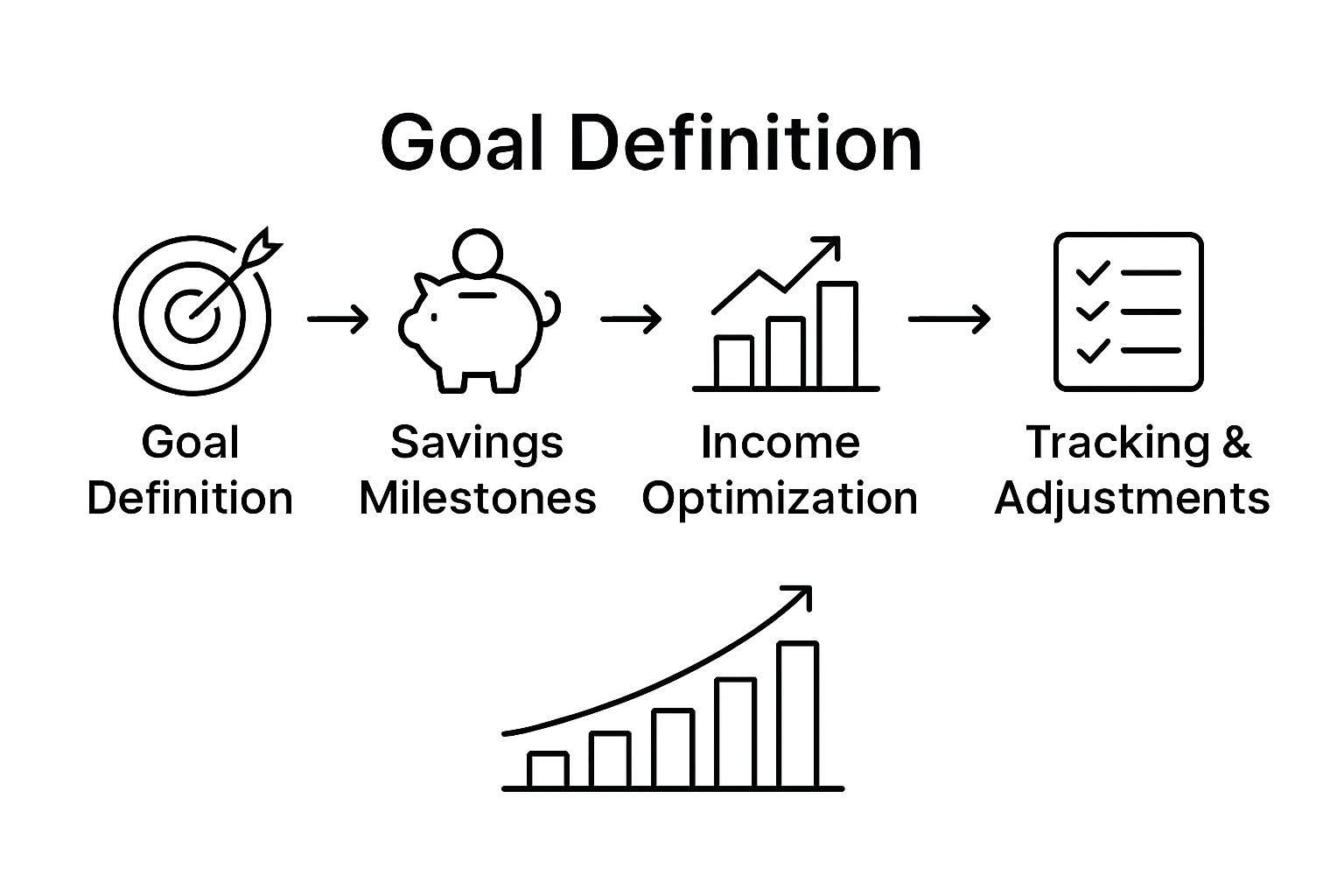
Utilize retirement calculators to assess your progress toward retirement goals and determine necessary refinements to your savings and investment strategies. Analyze your income streams, investment returns, and expense patterns with a critical eye. Be prepared to make incremental adjustments such as increasing your savings rate, rebalancing investment allocations, or exploring new income opportunities. Pay special attention to life changes that might impact your financial strategy including career transitions, family dynamics, or significant market shifts. Develop a flexible mindset that views your financial plan as an evolving strategy rather than a rigid set of rules.
Warning: Consistency matters more than perfection. Small steady improvements compound dramatically over time, so focus on continuous progress rather than achieving unrealistic milestones.
Take Control of Your Financial Independence Journey Today
Achieving Financial Independence Retire Early requires clear goals, disciplined saving, and smart investing. The challenge lies in defining your target retirement number, optimizing income while cutting expenses, and tracking progress consistently. Many find it difficult to balance strategic growth with everyday financial decisions without expert guidance. Your path to FIRE demands personalized insights that keep you motivated and on track.
At finblog.com, we understand these pain points and are here to help you master each step. From calculating your ideal retirement savings to optimizing income and building an investment portfolio, our expert advice and tailored resources empower you to take confident, informed actions now. Don’t wait to make your financial goals a reality. Explore our proven strategies and start transforming your future today. Visit https://finblog.com and unlock the support you need for lasting financial freedom.
Frequently Asked Questions
What are the first steps to define my Financial Independence Retire Early goals?
Defining your Financial Independence Retire Early goals begins with assessing your current financial situation. Calculate your annual living expenses and determine the net worth required to maintain your desired lifestyle. Focus on setting specific retirement age targets, annual expenses, and required investment portfolio amounts to create a clear roadmap.
How can I calculate my target retirement number effectively?
To calculate your target retirement number, multiply your annual living expenses by 25 to 30 times. This provides a robust savings target for retirement, ensuring you can sustain your lifestyle. Break it down further by analyzing your current age and expected retirement age to create specific milestones for savings.
What strategies can I use to optimize my income and reduce expenses?
Start by auditing your monthly expenses to categorize them as essential or discretionary. Reduce unnecessary costs in areas such as housing and entertainment while also exploring opportunities for career advancement or additional income streams. Aim to save at least 50% of your income to accelerate your Financial Independence journey.
How do I invest strategically for accelerated growth?
To invest strategically, focus on creating a diversified portfolio that includes low-cost index funds and targeted investments in promising sectors. Implement a dollar-cost averaging strategy by consistently investing a fixed amount each month, which helps mitigate market risks. Regularly review and rebalance your portfolio to maintain your target asset allocation.
Why is tracking my financial progress important, and how should I do it?
Tracking your financial progress allows you to adapt your strategies as needed and ensures you stay on course towards your goals. Establish a system to monitor your net worth, savings rate, and investment performance quarterly. Regular assessments will help you make informed adjustments to enhance your Financial Independence Retire Early plan.
Recommended
- Early Retirement Guide: Achieve Financial Freedom Step-by-Step – Finblog
- Master Financial Planning for Freelancers in 2025 – Finblog
- Master Retirement Healthcare Planning for a Secure Future – Finblog
- How to Build Wealth: Proven Steps for Lasting Financial Success – Finblog
- Moving House in Retirement: Expert Tips for North East UK 2025 | Schott Removals
- How to Set Wellness Goals for Healthy Aging Success – Real Healthy Haven