
The Fed is facing one of its toughest balancing acts in years, caught between rising inflation, a weakening job market, and growing geopolitical risks.
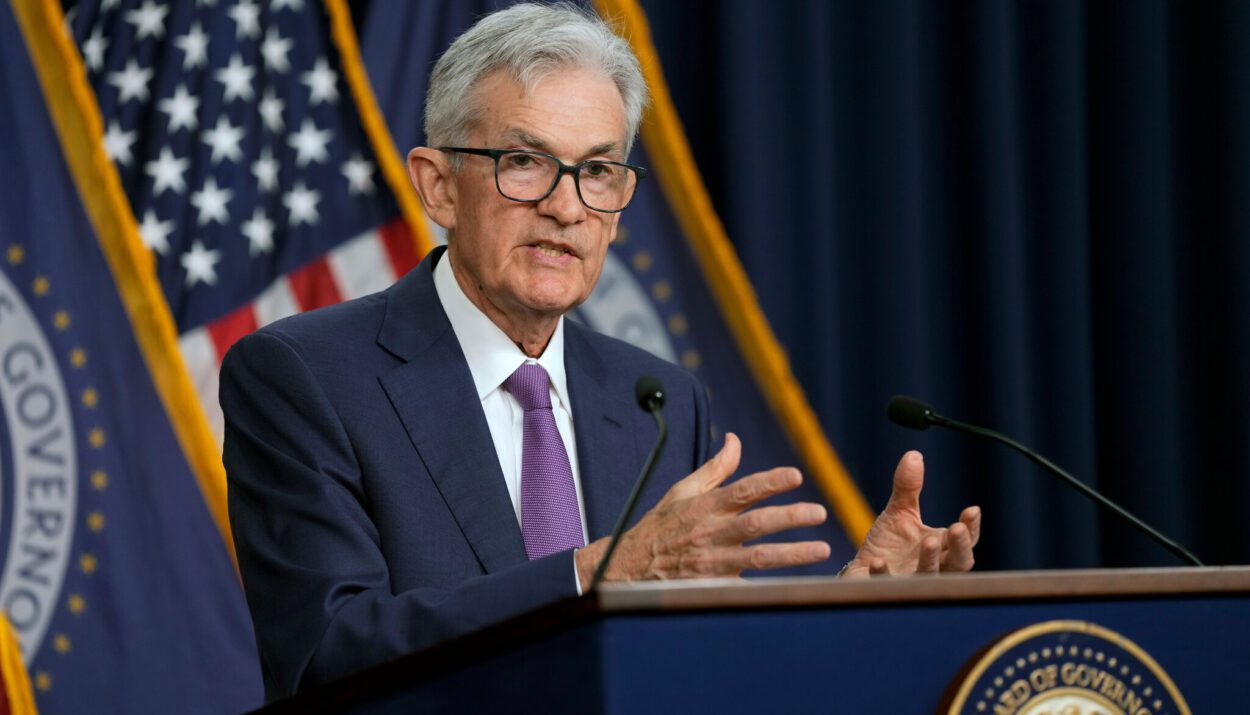
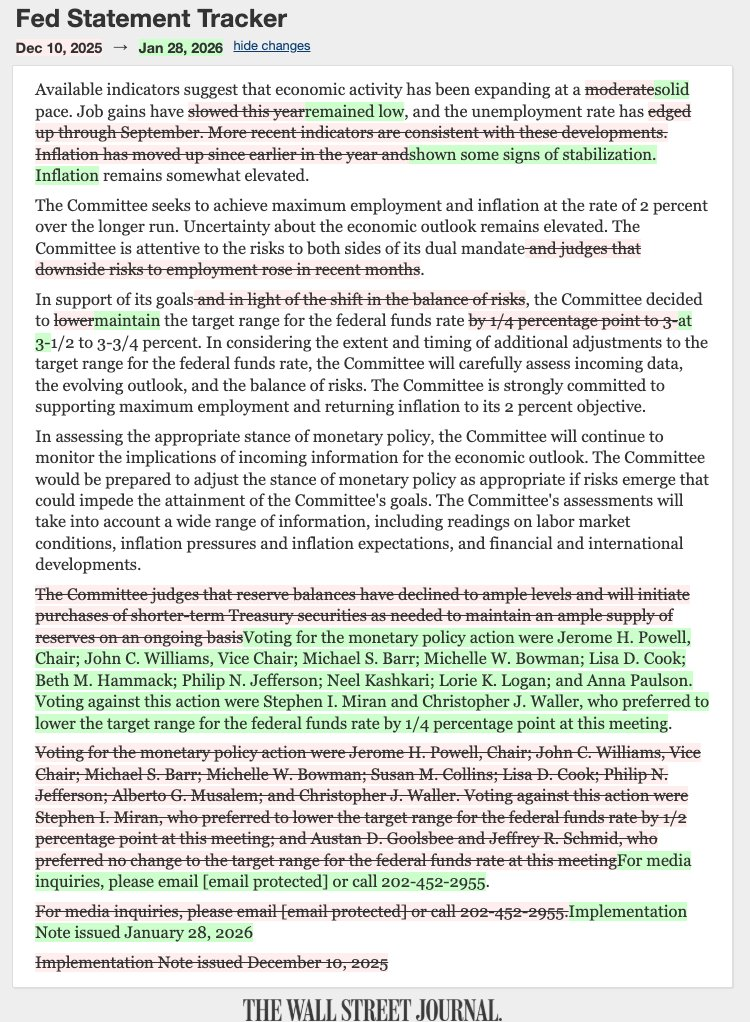
The Federal Reserve kept interest rates unchanged at 3.5%–3.75%, marking its second straight pause, as policymakers confront a deeply uncertain economic environment shaped by the Iran war, rising energy prices, and slowing hiring.
The decision was widely expected. The message behind it was not.
A Central Bank Stuck Between Two Risks
The Fed’s challenge is becoming increasingly clear.
Inflation is moving higher again, driven largely by surging oil prices linked to the Middle East conflict. At the same time, the labour market is losing momentum, with job gains slowing sharply and unemployment hovering around 4.4%.
This creates a rare situation where both sides of the Fed’s mandate are under pressure.
The central bank acknowledged this directly, noting that the economic impact of developments in the Middle East remains “uncertain” and that risks exist on both inflation and employment.
Inflation Rising, Fueled by Energy and AI
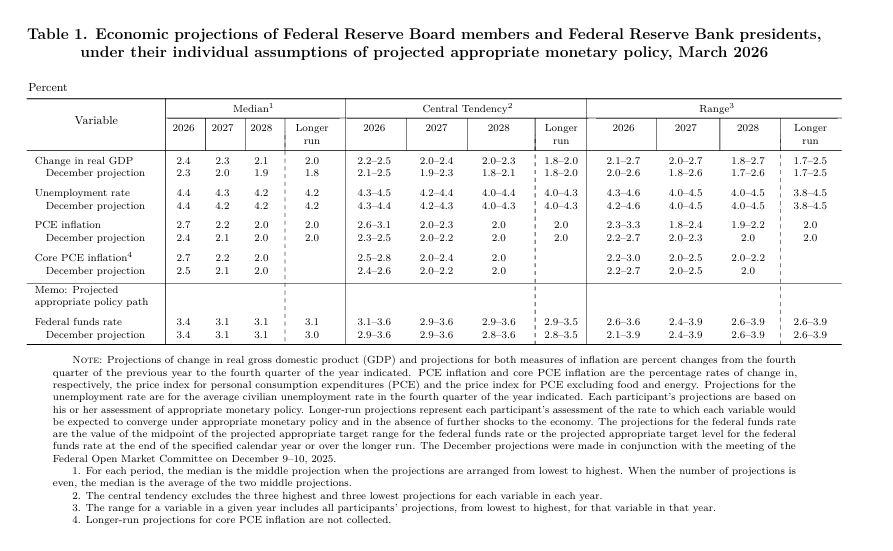
New projections show the Fed expects:
- Core inflation (2026): 2.7%, up from 2.5%
- Producer prices rising faster than expected
- Continued pressure from energy costs and tariffs
Powell warned that:
“Near-term higher energy prices will push up overall inflation.”
He also pointed to another, less discussed factor:
AI investment and data center expansion may be contributing to inflation pressures and pushing the neutral rate higher.
This suggests that both geopolitics and technological investment are now influencing the inflation outlook.
Rate Cuts Still on the Table, But Less Certain
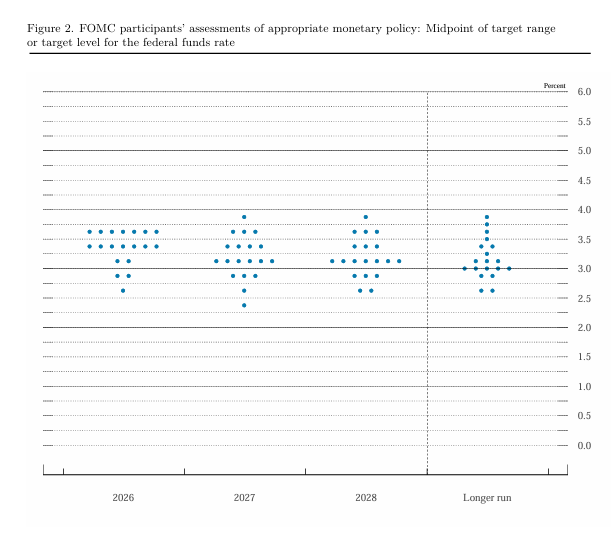
The Fed did not change its long-term rate path:
- 1 rate cut projected in 2026
- Another in 2027
- Neutral rate raised to around 3.1%
But internally, divisions are growing. One Fed governor, Stephen Miran, dissented in favour of a rate cut, while others are increasingly concerned that inflation will remain elevated. Some policymakers are no longer ruling out future rate hikes if price pressures intensify.
Powell made the Fed’s stance clear:
“If we don’t see inflation progress, we won’t see the rate cut.”
Labor Market Shows Signs of Weakness
While inflation is rising, the job market is not providing reassurance. Recent data showed:
- A loss of 92,000 jobs in February
- Hiring momentum slowing significantly
- Ongoing concerns about weak job creation
Powell acknowledged the risk:
“The labor market does have a feel of downside risk.”
However, he pushed back on more extreme concerns, stating:
“This is a very difficult situation, but it’s nothing like what we faced in the 1970s.”
War Adds a New Layer of Uncertainty
The Iran conflict is now a central factor in Fed decision-making. Oil prices have surged, with crude jumping sharply since the war began, effectively acting as both:
- An inflation driver
- A drag on economic growth
Higher energy costs reduce consumer spending power while also increasing prices across goods and services, making policy decisions even more complex.
Political Pressure and Leadership Uncertainty
The Fed is also facing increasing political tension. President Donald Trump has repeatedly pushed for aggressive rate cuts, while Powell has resisted. At the same time, legal pressure has emerged, including an investigation into Powell related to Fed renovations.
Powell confirmed he has:
- No intention of leaving the Fed board
- Plans to stay until the investigation is resolved
- Will remain as interim chair if a successor is not confirmed
With his term ending in May and Kevin Warsh awaiting Senate approval, leadership uncertainty is adding another layer of complexity to an already fragile situation.
The Bigger Picture
The Fed is no longer operating in a predictable cycle. Instead, it is navigating a system where:
- War is driving oil prices
- Oil is driving inflation
- Inflation is shaping policy
- Policy is influencing markets
At the same time, structural forces like AI investment are beginning to influence long-term rate expectations. The Federal Reserve is on hold, but not because conditions are stable. It is on hold because:
- Inflation is rising again
- The labor market is weakening
- The global environment is unpredictable
For now, the Fed is waiting for clarity. But as Powell made clear, the path forward depends on one key factor: Whether inflation finally comes down or stays elevated in a world shaped by war, energy shocks, and structural change.
Disclosure: This article does not represent investment advice. The content and materials featured on this page are for educational purposes only.
Related: Fed’s Best Move Now? Do Nothing
Fed Keeps Rates Steady Amid Rising Inflation: What it Means for Banks