
The US dollar rocky start to 2026 is becoming a wake-up call for global investors, as erratic policy signals from the White House and renewed concerns over Federal Reserve independence trigger sharp moves across currencies, commodities, stocks, and bonds.
After sliding nearly 2% in a single week in January to four-year lows, the dollar rebounded suddenly, catching crowded trades off guard and amplifying volatility across asset classes. Analysts warn that the greenback is becoming detached from traditional economic drivers, raising the risk of disorderly market reactions.
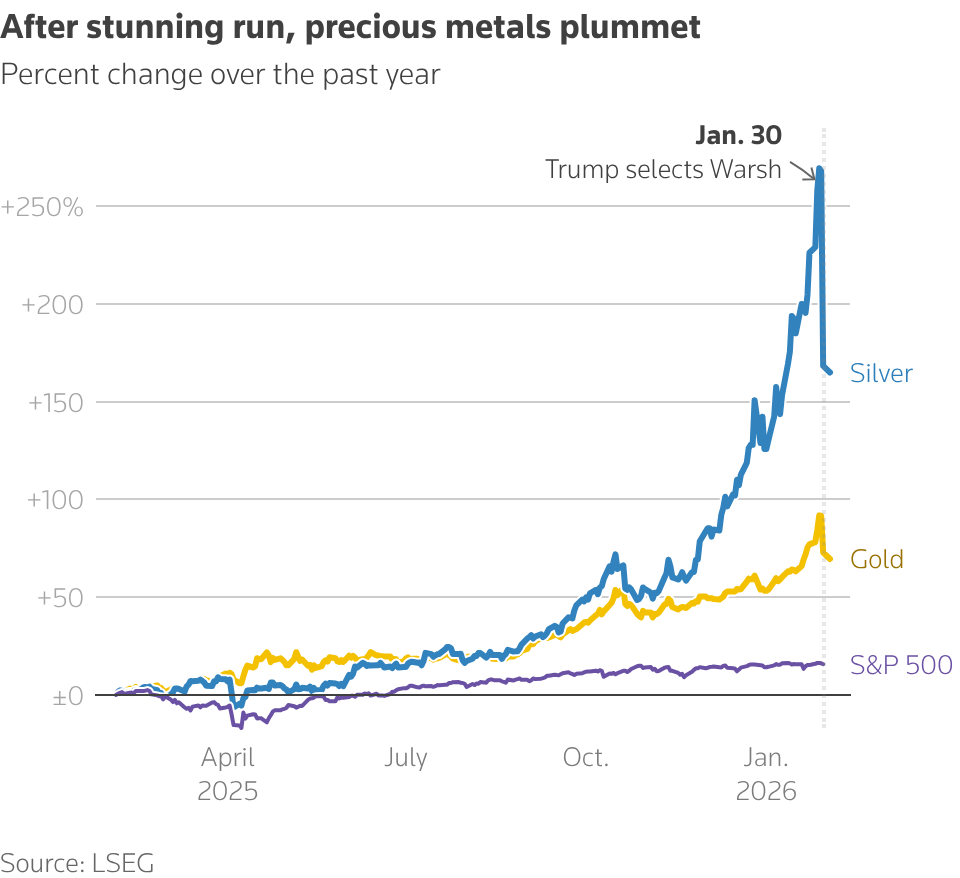
Metals whiplash after Fed nomination
The dollar’s abrupt rebound followed President Donald Trump’s decision to nominate former Fed governor Kevin Warsh to replace outgoing Fed chair Jerome Powell.
That shift upended the popular “currency debasement” trade. Gold, after its strongest January in more than 50 years, fell sharply, posting its biggest daily drop since the early 1980s before stabilizing. Silver and copper retreated from record highs, while oil headed for its worst weekly performance in nearly two months.
Strategists at Société Générale said the assumption of a steadily weakening dollar “dropped out of metals markets at lightning speed.”
Currency markets turn unstable
Volatility in the nearly $10 trillion-a-day FX market is climbing fast. Expected three-month volatility in the euro-dollar pair hit its highest level since July, underscoring investor unease.
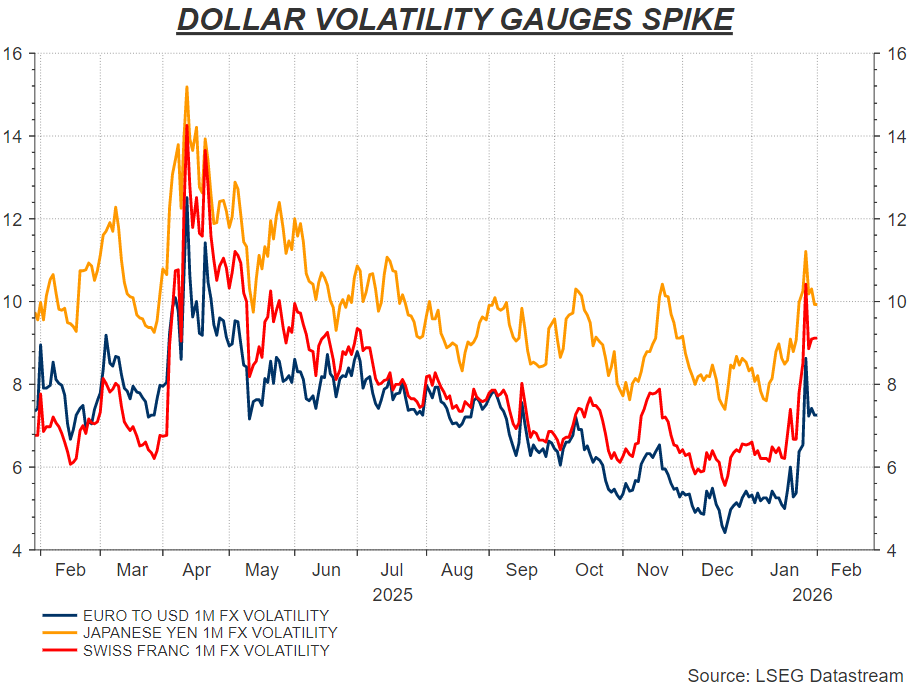
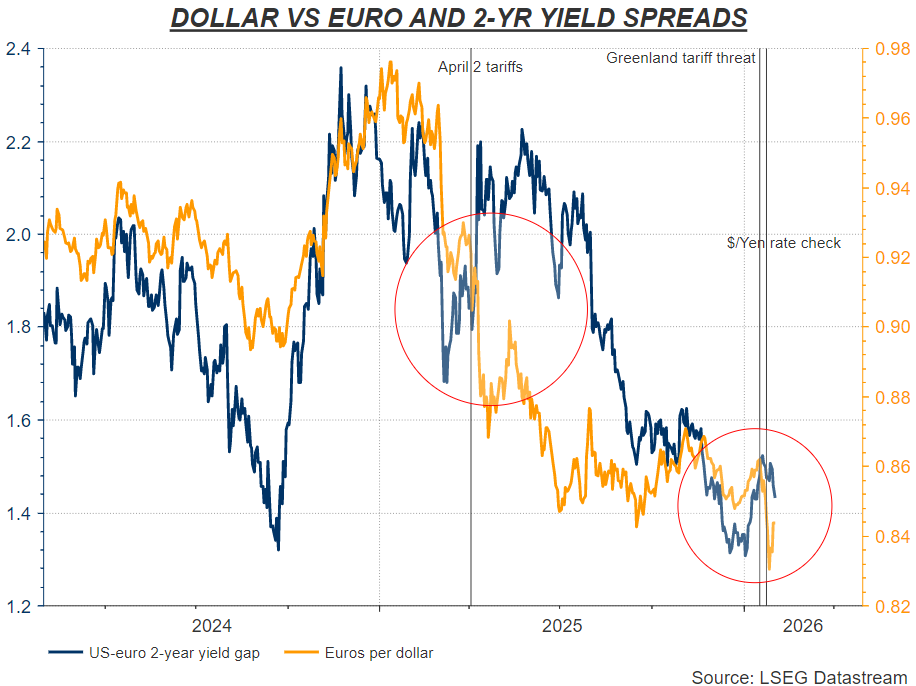
Barclays analysts say the dollar is now carrying a distinct “US policy risk premium,” meaning its moves are increasingly driven by political rhetoric rather than interest-rate differentials or growth expectations. That shift complicates valuations for dollar-denominated stocks and bonds, particularly for foreign investors.
“The main question is whether people lose confidence in the US asset base,” said Barclays strategist Themos Fiotakis.
‘Sell America’ risk resurfaces
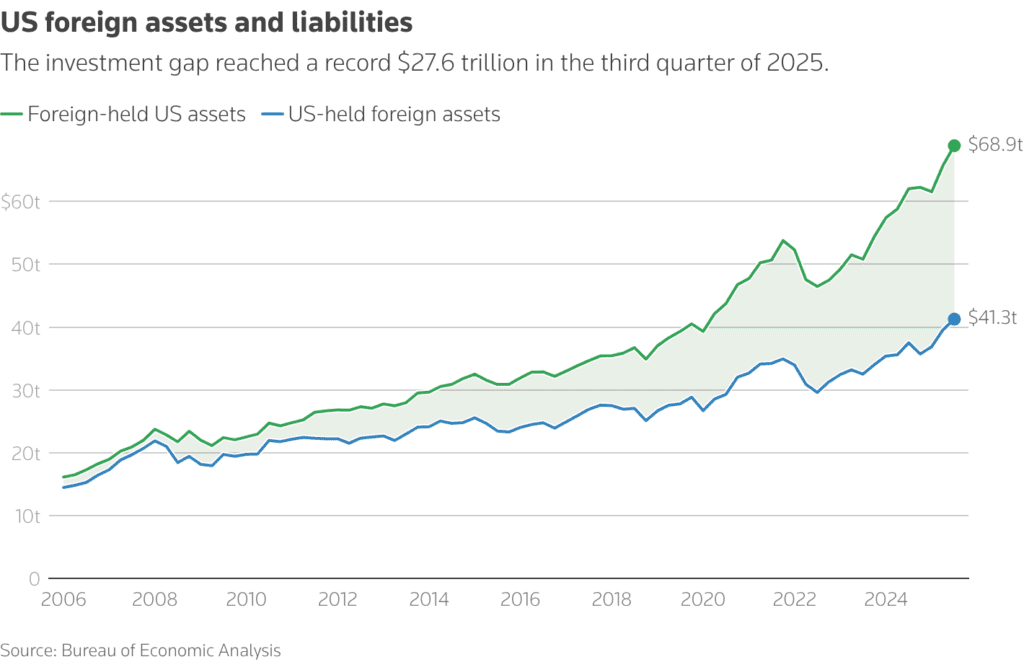
Foreign investors hold almost $70 trillion in US assets, more than double a decade ago. While a weaker dollar can normally support US equities and Treasuries, analysts warn that a disorderly decline could flip those relationships.
Bank of America estimates that a 5% monthly drop in the dollar could trigger a sharp sell-off in long-dated Treasuries and significantly tighten US financial conditions, reviving broader “Sell America” dynamics where the dollar and domestic assets fall together.
Investors move to hedge
Portfolio managers are already responding. Janus Henderson has cut exposure to stocks and gold, moving toward a more neutral stance. At Ninety One, managers are using options to hedge against large swings in Treasury yields. Hedge funds, meanwhile, are reducing exposure to North American assets amid trade tensions and policy uncertainty.
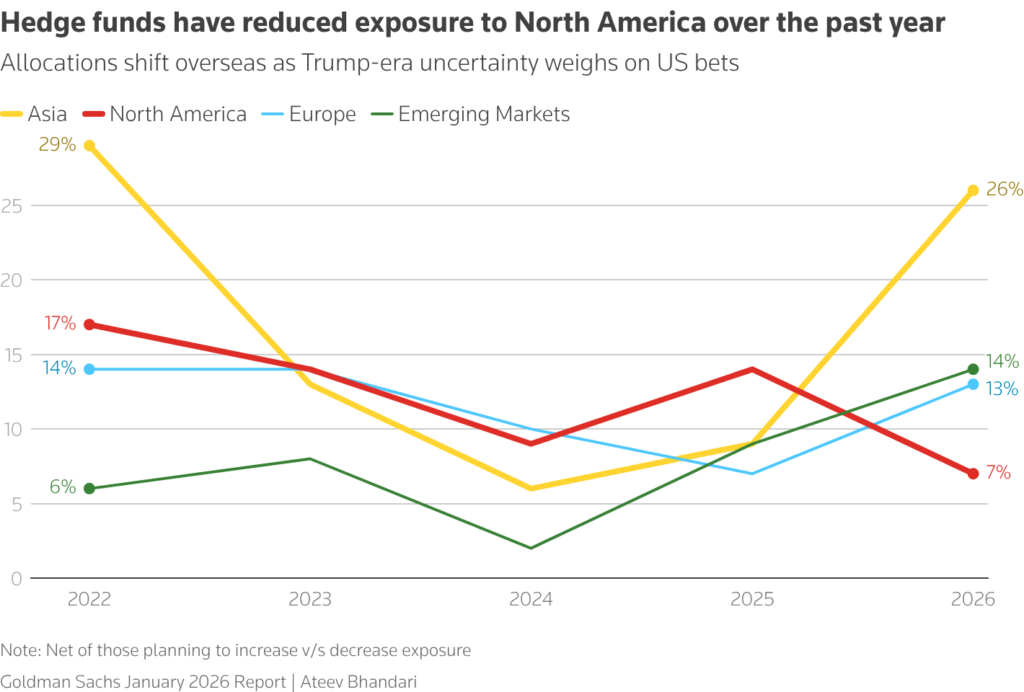
The message from markets is increasingly clear: if dollar moves remain unpredictable, volatility will not stay confined to currencies. It will continue to ripple through commodities, equities, and bonds, forcing investors worldwide to rethink how safe US assets really are in 2026.
Disclosure: This article does not represent investment advice. The content and materials featured on this page are for educational purposes only.
Related: Gold leaps to record high, dollar drops as US prosecutors target Fed’s Powell
Dollar vs Yuan Debate Returns as Trump and China Eye Currency Shift in 2026
A brutal year for stock picking spurs trillion-dollar fund exodus
Wild Currency Swings Put Emerging Markets in the Global Spotlight as Dollar Weakens