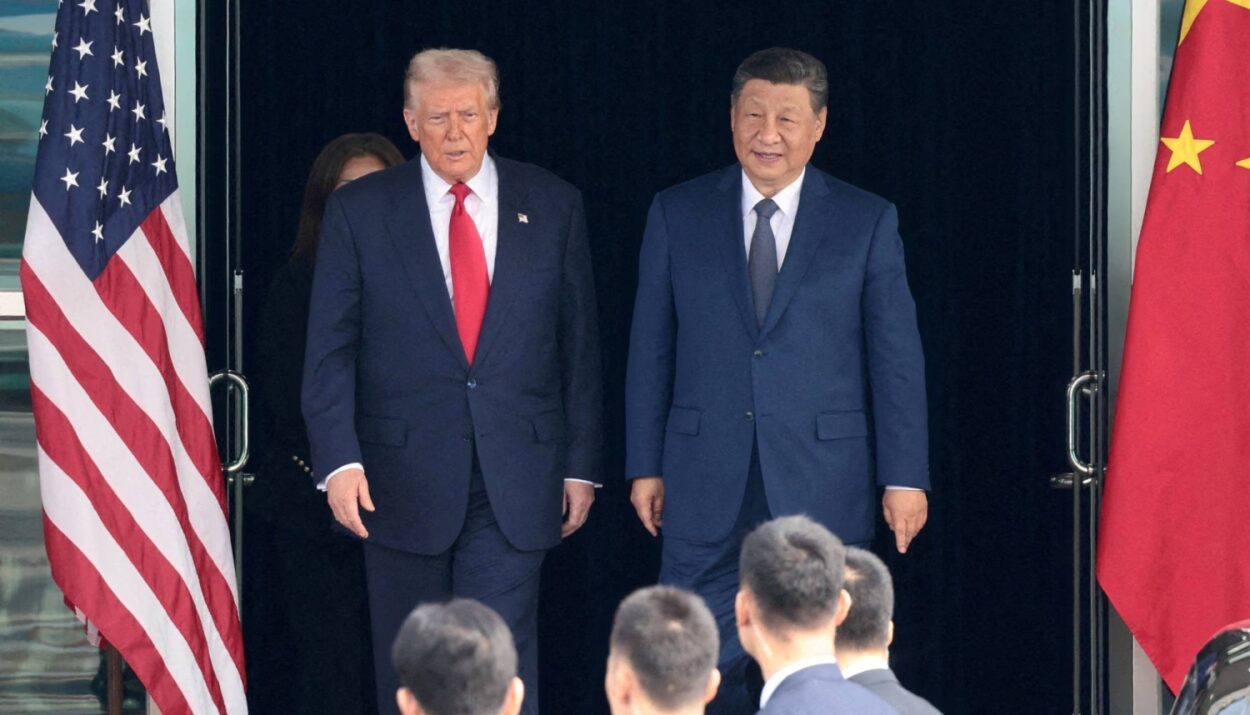

A high-stakes summit between President Donald Trump and Chinese leader Xi Jinping is expected to take place at the end of March, but uncertainty remains as Beijing says it still does not know what the United States wants from the meeting.
The White House has indicated the summit could take place from March 31 to April 2, potentially extending the fragile trade truce between the world’s two largest economies. However, Chinese analysts say the agenda for the talks remains unclear.
“Usually, planning for this kind of visit would start months ahead,” said Wu Xinbo, dean of the Institute of International Studies at Fudan University in Shanghai. “But this time it started very late and it’s still very much in progress.”
According to Wu, Chinese officials still do not know what specific agreements or commercial deals Trump hopes to secure during the visit.
Business Leaders Still Waiting for Invitations
The uncertainty is also affecting American companies.
US business executives have not yet been invited to join the presidential delegation, according to Sean Stein, president of the US–China Business Council.
Major diplomatic visits to China typically include large business delegations because of the country’s economic importance.
For example, Germany’s chancellor Friedrich Merz recently traveled to Beijing with about 30 executives, while British Prime Minister Keir Starmer brought nearly 60 business leaders earlier this year.
“It’s hard to imagine the president is not going to want to have a robust delegation,” Stein said. “But so far invitations haven’t gone out.”
A White House spokesperson said invitations would be sent “when appropriate,” adding that it is normal for the United States not to finalize such plans until closer to the meeting.
Trade Truce Still Holding
The upcoming summit could be crucial for stabilizing US–China relations after tensions escalated last year.
The two countries clashed over Trump’s global tariffs, prompting China to respond by halting purchases of U.S. soybeans and restricting exports of rare earth minerals used by American manufacturers.
The dispute eased temporarily in October, when Trump and Xi met in Busan, South Korea, agreeing to a one-year trade truce.
US officials have since said the two leaders may meet up to four times this year as both sides attempt to prevent another trade conflict.
Pressure to Expand the Economic Agenda
American companies are pushing for the summit to deliver more concrete economic progress.
Business leaders want the talks to address issues such as:
- Greater access to Chinese markets
- Approval for U.S. genetically modified crops
- Expanded pharmaceutical exports
- Licensing approvals for U.S. financial firms operating in China
These changes could significantly expand U.S. business activity in China.
China Signals Support but Warns Against Tensions
China has not officially confirmed the summit dates yet, which analysts say is normal for Beijing. Still, China’s top diplomat Wang Yi suggested last week that preparations for high-level talks are underway.
“This year is a big year for China–U.S. relations,” Wang said. “The agenda of high-level exchanges is already on the table.”
At the same time, he warned that both countries should “manage risks and remove unnecessary disruptions.”
The comments appeared to signal concern that actions by Washington, such as arms sales to Taiwan, could jeopardize the meeting.
A Delicate Meeting Ahead
Despite the uncertainty surrounding the summit agenda, both governments appear eager to maintain stability in the relationship.
However, analysts say expectations in Beijing remain cautious. During Trump’s first state visit to China in 2017, Xi hosted him with elaborate ceremonies and even a private tour of the Forbidden City.
This time, some experts believe China may offer a more restrained reception.
“No matter how well you treat him,” Wu said, referring to Trump, “you cannot prevent him from changing his mind.”
Disclosure: This article does not represent investment advice. The content and materials featured on this page are for educational purposes only.
Related: Trump’s Strait of Hormuz Plan Faces Major Challenges: What is next?