


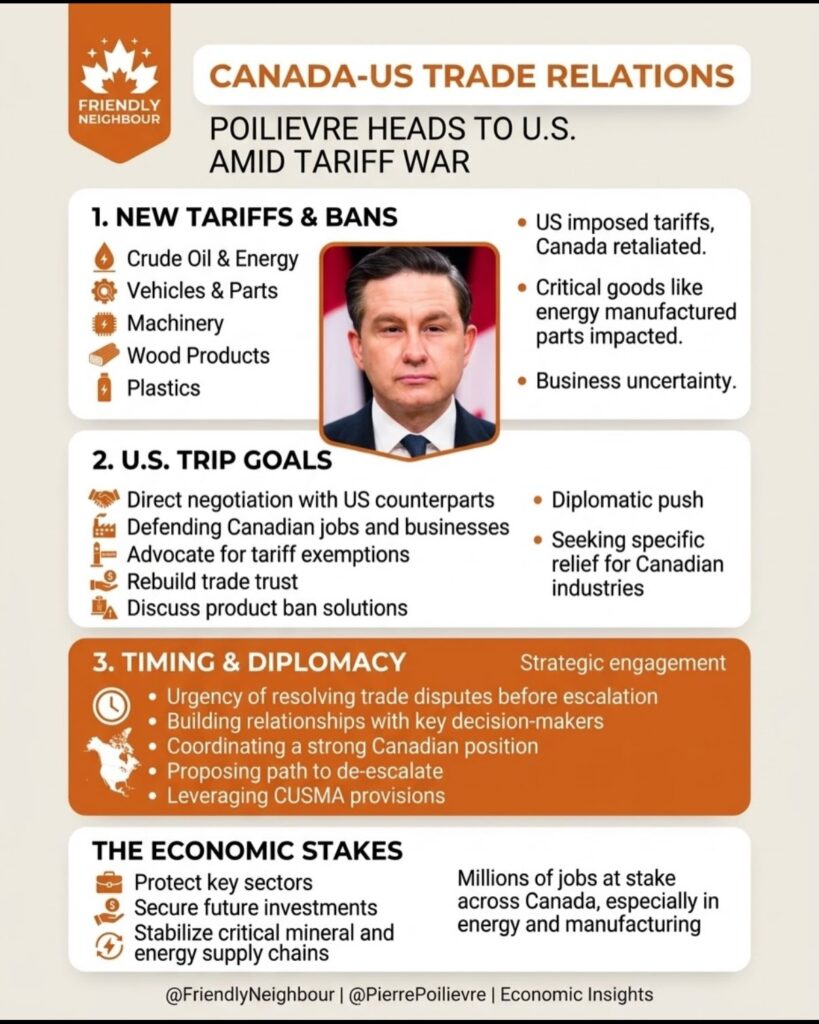
The US and Canada are escalating their trade war, with roughly $20 billion of goods on each side now facing tariffs. While the overall economic impact remains limited for now, consumers could increasingly feel the effects through higher prices.
Tariffs Are Starting to Hit Everyday Goods
Canada’s retaliatory tariffs of 15% to 50% on around $20 billion of US imports took effect on September 8. They cover products including cheese, clothing, cosmetics, electronics, alcohol and steel.
The US had already imposed tariffs of up to 50% on roughly $20 billion of Canadian goods after trade negotiations collapsed in August. Washington also plans to ban imports of some Canadian dairy products, motorcycles and alcohol from September 29.
For consumers, the basic problem is simple: tariffs are paid by importers, and companies can pass some or all of those extra costs on through higher prices.
The Economic Hit Is Still Relatively Small
For now, only a limited part of the enormous US-Canada trade relationship is affected.
US tariffs cover roughly 5% of Canada’s $382 billion in exports to the US, while Canada’s retaliation affects about 6% of more than $330 billion in US exports to Canada.
Economists therefore do not expect a major economy-wide shock unless the dispute spreads to more industries.
The risk is that escalation continues into important sectors such as autos, steel, agriculture and consumer goods, where supply chains between the two countries are deeply connected.
Canadians and Americans See the Fight Differently
Political support for the trade war also looks very different on each side of the border.
More than 70% of Canadians surveyed supported Ottawa’s retaliatory tariffs, while over 60% said they backed ending negotiations even if it meant higher costs or fewer jobs.
In the US, meanwhile, around 60% of Americans opposed additional tariffs on Canada.
That difference could matter if prices continue rising and the dispute becomes politically harder to reverse.
Investor takeaway: The tariffs are still too limited to create a major economic shock, but the direction is becoming more worrying. If the US-Canada dispute expands into larger industries, it could raise consumer prices, business costs and inflation pressure on both sides of the border.
Disclosure: This article does not represent investment advice. The content and materials featured on this page are for educational purposes only.
Related: US escalates Canada trade war with product bans, new tariffs
Mark Carney’s Survival Plan: Why Canada Is Pushing Middle Powers to Act Together